

-
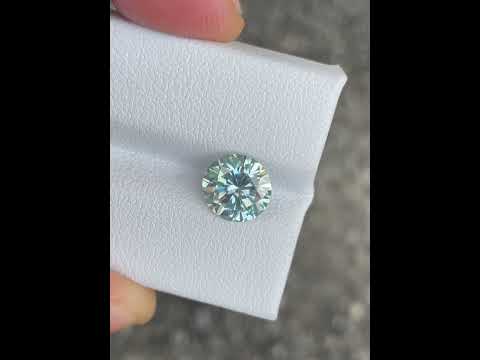
2.20 carats Round Brilliant Cut Moissanite Stone Synthetic Gemstone - LightBlue
A 2.20 carat Round Brilliant Cut Moissanite is a dazzling lab-grown gemstone known for its exceptional brilliance and fire. With a meticulously crafted round shape and 58 facets, this cut maximizes the reflection of light, creating an unparalleled sparkle that rivals even the finest...- $95.00
- $95.00
- Unit price
- per
-
LightBlue
-
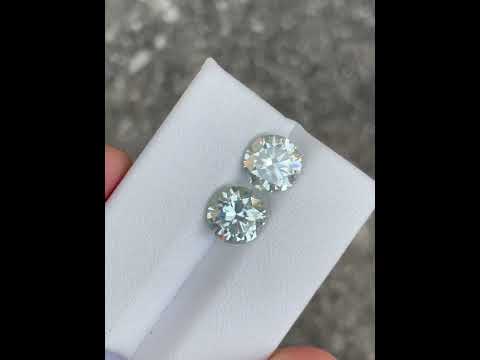
4.23 carats Round Brilliant Cut Moissanite Pair Gems Synthetic Gemstones - LightBlue
This pair of round brilliant-cut moissanite gemstones, each weighing 4.23 carats, is a stunning display of synthetic artistry and craftsmanship. Renowned for their dazzling brilliance and exceptional fire, these lab-created gems closely mimic the allure of natural diamonds while offering a sustainable and ethical...- $155.00
- $155.00
- Unit price
- per
-
LightBlue
-
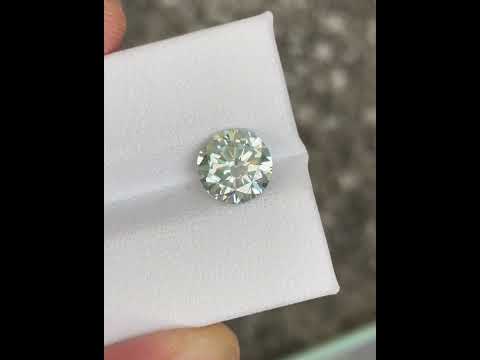
2.09 carats Round Brilliant Cut Moissanite Gem Synthetic Gemstone - LightBlue
A 2.09 carat Round Brilliant Cut Moissanite is a dazzling lab-grown gemstone known for its exceptional brilliance and fire. With a meticulously crafted round shape and 58 facets, this cut maximizes the reflection of light, creating an unparalleled sparkle that rivals even the finest...- $75.00
- $75.00
- Unit price
- per
-
LightBlue
-
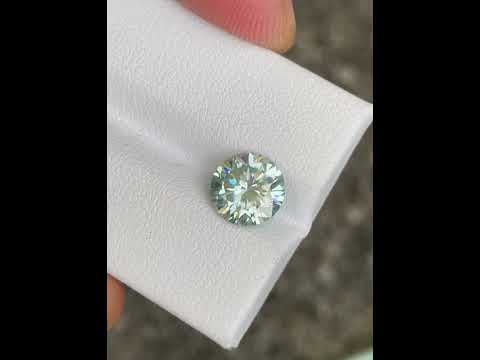
2.10 carats Round Brilliant Cut Moissanite Gem Synthetic Gemstone - LightBlue
A 2.10 carat Round Brilliant Cut Moissanite is a dazzling lab-grown gemstone known for its exceptional brilliance and fire. With a meticulously crafted round shape and 58 facets, this cut maximizes the reflection of light, creating an unparalleled sparkle that rivals even the finest...- $85.00
- $85.00
- Unit price
- per
-
LightBlue
-
2.09 carats Round Brilliant Cut Moissanite Synthetic Gemstone - LightBlue
A 2.09 carat Round Brilliant Cut Moissanite is a dazzling lab-grown gemstone known for its exceptional brilliance and fire. With a meticulously crafted round shape and 58 facets, this cut maximizes the reflection of light, creating an unparalleled sparkle that rivals even the finest...- $70.00
- $70.00
- Unit price
- per
-
LightBlue
-
1.85 carats Round Brilliant Cut Moissanite Synthetic Gemstone - LightBlue
A 1.85 carat Round Brilliant Cut Moissanite is a dazzling lab-grown gemstone known for its exceptional brilliance and fire. With a meticulously crafted round shape and 58 facets, this cut maximizes the reflection of light, creating an unparalleled sparkle that rivals even the finest...- $85.00
- $85.00
- Unit price
- per
-
LightBlue
-
2.20 carats Round Brilliant Cut Moissanite Gemstone - LightBlue
A 2.20 carat Round Brilliant Cut Moissanite is a dazzling lab-grown gemstone known for its exceptional brilliance and fire. With a meticulously crafted round shape and 58 facets, this cut maximizes the reflection of light, creating an unparalleled sparkle that rivals even the finest diamonds....- $75.00
- $75.00
- Unit price
- per
-
LightBlue
-
1.80 carats Round Brilliant Cut Moissanite Gemstone - LightBlue
A 1.80-carat Round Brilliant Cut Moissanite is a dazzling lab-grown gemstone known for its exceptional brilliance and fire. With a meticulously crafted round shape and 58 facets, this cut maximizes the reflection of light, creating an unparalleled sparkle that rivals even the finest diamonds....- $90.00
- $90.00
- Unit price
- per
-
LightBlue
Free Shipping on order over $80
100% Authentic & Certified
Save Big in 2026
Moissanite Gemstones
Moissanite gemstones are best compared by cut quality, color, clarity, physical dimensions, brilliance, setting construction and the overall balance of the finished jewelry rather than by assuming that the largest-looking stone is automatically the strongest choice. Gem-quality moissanite used in modern jewelry is laboratory grown silicon carbide, while naturally occurring moissanite is extremely rare and is not the source of ordinary commercial engagement-ring stones. That distinction is important because a buyer should know exactly what the gemstone is rather than treating moissanite as a type of diamond or assuming that a colorless appearance establishes the same mineral identity.

Sidebar






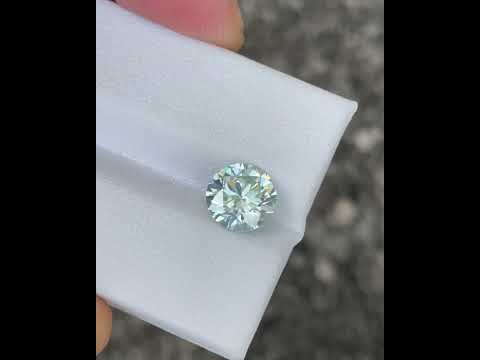

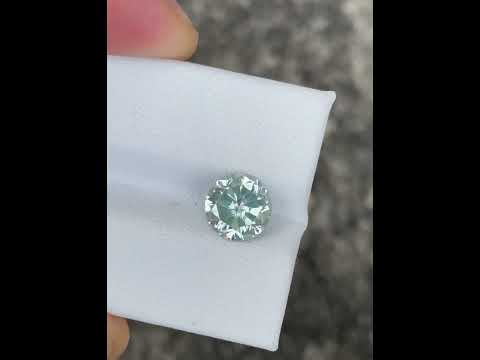

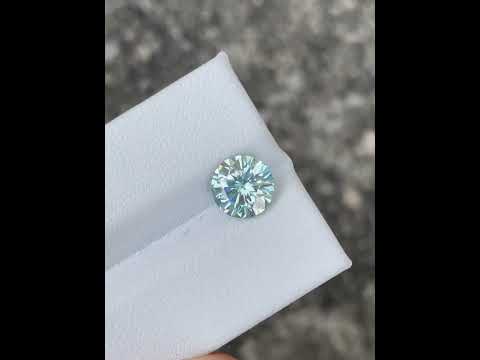
The appeal of moissanite comes from a combination of high hardness, strong brilliance and unusually noticeable dispersion, commonly described as fire. Its optical character is different from diamond rather than simply being a cheaper copy of the same visual effect. Some buyers appreciate the colorful flashes and lively appearance immediately, while others prefer a quieter stone with less obvious dispersion. The right choice therefore begins with personal visual preference and continues through cut, dimensions, color and setting design.
Buyers comparing a finished moissanite piece with the wider range of loose gemstones should judge each option according to its own physical and optical properties rather than applying one gemstone's quality language mechanically to another.
Moissanite Cut Quality: Why Proportions Control Brilliance and Fire
Cut quality has a major influence on how a moissanite gemstone performs because the placement and proportion of facets determine how efficiently light moves through the stone and returns to the eye. A well-cut moissanite can look bright across most of its face, while poor proportions can produce dark areas, uneven brightness or a visually distracting center even when the stone is otherwise highly transparent.
Round brilliant cuts are popular because they emphasize brightness and fire, but oval, cushion, pear, radiant and emerald-style shapes provide very different visual personalities. An oval can create a longer face-up outline, while a cushion often produces a softer shape with broad flashes. Emerald-style cutting reduces the fragmented appearance of brilliant faceting and emphasizes long reflections, clarity and geometry instead.
Because moissanite has strong dispersion, cutting can make spectral flashes particularly noticeable. Buyers who enjoy that effect may prefer brilliant and modified-brilliant designs, while those who want a calmer appearance may find step-cut or less aggressively faceted designs more appealing. The best cut is therefore not simply the one that creates the greatest possible rainbow effect, but the one whose brightness and visual character suit the person who will wear it.
Moissanite Color: Comparing Colorless and Near-Colorless Stones
Moissanite used in jewelry can appear colorless or near colorless, although subtle yellow, gray or greenish tones may be visible in some stones, particularly under certain lighting conditions or viewing angles. Color becomes easier to notice as stones become larger because the greater optical path can make a faint body tone more apparent.
Buyers should evaluate color in realistic lighting rather than relying only on intense display illumination. A gemstone that appears icy white beneath jewelry-store lights may show a slightly warmer character in daylight or indoor ambient lighting. This does not automatically make the stone unattractive, but it should match the buyer's expectations and the color of the chosen metal.
White metals such as platinum or white gold can make subtle warmth easier to notice because the setting provides a neutral reference. Yellow or rose gold can integrate warmer tones naturally and may make small differences in gemstone color less visually important. The most useful decision is therefore based on how the complete ring or jewelry piece looks rather than treating color as an isolated specification.
Moissanite Brilliance and Fire: Why It Does Not Look Exactly Like Diamond
Moissanite has high refractive properties and unusually strong dispersion, which means it can produce intense white brilliance together with noticeable flashes of spectral color. This lively effect is one of its defining visual characteristics and one of the main reasons buyers either strongly prefer it or decide that another gemstone better suits their taste.
The difference becomes especially noticeable in larger stones and under small bright light sources, where colorful flashes can appear stronger than they do in natural daylight. A buyer who has only seen moissanite in photographs or short videos should therefore consider how the stone behaves in several lighting environments before deciding that one exaggerated studio presentation represents everyday appearance.
Moissanite is also doubly refractive, unlike diamond, which can cause facet junctions viewed through the stone to appear doubled from certain directions. Skilled orientation and cutting help manage this optical effect, but it remains part of the gemstone's identity. Rather than expecting moissanite to reproduce diamond perfectly, buyers are better served by deciding whether they enjoy moissanite's own combination of brightness, fire and visual movement.
Moissanite Clarity: What Inclusions Matter in a Lab-Grown Stone
Commercial moissanite is generally produced with high clarity, so obvious inclusions are not expected to dominate the face-up appearance of a well-finished jewelry stone. Small internal features can still occur, and their importance depends primarily on whether they are visible without magnification or interfere with the stone's brilliance.
A tiny feature near the girdle may have little practical effect, particularly once the gemstone is secured in a setting, while an obvious inclusion under the table can be more distracting because it remains visible from the most common viewing direction. Surface condition also matters because chips, abrasion or poor polishing around facet junctions can influence the finished appearance even when the interior is clean.
Because clarity is usually high, buyers should avoid paying disproportionate attention to microscopic perfection while ignoring cut or dimensions. A technically cleaner stone with weaker proportions may look less attractive than a stone containing a minute internal feature but showing much stronger face-up performance.
Moissanite Carat Weight vs Millimeter Size: Compare the Stone You Actually See
Moissanite should be compared carefully by physical dimensions because carat terminology can create confusion when buyers are thinking in diamond-equivalent sizes. Different gemstones have different densities, and a moissanite with the same dimensions as a diamond will not necessarily have exactly the same actual weight.
Length, width and depth therefore provide a more reliable understanding of visible size. An 8 mm round stone is physically 8 mm across regardless of the weight terminology used in a particular listing, while an oval requires both length and width to communicate its true appearance. Depth matters as well because excessive material beneath the girdle can increase weight without increasing visible face-up area.
This becomes especially important when replacing a gemstone in an existing setting. A jeweler needs exact measurements, not simply a nominal carat-equivalent description. Buyers should therefore check dimensions first and treat weight as an additional specification rather than the sole measure of size.
Moissanite Hardness and Durability for Everyday Rings
Moissanite has Mohs hardness around 9.25, placing it among the hardest gemstones commonly used in jewelry. That high hardness gives polished surfaces excellent resistance to everyday scratching and makes moissanite particularly practical for engagement rings and other frequently worn pieces.
Hardness does not mean that a gemstone or ring is indestructible. Sharp corners on certain shapes can still chip under severe impact, and the metal setting can bend, wear or lose prong security even when the center stone remains undamaged. A durable gemstone therefore still depends on sound jewelry construction and routine inspection.
The general gemstone care principles remain relevant because keeping oils, cosmetics and accumulated residue away from the pavilion can help maintain brightness. A very hard gemstone can still appear dull when surface contamination prevents light from entering and returning efficiently.
Moissanite Ring Settings: Match Protection and Style to the Stone Shape
Setting design affects both appearance and long-term security. A round or cushion stone can work in relatively open prong settings because there are no extremely narrow points, while pear and marquise shapes deserve careful protection around their tips. Emerald-style and radiant cuts introduce corners that should be secured appropriately, particularly in rings intended for frequent wear.
Low-profile settings can reduce the chance of catching the stone on clothing or hard objects, while higher settings often allow more light and create a more prominent visual profile. Neither approach is automatically better; comfort, hand shape and daily routine should influence the decision alongside aesthetics.
Halo designs can make the overall ring appear larger, while solitaire settings direct nearly all attention to the center moissanite. Side stones introduce another comparison because differences in color and optical character may become noticeable when moissanite is paired directly with other gemstones. The finished piece should therefore be judged as a complete composition rather than as a center-stone specification surrounded by secondary details.
Moissanite vs Diamond: Similar Use Does Not Mean Identical Appearance
Moissanite and diamond are different substances with different optical properties, even though both can be used successfully in engagement rings and other fine jewelry. Diamond is carbon, while moissanite is silicon carbide. Their hardness, refractive behavior, dispersion and double-refraction properties differ, which is why an experienced observer may distinguish their appearance even when both stones are colorless and similarly cut.
Moissanite typically shows stronger spectral fire, while diamond generally presents a different balance between white brilliance, contrast and dispersion. These differences do not create a universal winner because jewelry preference is subjective. Someone who enjoys pronounced rainbow flashes may deliberately choose moissanite for that quality rather than because it imitates another stone.
A buyer comparing gemstones across the all gems selection benefits from treating each species according to the features that make it distinctive. The objective is to choose the appearance, durability and design that fit the wearer rather than forcing every transparent stone into a diamond-centered comparison.
Moissanite Authenticity and Product Description: Know What You Are Buying
Because gem-quality commercial moissanite is laboratory grown, transparent product wording is essential. Buyers should know that the stone is moissanite and should not confuse the term with natural diamond, synthetic diamond or cubic zirconia. These are different substances with different chemical compositions and gemological properties.
The word synthetic in gemology means that a substance has been produced artificially while possessing the essential chemical and physical characteristics of its natural counterpart. It does not mean imitation in the same sense as a material merely designed to resemble another gem. Laboratory-grown moissanite is therefore moissanite, although the naturally occurring mineral is exceptionally rare.
Gandhara Gems' authenticity guarantee provides useful purchasing context when gemstone identity and product representation are part of the decision. Buyers should still review the individual listing so they understand the stone size, jewelry metal, setting and any other specifications that apply to the actual piece.
Buying Moissanite Rings Online: Compare the Complete Jewelry Piece
An online moissanite purchase should begin with the gemstone's face-up dimensions and shape, followed by cut performance, color and overall setting quality. Photographs and videos are useful for showing brilliance, but intense studio lights can make fire appear stronger than it will under normal conditions. Seeing the piece represented from multiple angles helps establish whether the stone sits securely, whether prongs are symmetrical and whether the ring profile suits the intended style.
Metal type, band width and setting height deserve the same attention as the center stone because they determine comfort and long-term wearability. A visually impressive large moissanite may feel poorly balanced on a very thin band, while a more moderate stone can look substantial when the setting is proportioned well.
Gandhara Gems' shipping information provides the practical order framework, while the return policy is relevant when a buyer wants to assess the stone's fire, apparent color, ring proportions and comfort in ordinary lighting after delivery.
Moissanite Gemstone FAQs
Is the moissanite used in jewelry natural or laboratory grown?
Almost all moissanite used in modern jewelry is laboratory grown because naturally occurring moissanite is extraordinarily rare and is not available in the quantities or sizes required for ordinary commercial rings. Laboratory-grown moissanite has the silicon carbide composition and characteristic optical properties associated with the mineral, but buyers should still understand that the gemstone was produced in a controlled environment rather than mined as a typical natural jewelry stone.
Does moissanite look exactly like diamond?
Moissanite can resemble diamond at a glance because both can be transparent, colorless and highly brilliant, but their optical behavior is different. Moissanite has stronger dispersion, producing more noticeable colored fire, and it is doubly refractive, while diamond is singly refractive. Those distinctions become more apparent in larger stones and certain lighting conditions, so buyers should choose moissanite because they like its own appearance rather than expecting a perfect visual duplication of diamond.
Is moissanite durable enough for an everyday engagement ring?
Moissanite's Mohs hardness of approximately 9.25 gives it excellent resistance to scratching and makes it highly suitable for frequent jewelry wear. The gemstone can still chip if subjected to a severe impact, and the ring setting can suffer wear independently of the stone, so normal jewelry care and periodic inspection of prongs remain sensible. Its combination of hardness and optical performance is one reason moissanite has become widely used in engagement rings.
Should I compare moissanite by carat weight or millimeter dimensions?
Millimeter dimensions provide the clearest understanding of how large the gemstone will actually appear because moissanite and diamond do not have identical density. Carat-equivalent terminology can be useful for communicating familiar visual sizes, but exact length, width and depth are more reliable when comparing two stones or checking compatibility with an existing setting. Buyers should therefore consider physical measurements first and use weight as supporting information.
Why does some moissanite show more rainbow fire than other stones?
The amount and visibility of spectral fire depend on the gemstone's strong dispersion, the cut design, stone size, viewing angle and lighting environment. Brilliant cuts under small intense light sources can produce particularly obvious flashes of color, while other shapes and softer lighting can make the effect less dominant. A buyer who prefers a restrained appearance should therefore compare actual videos and cut styles rather than assuming every moissanite will produce exactly the same visual effect.
Can moissanite have a yellow or gray tint?
Yes. Moissanite can range from colorless to near colorless, and some stones may show subtle yellow, gray or other undertones, particularly in larger sizes or under certain lighting conditions. Whether that is noticeable or undesirable depends on the individual stone, setting metal and buyer preference. Comparing the complete jewelry piece under realistic lighting gives a better impression than relying solely on a color description.
Choose Moissanite Gemstones by Cut, Dimensions and the Appearance You Actually Prefer
Compare the current Moissanite Gemstones by face-up dimensions, shape, cut performance, apparent color, clarity, fire and the quality of the finished setting rather than selecting according to size alone. A well-proportioned stone that looks balanced on the hand can create a stronger result than a larger moissanite placed in a setting that feels visually or physically awkward. Choose the piece whose brilliance, spectral fire, gemstone dimensions and jewelry design genuinely match your style, intended wear and budget.

Recently Viewed Products
Example product title
- $19.99
- $19.99
- Unit price
- / per
Example product title
- $19.99
- $19.99
- Unit price
- / per
Example product title
- $19.99
- $19.99
- Unit price
- / per
Example product title
- $19.99
- $19.99
- Unit price
- / per
Example product title
- $19.99
- $19.99
- Unit price
- / per
Example product title
- $19.99
- $19.99
- Unit price
- / per
Example product title
- $19.99
- $19.99
- Unit price
- / per
Example product title
- $19.99
- $19.99
- Unit price
- / per
Example product title
- $19.99
- $19.99
- Unit price
- / per
Example product title
- $19.99
- $19.99
- Unit price
- / per
- Choosing a selection results in a full page refresh.


