

-
Lovely Butterfly Shape Twinned Calcite With Fluorite And Lemonite Matrix - Gray
Presenting this attractive and butterfly shape Calcite with purple Fluorite and lemonite matrix attached. The calcite crystals are nicely attached forming lovely butterfly shape and impact twinned with each other. The fluorite attached on side creating an awesome contrast of colors with orangey lemonite...- $280.00
- $280.00
- Unit price
- per
-
Gray
-
Saturated Forest Green Color Fluorite On Muscovite - Green
Presenting this beautiful and well balanced specimen, featuring lovely focal crystal of Fluorite on muscovite. The fluorite has a magnificent forest green coloration, well crystalized and octahedral crystal form. The crystal is aesthetically perched on matrix with well crystallized all around and form. It...- $220.00
- $220.00
- Unit price
- per
-
Green
Free Shipping on order over $80
100% Authentic & Certified
Save Big in 2026
Fluorite Minerals
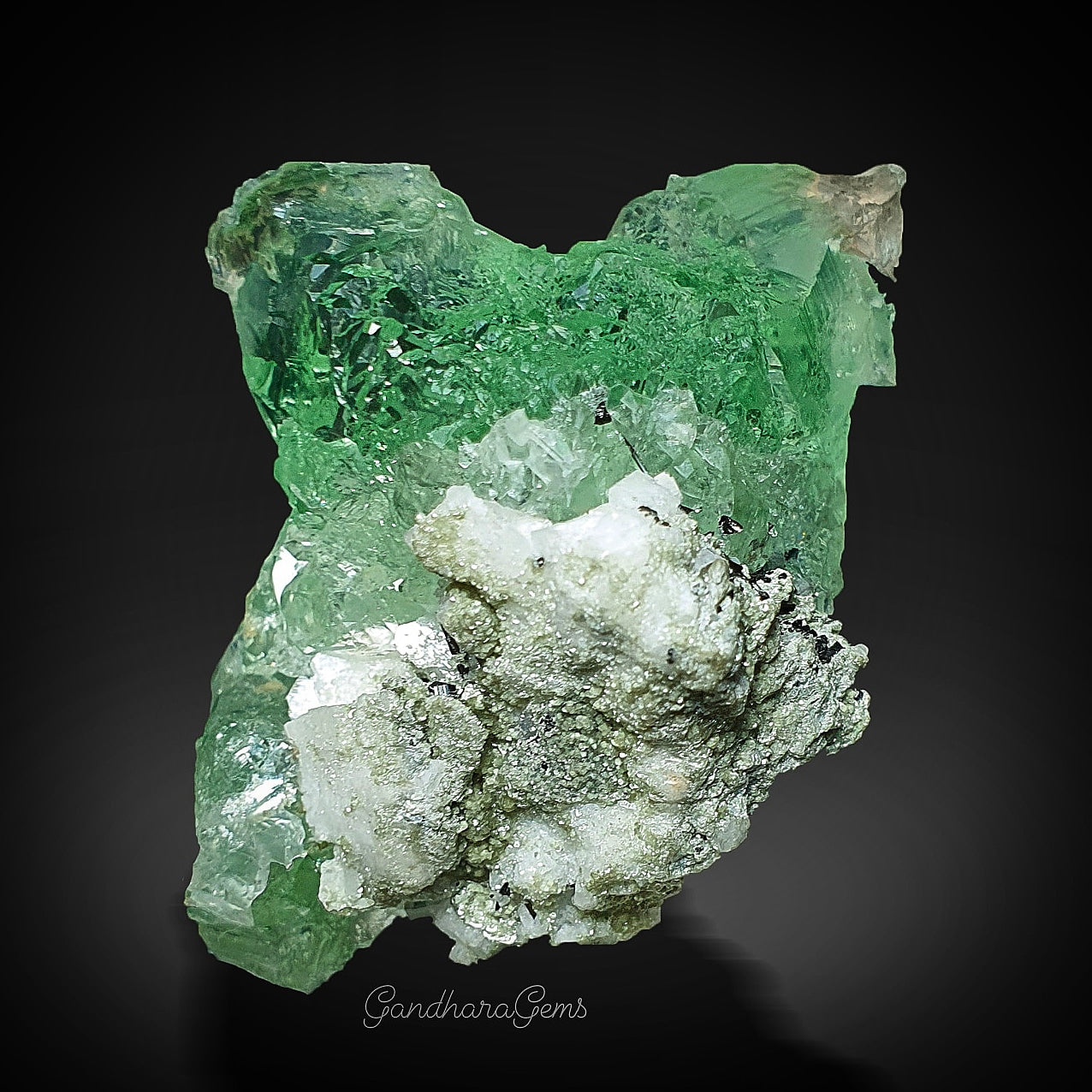
Fluorite mineral specimens are best selected by comparing natural crystal form, green color, transparency, zoning, luster, matrix association, physical dimensions and visible condition rather than simply choosing the darkest or largest piece. Fluorite can form highly recognizable cubic and other isometric crystal shapes, and green specimens may range from pale, almost watery tones to stronger grass, mint or deeper green appearances. A smaller crystal with sharp faces, attractive transparency and intact edges can make a stronger collector specimen than a much heavier piece dominated by broken crystal surfaces or matrix.
Sidebar


Fluorite is calcium fluoride and is notable for an unusually wide natural color range, although this collection centers on green fluorite. Its Mohs hardness of 4 makes it distinctly softer than quartz, beryl and many traditional jewelry gemstones, while its perfect cleavage means that well-formed crystals require thoughtful handling. These characteristics make specimen condition especially important. Buyers primarily interested in uncut fluorite for lapidary or other purposes can compare fluorite rough gems, while this collection emphasizes natural crystals and specimens as preserved mineral forms.
Green Fluorite Color: How Tone, Transparency and Zoning Change Specimen Appearance
Green fluorite can display considerable variation in hue and tone. Some crystals are pale and highly transparent, allowing internal structures and overlapping crystal faces to remain visible, while others show richer green coloration with a more translucent appearance. Neither extreme is automatically superior because specimen quality depends on how color interacts with crystal form, transparency and overall composition.
Thickness strongly affects perceived color. A crystal may look much deeper green through its center while thin edges appear almost colorless or lightly tinted. Matrix can change the visual effect again by providing contrast behind transparent or translucent crystals. For this reason, buyers should not judge fluorite color from a single close-up image without considering the complete piece.
Color zoning can be particularly attractive when bands or internal areas of different saturation remain visible through the crystal. Zoning is not inherently a flaw. In a mineral specimen, it can preserve part of the crystal's growth history and create visual depth that would be lost if the stone were reduced to a uniform polished shape.
The darkest green specimen is therefore not automatically the strongest choice. Look for a combination of hue, transparency, crystal definition and natural pattern that suits the type of specimen you want to display.
Fluorite Crystal Form: Why Cubic Geometry Matters to Collectors
Fluorite crystallizes in the isometric system and is especially well known for cubic crystals. Sharp cube edges and clearly defined faces can make even relatively small specimens visually compelling because the geometry is immediately recognizable.
Natural fluorite can also occur in other crystal forms and combinations, so buyers should not assume that every desirable specimen must be a perfect isolated cube. Intergrown crystals, stepped faces and clusters can create complex compositions where the relationship between several crystals becomes more interesting than any one individual shape.
Condition matters because fluorite's softness and perfect cleavage make edges susceptible to damage. A crystal may show natural growth irregularities, contact areas or etched surfaces that formed geologically, and these should be distinguished from fresh chips. Damage to a prominent cube corner or focal face usually has greater visual impact than a small break hidden on the rear of a matrix piece.
Collectors comparing fluorite with other mineral specimens and crystals should therefore pay close attention to preserved geometry and not only to overall size.
Fluorite Transparency and Internal Features: When Clarity Adds Depth to a Specimen
Fluorite can range from transparent through translucent to effectively opaque depending on color, inclusions and crystal thickness. Transparent green crystals can be especially interesting because light reveals internal color zoning, cleavage traces, included minerals or overlapping crystal growth.
Mineral specimens should not be judged by the same eye-clean standard often used for certain faceted gemstones. An inclusion can add geological character, particularly when it reveals another mineral or a growth feature inside an otherwise transparent crystal.
Fractures deserve separate consideration because fluorite has pronounced cleavage. An internal plane may contribute an attractive reflective effect, but a significant surface-reaching break can also make a crystal more vulnerable to future damage. Buyers should therefore distinguish visual internal character from structural weakness.
For display purposes, clarity is most useful when it helps the natural crystal structure remain visible. A translucent specimen with exceptional form can be just as satisfying as a transparent crystal if the complete mineral composition is stronger.
Fluorite Cleavage: Why Perfect Crystal Faces Still Require Careful Handling
Fluorite has perfect cleavage, meaning it can separate readily along particular crystallographic planes. This characteristic has major practical importance for collectors because an apparently solid crystal can chip or separate if struck.
The mineral's Mohs hardness of 4 adds another handling consideration. Harder minerals can scratch fluorite surfaces, so specimens should not be stored loosely against quartz, topaz, corundum or similarly harder stones.
A well-preserved cube should therefore be handled by a secure matrix or broad base rather than by projecting corners. Thin edges, isolated crystals and narrow attachment points need particular care. The same caution applies during cleaning because aggressive mechanical scrubbing can scratch surfaces or place pressure on fragile crystal areas.
Fluorite's softness and cleavage do not reduce its appeal as a collector mineral, but they make preservation an important part of buying quality.
Fluorite Matrix Specimens: How Crystal Placement and Host Rock Affect Display
Fluorite can occur as isolated crystals or as clusters attached to matrix. Matrix provides geological context and often creates visual contrast that makes green crystals more noticeable, particularly when the host rock is lighter or texturally different.
A strong matrix specimen usually has an obvious visual focus. Several well-positioned crystals may be more attractive than one large crystal partially hidden by surrounding rock. The relationship between crystal color, spacing and host material contributes to the complete composition.
Stability should be considered alongside appearance. Fluorite crystals projecting from matrix can be vulnerable at their attachment points, while associated minerals may have different hardness or cleavage characteristics. The complete specimen must therefore be handled according to its most delicate component.
Weight alone is particularly unhelpful for comparing matrix pieces because much of the mass may come from host rock. Actual dimensions and the size of the focal fluorite crystals provide a much clearer sense of display presence.
Fluorite Size and Dimensions: Why Bigger Is Not Automatically Better
Large fluorite specimens can make dramatic display pieces, but physical size does not compensate for weak crystal definition or extensive damage. A smaller specimen with sharp cube faces, attractive green color and balanced transparency may show the mineral's characteristics far more effectively.
Length, width and height are the most practical measurements when planning cabinet space. They show how much area a specimen occupies and whether the piece can stand naturally or needs additional support.
Crystal size should also be considered separately from overall matrix size. A broad host rock can make a specimen physically large even when the visible fluorite crystals are modest. Conversely, a compact piece may be dominated by one unusually large and well-formed crystal.
Buyers should therefore compare the dimensions of both the complete specimen and the focal crystals rather than assuming that weight or maximum length reflects collector quality.
Fluorite Fluorescence: An Interesting Property That Should Not Be Assumed for Every Specimen
The term fluorescence is historically connected with fluorite because examples of the mineral can emit visible light under ultraviolet radiation. However, fluorescence varies significantly among fluorite specimens, and not every piece will show the same color or intensity of response.
A buyer should not assume a green fluorite is strongly fluorescent merely because of its mineral identity or visible color. If ultraviolet response is an important purchasing factor, it should be supported by information for that specific specimen rather than inferred.
This distinction is useful because fluorescence is a separate property from daylight color and crystal quality. A specimen can be attractive and mineralogically interesting even if its UV response is weak or undocumented.
For most buyers, natural crystal form, condition, green color and transparency will remain more immediately useful selection criteria than an assumed fluorescent effect.
Natural Fluorite Identity and Color: Avoiding Assumptions From Appearance Alone
Fluorite occurs in many colors, including green, purple, blue, yellow, colorless and combinations of these. Visible color alone therefore cannot establish locality, treatment history or every aspect of mineral identity.
Crystal form, cleavage, hardness and other physical characteristics contribute to proper identification. Buyers organizing a mineral collection should keep any supplied locality and specimen information with the piece rather than relying on memory after purchase.
Gandhara Gems' authenticity guarantee provides useful context for mineral identity. When highly specific identification or treatment questions materially affect a significant purchase, formal mineralogical testing provides stronger evidence than color or photography alone.
Caring for Green Fluorite Mineral Specimens
Fluorite requires gentler care than many harder collector minerals. Its Mohs hardness of 4 means abrasive contact can scratch natural faces, while perfect cleavage makes impacts particularly undesirable.
Store specimens so that individual crystals do not rub against neighboring minerals. If a piece has matrix or projecting cubes, support it from a stable base and avoid lifting it by exposed crystals.
Cleaning should begin with the least aggressive approach. Light dust removal may be all that is needed for routine display maintenance. Complex specimens can include other minerals with their own sensitivities, so one cleaning method should not automatically be applied to every piece.
The Gandhara Gems gemstone care information offers useful general handling principles, but the individual condition and mineral associations of a fluorite specimen should determine how conservatively it is cleaned.
Buying Green Fluorite Minerals Online: Final Checks Before Ordering
Compare each fluorite specimen by green hue, transparency, color zoning, crystal geometry, matrix relationship, overall dimensions and visible condition. Look closely at cube corners and edges because damage there can noticeably change the natural form. Distinguish fresh chips from natural contacts or growth textures whenever the photographs make that possible.
Consider how the specimen will be displayed. Transparent crystals may benefit from lighting that allows their internal color and zoning to remain visible, while darker or more translucent pieces may rely more heavily on reflected light across natural faces.
Online purchase terms also matter with a mineral that can cleave or chip under impact. Gandhara Gems' shipping information explains applicable delivery considerations, and the return policy provides relevant conditions for evaluating a specimen after arrival.
Fluorite Mineral FAQs
What color is natural fluorite?
Fluorite occurs in many colors, including green, purple, blue, yellow and colorless varieties. This collection focuses on green fluorite crystals and specimens.
Is fluorite a hard mineral?
Fluorite has Mohs hardness 4, making it softer than quartz, beryl and many commonly collected gemstone minerals.
Why does fluorite break easily?
Fluorite has perfect cleavage, so it can separate along specific crystallographic directions when struck or stressed.
Are cube-shaped fluorite crystals natural?
Yes. Cubic crystals are one of fluorite's characteristic natural forms because the mineral crystallizes in the isometric system.
Is transparent fluorite better than translucent fluorite?
Not automatically. Transparency can reveal zoning and internal features, but crystal form, color, condition and overall specimen composition are also important.
Does every fluorite crystal fluoresce strongly under UV light?
No. Fluorescence varies between specimens. A strong ultraviolet reaction should not be assumed unless it is documented for the individual piece.
Should I buy fluorite by weight?
Usually not. Physical dimensions, crystal form, color, transparency, matrix and preservation provide much more useful information about collector quality.
Choose Fluorite Minerals by Green Color, Crystal Geometry and Condition
Compare the current fluorite specimens by green hue, transparency, color zoning, cubic or other natural crystal form, edge condition, matrix relationship and actual dimensions. Give greater weight to preserved geometry and a balanced specimen composition than to darkness or gross weight alone. Choose the individual fluorite whose natural crystal character, color and state of preservation best match the mineral collection or display you want to build.

Recently Viewed Products
Example product title
- $19.99
- $19.99
- Unit price
- / per
Example product title
- $19.99
- $19.99
- Unit price
- / per
Example product title
- $19.99
- $19.99
- Unit price
- / per
Example product title
- $19.99
- $19.99
- Unit price
- / per
Example product title
- $19.99
- $19.99
- Unit price
- / per
Example product title
- $19.99
- $19.99
- Unit price
- / per
Example product title
- $19.99
- $19.99
- Unit price
- / per
Example product title
- $19.99
- $19.99
- Unit price
- / per
Example product title
- $19.99
- $19.99
- Unit price
- / per
Example product title
- $19.99
- $19.99
- Unit price
- / per
- Choosing a selection results in a full page refresh.


