

-
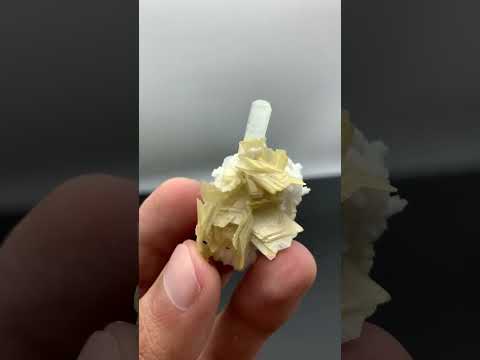
Combination of Aquamarine on Muscovite with Albite from Pakistan - Light-Yellow
This striking specimen from Pakistan features a beautiful combination of aquamarine, muscovite, and albite, presenting a vivid display of colors and textures. The aquamarine crystals, with their signature cool blue to blue-green hue, stand out against the soft silvery shimmer of muscovite, which forms...- $150.00
- $150.00
- Unit price
- per
-
Light-Yellow
-
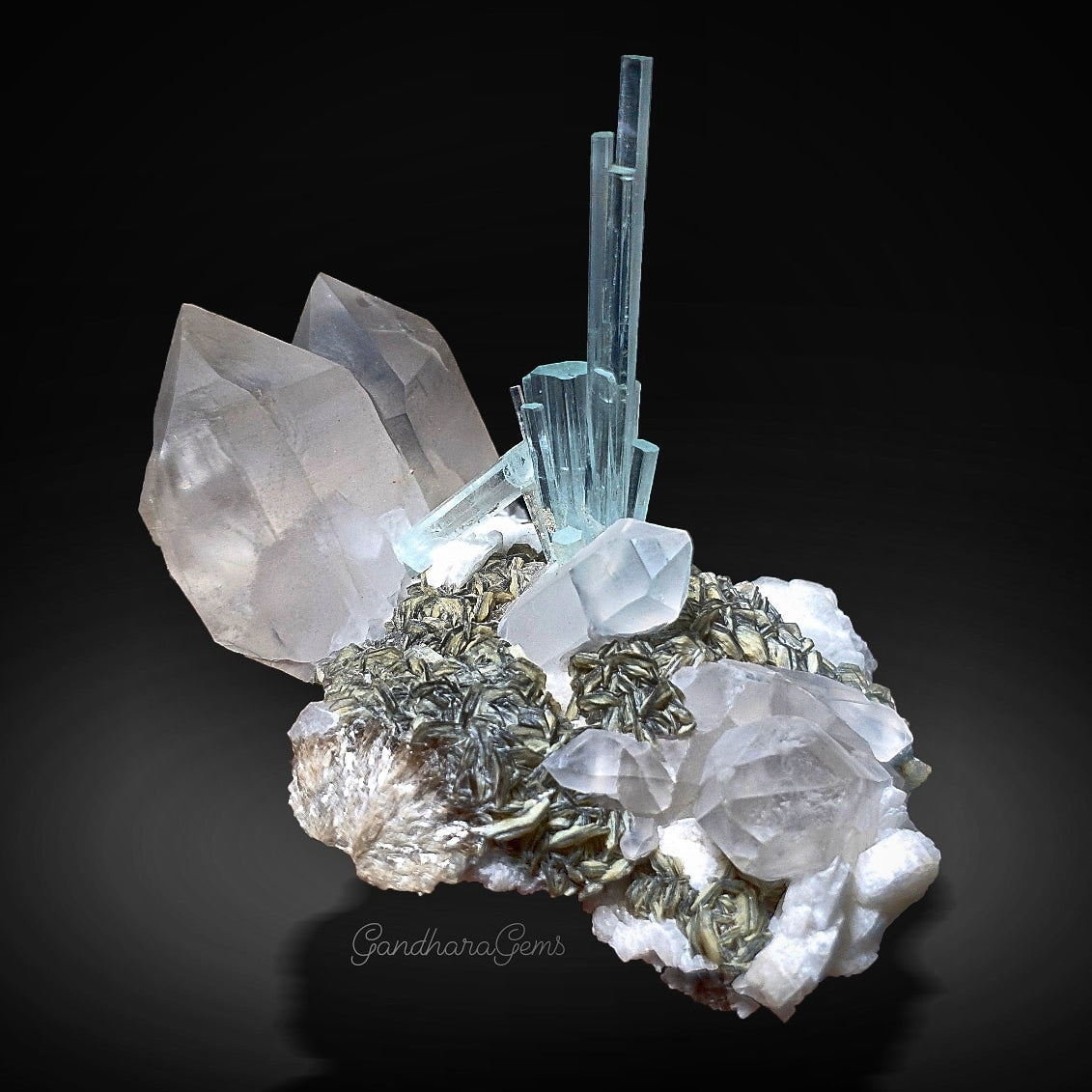
Aquamarine crystals cluster on Muscovite matrix from Pakistan - LightBlue
Aquamarine is a light blue color variety of beryl family forming prismatic and large crystals as rarely on matrix. This particular specimen is an exceptional example for the species featuring a gorgeous gem cluster of multiple fatty crystals shooting out of silver-gray Muscovite matrix....- $3,500.00
- $3,500.00
- Unit price
- per
-
LightBlue
Free Shipping on order over $80
100% Authentic & Certified
Save Big in 2026
Aquamarine Minerals
Aquamarine mineral specimens should be selected for the quality and character of the natural crystal itself rather than judged by the same standards used for faceted gemstones. Blue to greenish-blue color, crystal form, termination, transparency, matrix association, surface condition, size and overall composition all contribute to a specimen's appeal. A crystal does not need to be internally flawless to be an interesting mineral specimen, and inclusions, growth features or matrix can sometimes add geological character that would be considered undesirable in cutting material.
Sidebar



Aquamarine is the blue to greenish-blue variety of beryl and commonly develops in elongated six-sided prismatic crystals. That natural growth habit is central to specimen collecting because it shows the mineral as it formed rather than reducing it to polished color and brilliance. Buyers seeking finished jewelry stones should compare aquamarine gemstones, while lapidary buyers can consider aquamarine rough gems. This collection instead focuses on aquamarine as a natural mineral specimen.
Aquamarine Crystal Form: Why Prismatic Growth and Terminations Matter
One of aquamarine's most recognizable mineralogical features is its prismatic crystal habit. Well-developed crystals can show six-sided cross sections, relatively straight faces and natural terminations. These features allow collectors to appreciate how the beryl crystal grew rather than evaluating it only as raw material for cutting.
A complete termination can be visually desirable because it preserves the top of the natural crystal, but a broken or incomplete specimen is not automatically uninteresting. Large crystal sections, unusual growth forms, attractive color or significant matrix relationships can still create strong specimens even when the termination is imperfect.
Surface condition also matters. Natural etching, growth markings and contact areas may all reflect geological history. They should be distinguished from fresh chips or handling damage when possible. A collector should therefore look at the entire crystal architecture rather than reducing condition to a simple perfect-versus-imperfect judgment.
The main mineral specimens and crystals collection provides useful context for comparing aquamarine's prismatic beryl habit with other mineral species.
Aquamarine Mineral Color: Comparing Pale Blue and Greenish-Blue Crystals
Aquamarine typically appears light blue to greenish blue. Specimen color can look very different depending on crystal thickness, transparency, lighting and matrix. A thick crystal may appear noticeably stronger in tone than a thin one even when the underlying hue is similar.
The deepest blue specimen is not automatically the best choice. Color should be considered with transparency, crystal form, surface quality and the overall balance of the piece. A pale but exceptionally well-formed transparent crystal may be more appealing to one collector than a darker crystal with extensive damage.
Greenish components are also natural within aquamarine. Heat treatment can reduce greenish coloration in gem material and produce a bluer appearance, so buyers should not assume every blue aquamarine specimen necessarily represents an untreated original color unless that history is known.
For mineral collecting, natural visual character is often more important than trying to match the standardized appearance associated with jewelry.
Aquamarine Transparency and Inclusions: When Internal Features Add Specimen Character
Faceted aquamarine is often prized for high transparency, but mineral specimens should not be evaluated by exactly the same standard. Internal tubes, fractures, mineral inclusions, growth features and zoning can all provide information about how a crystal formed.
A highly transparent aquamarine crystal can be visually striking because light travels through the prismatic form and reveals its interior. A more included specimen can be equally interesting when those features are distinctive or when the crystal remains attractive as part of a larger mineral association.
Damage needs to be considered separately from natural inclusions. An internal growth feature formed with the crystal is not the same as a recent chip created during mining, transport or handling.
Collectors should therefore assess clarity according to how the internal features affect the specimen's beauty and geological character, rather than expecting the appearance of an eye-clean faceted gemstone.
Aquamarine Matrix Specimens: How Host Rock Changes the Character of a Piece
Some aquamarine specimens occur attached to matrix or associated with other minerals. Matrix can provide geological context and create a more complex display piece because the aquamarine remains connected to part of its original mineral environment.
The quality of a matrix specimen depends on composition rather than on crystal size alone. A modest aquamarine crystal placed naturally on an attractive matrix can produce a more visually balanced specimen than a much larger isolated crystal. Multiple crystals, contrasting colors and the orientation of the main aquamarine can all influence presentation.
Matrix should also be checked for stability. Delicate associated minerals or narrow contact points may require more careful handling than a robust single crystal. Buyers planning display should therefore consider how the specimen will be stored and supported, not only how it looks in a photograph.
Aquamarine Crystal Size vs Overall Specimen Quality
Large aquamarine crystals can be impressive, but size is only one part of mineral specimen quality. A smaller crystal with complete form, attractive color and minimal damage can be more compelling than a much larger piece with poor termination or extensive breakage.
Dimensions are often more useful than weight for understanding the visual scale of a specimen. Length, width and height tell a collector how the piece will occupy physical space and whether it fits a cabinet, display stand or existing collection arrangement.
Weight becomes especially difficult to compare between matrix and non-matrix pieces because host rock may account for a significant portion of the total mass. A heavier matrix specimen therefore should not automatically be treated as containing more or better aquamarine.
Buyers should judge the entire composition, including the relationship between crystal size, matrix and overall visual balance.
Natural Aquamarine Minerals vs Rough Aquamarine for Cutting
Mineral specimens and lapidary rough can sometimes overlap physically, but the buying objectives are different. Cutting rough is chosen largely for recoverable gemstone volume, transparency, color and internal structure. A mineral specimen is chosen for natural crystal form, surface features, matrix relationships and preservation.
A beautiful terminated aquamarine crystal may be a poor candidate for cutting simply because transforming it would destroy the very characteristics that make it interesting as a specimen. Conversely, an irregular broken crystal section with an excellent transparent interior may have little specimen appeal but strong lapidary potential.
Keeping these goals separate helps buyers avoid destroying a visually or mineralogically interesting crystal merely to recover a smaller faceted gemstone.
The existing natural aquamarine and blue beryl article provides additional gemstone background, while specimen buying should remain centered on natural form and condition.
Aquamarine Hardness and Specimen Durability
Aquamarine has a Mohs hardness of 7.5 to 8, giving intact crystal surfaces good resistance to scratching compared with many softer minerals. Hardness does not make every specimen difficult to damage, however. Crystals may contain fractures, exposed terminations, narrow matrix attachment points or delicate associated minerals.
A specimen should therefore be handled by its most structurally secure area rather than by projecting crystals. Even a hard mineral can chip if dropped or struck, and a beautiful termination can be permanently damaged by a relatively small impact.
Matrix specimens can require additional care because the host minerals may be softer or more fragile than aquamarine itself. The durability of the entire specimen is therefore determined by its weakest component rather than by the hardness of beryl alone.
Aquamarine Treatments and Natural Specimen Appearance
Heat treatment is well known in aquamarine because it can reduce greenish coloration and produce a bluer appearance. For collectors interested in mineral specimens, treatment history can be especially relevant when the goal is to preserve or understand natural mineral color.
The term “natural aquamarine” establishes geological origin but does not automatically confirm that no treatment has occurred after mining. When treatment status is important, buyers should rely on available disclosure or appropriate testing rather than assuming that an uncut crystal must be untreated.
Gandhara Gems' authenticity guarantee provides relevant purchasing context concerning gemstone and mineral identity.
Aquamarine Origins: Why Locality Should Be Documented Rather Than Assumed
Aquamarine occurs in multiple gem-producing regions, and locality can add interest to a mineral specimen when it has been reliably documented. Crystal shape, matrix and inclusions may sometimes provide clues, but visual appearance alone should not be used to make unsupported geographic origin claims.
Two aquamarine crystals from different regions can look similar, while specimens from the same region can vary substantially. Origin should therefore be treated as provenance information rather than something that can be confidently inferred from color or shape.
For collectors who value locality, documented source information can become part of the specimen's identity. When no reliable locality is provided, the crystal should be appreciated according to its observable mineralogical features rather than assigned a speculative origin.
Displaying and Caring for Aquamarine Mineral Specimens
Aquamarine's color is generally stable to ordinary light, but mineral specimens should still be protected from unnecessary heat, impact and harsh cleaning. A crystal with fractures or liquid inclusions can require more conservative cleaning than a flawless polished gemstone.
Simple dust removal is often preferable to aggressive cleaning, especially for specimens with matrix or associated minerals. Before using water, ultrasonic equipment or other methods, consider the stability of every mineral present on the piece.
Storage should prevent crystals from knocking against harder objects or one another. A specimen with a prominent termination may benefit from secure placement where it cannot tip or strike the side of a display cabinet.
The Gandhara Gems gemstone care information provides useful general guidance, although unusual matrix specimens may require care tailored to their complete mineral composition.
Buying Aquamarine Mineral Specimens Online: What to Compare Before Ordering
Start with the qualities you want from a specimen. If natural crystal form is the priority, compare prism development, termination, surface condition and overall symmetry. If color is most important, consider hue and saturation together with thickness and transparency. For matrix specimens, evaluate how naturally and securely the aquamarine sits within the complete composition.
Study photographs for chips, contact areas, healed or internal fractures and the condition of exposed terminations. Check dimensions rather than relying on weight alone, especially when comparing isolated crystals with matrix pieces.
Photography can also make pale blue minerals appear stronger or weaker depending on lighting and display settings, so accurate color presentation and realistic expectations matter. Gandhara Gems' shipping information explains applicable order considerations, while the return policy provides the relevant terms when purchasing mineral specimens online.
Aquamarine Mineral Specimen FAQs
Is aquamarine a mineral or a gemstone?
Aquamarine is the blue to greenish-blue variety of the mineral beryl. It can be collected as a natural mineral crystal or cut and polished as a gemstone.
What makes a good aquamarine mineral specimen?
Important characteristics can include attractive color, well-developed crystal form, intact termination, transparency, interesting inclusions, minimal damage and an appealing relationship with matrix when present.
Is darker blue aquamarine always a better mineral specimen?
No. Color is only one factor. A paler crystal with exceptional form, transparency or matrix association may be more desirable to a collector than a darker but damaged crystal.
Are inclusions bad in aquamarine specimens?
Not necessarily. Natural inclusions and growth features can add geological interest. They become more problematic when they weaken the specimen or significantly obscure characteristics the buyer values.
Is aquamarine hard enough for display?
Aquamarine has Mohs hardness 7.5 to 8, but crystals can still chip or break if struck. Matrix or associated minerals may also be more fragile than the aquamarine itself.
Can natural aquamarine be heat treated?
Yes. Heat treatment can be used to reduce greenish coloration and create a bluer appearance. Natural origin and treatment status should therefore be considered separately.
Should I buy an aquamarine specimen by weight?
Not by weight alone. Crystal form, dimensions, condition, color, termination and matrix composition usually provide more useful information about specimen quality.
Choose Aquamarine Minerals by Natural Form, Color and Specimen Character
Compare the available aquamarine specimens by blue to greenish-blue color, crystal form, termination, transparency, inclusions, matrix relationship, physical dimensions and visible condition. Choose a complete prismatic crystal when natural form matters most, or a matrix specimen when geological composition and visual balance are the priority. Rather than selecting the heaviest piece automatically, choose the aquamarine mineral whose preserved natural features make it the strongest fit for the collection or display you are building.

Recently Viewed Products
Example product title
- $19.99
- $19.99
- Unit price
- / per
Example product title
- $19.99
- $19.99
- Unit price
- / per
Example product title
- $19.99
- $19.99
- Unit price
- / per
Example product title
- $19.99
- $19.99
- Unit price
- / per
Example product title
- $19.99
- $19.99
- Unit price
- / per
Example product title
- $19.99
- $19.99
- Unit price
- / per
Example product title
- $19.99
- $19.99
- Unit price
- / per
Example product title
- $19.99
- $19.99
- Unit price
- / per
Example product title
- $19.99
- $19.99
- Unit price
- / per
Example product title
- $19.99
- $19.99
- Unit price
- / per
- Choosing a selection results in a full page refresh.


