

-
Interconnected Faden Quartz Combined Crystals Specimen from Pakistan - White
This Faden Quartz crystal specimen from Pakistan is a stunning example of natural mineral beauty. Mined from the rich geological regions of the Himalayas, this specimen features pristine, transparent crystals with sharp terminations and excellent clarity. The Faden quartz points are well-formed, showcasing the...- $350.00
- $350.00
- Unit price
- per
-
White
-
Sculptural Of Clear Quartz Crystals Specimen from Pakistan - White
This Clear Quartz crystal specimen from Pakistan is a stunning example of natural mineral beauty. Mined from the rich geological regions of the Himalayas, this specimen features pristine, transparent crystals with sharp terminations and excellent clarity. The quartz points are well-formed, showcasing the hexagonal...- $850.00
- $850.00
- Unit price
- per
-
White
-
Bi color Double Terminated Smoky Blue Quartz Crystal with Albite from Afghanistan - grayish_blue
This stunning bi color double terminated Smoky Blue Quartz crystal from Afghanistan is a rare and captivating specimen, featuring a unique fusion of smoky and blue hues that create a mesmerizing visual contrast. The crystal exhibits well-defined terminations on both ends, showcasing its natural...- $220.00
- $220.00
- Unit price
- per
-
grayish_blue
-
Couple of Morganite Crystals with Schorl on Quartz from Pakistan - Light-Yellow
This striking mineral specimen from Pakistan features a stunning combination of soft morganite crystals elegantly perched alongside deep black schorl tourmaline on a pristine quartz matrix. The morganite, a gem variety of beryl, displays excellent clarity with a delicate blush hue that contrasts beautifully...- $450.00
- $450.00
- Unit price
- per
-
Light-Yellow
-
Specimen of Black Tourmaline Crystal on Smoky Quartz from Pakistan - Black
A captivating display of nature's artistry, a stunning composition of Black Tourmaline on Albite with Smoky Quartz emerges from the depths of Pakistan's mineral-rich landscapes. The deep, enigmatic hues of Black Tourmaline seamlessly contrast with the pristine beauty of Albite, creating a visually striking...- $650.00
- $650.00
- Unit price
- per
-
Black
-
isolated double terminated Quartz on Feldspar with Garnet from Pakistan - White
This specimen is a stunning combination of natural minerals, featuring a well-formed, isolated, double-terminated quartz crystal perched elegantly on a matrix of feldspar, accented with vibrant garnet crystals. Originating from the mineral-rich regions of Pakistan, the quartz displays remarkable clarity, with sharp, well-defined terminations...- $450.00
- $450.00
- Unit price
- per
-
White
-
Double Terminated Faden Quartz Crystals on Calcite from Pakistan - Brown
This Faden Quartz specimen from Pakistan exhibits a striking clustering of crystals on its matrix, showcasing the unique geological formation of the region. The Faden Quartz crystals, characterized by their distinct milky-white appearance and thread-like inclusions, form a captivating arrangement, seemingly intertwining and intersecting...- $180.00
- $180.00
- Unit price
- per
-
Brown
-
Impressive Microcline Feldspar with Quartz and Cleavelandite from pakistan - White
The impressive Microcline Feldspar specimen from Pakistan is a stunning geological marvel that captivates with its intricate composition and aesthetic appeal. The dominant feature of this specimen is the exquisite Microcline Feldspar crystals, displaying a captivating interplay of colors ranging from delicate greens to...- $650.00
- $650.00
- Unit price
- per
-
White
-
isolated elongated gem Kunzite crystals on Smoky Quartz from Afghanistan - Purple
In a captivating display of Earth's mineral wonders, a stunning composition emerges from the rugged landscapes of Afghanistan – isolated, elongated Kunzite crystals delicately cradle upon the sublime canvas of Smoky Quartz. Each Kunzite gem, with its ethereal pastel hues ranging from delicate pinks...- $980.00
- $980.00
- Unit price
- per
-
Purple
-
Tabular Faden Quartz crystals aggregate with Iron-oxide coating from Pakistan - Brown
Faden Quartz is a remarkable and aesthetically captivating variety of quartz crystal, distinguished by its unique physical characteristics and stunning visual appeal. The term "Faden" is derived from the German word for "thread," and this name perfectly encapsulates the defining feature of these crystals....- $220.00
- $220.00
- Unit price
- per
-
Brown
-
Aggregate elongated Faden Quartz crystal cluster on matrix from Pakistan - White
The Cluster of Quartz crystals, originating from the majestic lands of India, is a true masterpiece of nature. This breathtaking cluster exhibits a stunning display of clear and radiant quartz crystals, elegantly shooting out of their intricate matrix with a remarkable grace. Each crystal...- $580.00
- $580.00
- Unit price
- per
-
White
-
Sculptural and impressive elongated iron coated Quartz from Pakistan - Orange
Iron-oxide coated Faden Quartz is a remarkable and aesthetically captivating variety of quartz crystal, distinguished by its unique physical characteristics and stunning visual appeal. The term "Faden" is derived from the German word for "thread," and this name perfectly encapsulates the defining feature of...- $220.00
- $220.00
- Unit price
- per
-
Orange
-
Iron-oxide coated Faden Quartz from Pakistan - Orange
Iron-oxide coated Faden Quartz is a remarkable and aesthetically captivating variety of quartz crystal, distinguished by its unique physical characteristics and stunning visual appeal. The term "Faden" is derived from the German word for "thread," and this name perfectly encapsulates the defining feature of...- $120.00
- $120.00
- Unit price
- per
-
Orange
-
Shop the Finest Quality Quartz Crystal Minerals from Pakistan Limited Stock Available - White
This is an exceptional and sculptural example of pointed terminated Quartz crystal cluster with marked transparency. Its well crystalized all around with 360-degree view all around. It has magnificent vitreous wet luster with glassy faces and excellent transparency. It's an indeed unique find of...- $120.00
- $120.00
- Unit price
- per
-
White
-
Rare Morion Quartz with metallic luster from Zagi Mountains, KPK Province, Pak - Black
Morion Quartz, sourced from the Zagi Mountains in HameedAbad Kafoor Dheri, KPK Province, Pakistan, is a captivating raw stone. It exhibits a deep black color with a mesmerizing metallic luster. The stone's raw and natural texture adds to its allure. This unique variety of...- $120.00
$120.00- $120.00
- Unit price
- per
-
Black
-
Saturday Color Smoky Quartz On White Albite - Brownish Red
This is beautiful and well balanced Smoky Quartz crystal aesthetically positioned on white Albite matrix. The smoky quartz crystal is well crystalized all around with pointed terminations. It has excellent transparency with saturated smoky color and vitreous wet luster. It has more like dauphine...- $220.00
- $220.00
- Unit price
- per
-
Brownish Red
-
Galaxy Inside Quartz, Nicely Terminated Crystal - White
This is lusterious and mirror gem Quartz with pointed termination. It's well crystalized all around with lovely intergrown crystal form. It has magnificent mirror luster, excellent transparency and exceptionally glowy inside. Its well crystalized all around, natural rehealed on the bottom of crystal. ...- $145.00
- $145.00
- Unit price
- per
-
White
-
Pointed Terminated lustrous Quartz on Matrix - White
Presenting this beautiful and very well balanced pointed terminated smokey quartz on matrix. The quartz crystal has magnificent vitreous luster, very good transparency and interesting cloudy inclusion. The crystal is so well crystalized all around and nicely positioned on matrix. Its an indeed attractive...- $120.00
- $120.00
- Unit price
- per
-
White
Free Shipping on order over $80
100% Authentic & Certified
Save Big in 2026
Quartz Minerals
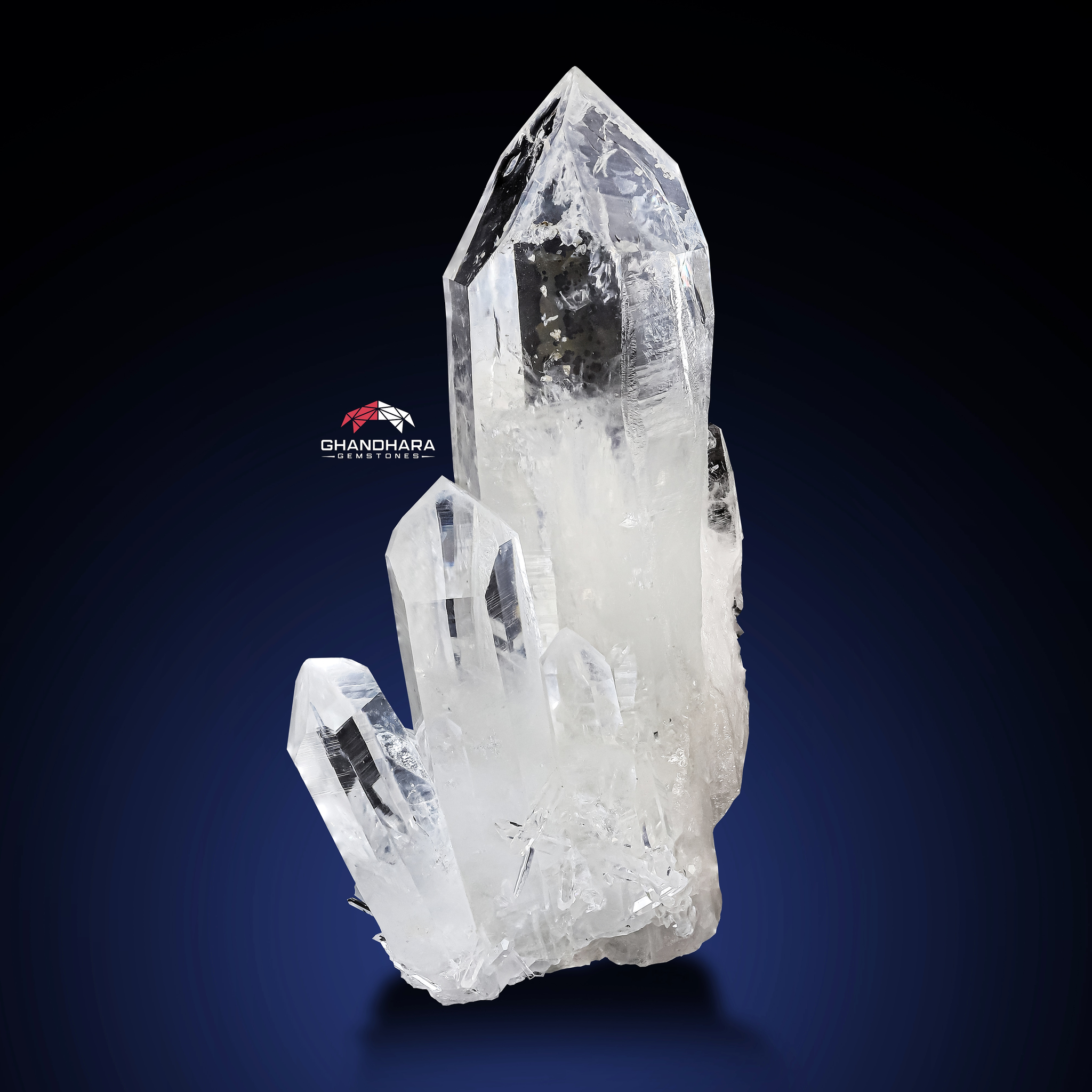
Quartz mineral specimens are best chosen by examining natural crystal form, termination quality, transparency, inclusions, cluster composition, matrix association and physical condition rather than simply selecting the largest or clearest piece. Quartz is one of the most familiar mineral species, yet individual specimens can look dramatically different because crystal size, growth habit, color, internal features and relationships between neighboring crystals vary from one occurrence to another. A sharply terminated single crystal can appeal to a collector for its symmetry, while a complex cluster may be more interesting because dozens of crystals reveal several generations or directions of natural growth within one specimen.
Sidebar




This collection focuses on quartz as a natural mineral specimen rather than simply as material waiting to be polished. Buyers who prefer finished stones with established face-up dimensions can compare quartz gemstones, while cutters interested in selecting unpolished material for faceting, carving or cabochons may find rough quartz gemstones more appropriate. Preserved quartz crystals and clusters deserve their own buying standards because their natural surfaces, terminations, inclusions and relationships with matrix are qualities that cutting would permanently remove.
Quartz Crystal Form: Why Prismatic Growth and Natural Terminations Matter
Quartz commonly develops crystals with six-sided prismatic bodies ending in pyramidal faces, creating the familiar pointed form associated with natural quartz. Although the underlying crystallography is more complex than the outward six-sided appearance suggests, this recognizable habit makes crystal definition one of the first characteristics collectors notice. A specimen with cleanly developed faces, recognizable prism edges and an intact termination often communicates its natural growth more clearly than a larger piece whose crystal form has been heavily broken or obscured.
Termination condition deserves particular attention because the tip of a quartz crystal is often a visual focal point. An intact termination can give the specimen a sense of completeness, while minor contact areas may simply show where another crystal or surrounding rock interrupted growth. Those natural contacts should be distinguished from fresh chips produced after extraction, since a contact surface belongs to the specimen's geological history whereas recent damage removes part of the original structure.
Some collectors prefer perfectly isolated crystals, while others value intergrown forms where several quartz crystals share a base or partially overlap. Neither type is universally better. The useful question is whether the specimen preserves an appealing natural arrangement and whether its most important crystal faces remain sufficiently intact for the form to be appreciated.
Quartz Crystal Clusters: Evaluating Balance, Terminations and Visual Depth
A quartz cluster should be judged as a complete composition rather than as the sum of individual crystal sizes. Several moderately sized crystals pointing in complementary directions can produce a far more engaging specimen than one large central crystal surrounded by broken or visually confusing growth. Good clusters often have a recognizable focal area while retaining enough secondary crystals to create depth and natural complexity.
The condition of those secondary crystals matters because a cluster can contain dozens of exposed terminations. Expecting every small crystal to be flawless may be unrealistic, particularly in complex natural pieces, but significant damage to the central or most visually dominant crystals can change the specimen's character. Photographs from several directions are especially useful because one frontal image may hide broken rear crystals, narrow attachment points or an unstable base.
Buyers interested in comparing quartz with other naturally preserved species can move naturally through the wider selection of mineral specimens and crystals, where differences in crystal habit become easier to appreciate. Quartz's prismatic growth and frequent clustering create a very different visual structure from cubic fluorite, equant garnet or elongated tourmaline.
Quartz Clarity, Veils and Inclusions: When Internal Features Increase Specimen Interest
Quartz can be exceptionally transparent, but perfect optical clarity is not a requirement for an interesting mineral specimen. Natural crystals may contain veils, internal fractures, fluid-related features, mineral inclusions, growth zones and cloudy regions, and these characteristics can reveal aspects of how the crystal developed. Transparent areas allow those features to be observed from several angles, creating internal depth that would not exist in a completely featureless crystal.
The location and character of inclusions matter more than their mere presence. A fine internal veil may catch light attractively without weakening the crystal, while a large surface-reaching fracture through an exposed termination may represent a genuine structural concern. Mineral inclusions can also become a central reason to collect a particular quartz specimen when they are visually distinct and naturally enclosed.
Collectors should therefore avoid applying the clarity standards used for faceted jewelry to natural quartz specimens. The objective is not necessarily to find a crystal without any internal feature, but to choose one where transparency, inclusions and natural structure combine in a way that supports the intended display or collecting purpose.
Quartz Color and Natural Variety: Clear, Smoky and Colored Crystal Specimens
Quartz occurs in a wide range of appearances, including colorless rock crystal as well as naturally colored varieties associated with smoky quartz, amethyst and other forms of crystalline quartz. Color can add considerable visual interest to a mineral specimen, particularly when saturation changes through the crystal or when several growth zones produce different intensities from the base to the termination.
Thickness influences how strongly that color appears. A smoky crystal may look substantially darker through its thick central section than around thin edges, while pale color can become more obvious when several crystals overlap within a cluster. Lighting also changes perception, so a specimen photographed against a bright background may appear lighter or more transparent than the same crystal under ordinary room illumination.
Color should therefore be considered together with natural form rather than used as a standalone quality ranking. A pale crystal with exceptional termination and surface preservation can make a stronger specimen than a darker example whose important faces are badly damaged. The most suitable choice depends on whether the collector values crystal architecture, color, inclusions or the complete visual relationship between those characteristics.
Quartz Matrix Specimens: How Host Rock Changes the Character of a Collection Piece
Quartz can grow directly from host rock or alongside other minerals, and preserving that matrix can provide valuable geological context. The host material may create strong visual contrast with transparent crystals and can show how a cluster was naturally positioned before extraction. In some specimens, the matrix is integral to the composition; in others, a large amount of host rock can visually overwhelm relatively small quartz crystals.
A balanced matrix specimen usually allows the quartz to remain the clear focus while preserving enough surrounding rock to explain its natural setting. Several small crystals arranged across a contrasting matrix can be highly attractive even if no single crystal is especially large. Conversely, one dominant terminated crystal emerging from matrix can create a strong specimen when its position and orientation allow the natural form to be seen clearly.
Stability is just as important as aesthetics. Quartz itself has good scratch resistance, but a fragile host rock may crumble or break far more easily. Crystals connected to matrix by narrow bases can also be vulnerable to leverage during handling, so a specimen should always be lifted and supported by its strongest structural area.
Quartz Hardness, Fracture and Practical Specimen Care
Quartz has Mohs hardness 7, making it resistant to scratching from many common objects and harder than minerals such as fluorite or calcite. Its cleavage is poor to indistinct, while broken surfaces characteristically show conchoidal fracture. These properties help explain quartz's widespread use in jewelry and lapidary work, but they should not be interpreted to mean that natural crystal specimens cannot chip or fracture.
Terminations and sharp edges remain vulnerable to impact, particularly in clusters where slender crystals project away from the main base. Pre-existing internal fractures can also extend if a specimen is dropped or subjected to excessive mechanical pressure. The safest approach is to handle a cluster by its solid base or matrix and avoid using exposed crystal points as grips.
Cleaning should take the complete specimen into account rather than quartz alone. A simple isolated quartz crystal may tolerate handling that would be inappropriate for a cluster containing fragile associated minerals or unstable matrix. The site's gemstone care information provides useful general principles, while unusually complex specimens should always be treated according to their most sensitive component.
Quartz Mineral Identification and Authenticity: What Appearance Can and Cannot Confirm
The familiar shape and hardness of quartz often make well-developed crystals relatively recognizable, but appearance alone cannot answer every question about variety, treatment, coatings or associated minerals. Some altered commercial crystals can display colors or surface effects created after natural growth, while naturally included quartz can be marketed under numerous descriptive trade names that do not represent separate mineral species.
Collectors should therefore focus first on the observable mineral and any reliable information accompanying the specimen. A natural crystal shape does not automatically prove that every visible surface or color is untreated, just as a dramatic trade name does not establish a scientifically distinct variety.
When mineral identity is important to the purchase, Gandhara Gems' authenticity guarantee provides relevant purchasing context. Buyers building a systematic collection should also retain any reliable locality or specimen information supplied with the piece so that those details remain associated with the crystal over time.
Quartz Mineral Size and Weight: Choosing a Specimen for Real Display Space
Quartz can occur in crystals ranging from tiny points to extremely large masses, which makes physical dimensions particularly important when comparing specimens online. Weight tells only how much the piece weighs; it does not reveal whether that mass is concentrated in a compact crystal, spread across a wide cluster or dominated by host matrix.
Length, width and height provide a more practical understanding of display scale. A wide cluster may require significantly more shelf space than a taller single crystal of similar weight, while delicate projecting crystals can increase the safe clearance needed around the piece. Buyers should therefore think about the actual location where the specimen will be displayed before allowing total weight to drive the choice.
This becomes especially important with matrix specimens because the host rock can contribute considerably to mass without increasing the size or quality of the visible quartz. A lighter specimen with cleaner composition and stronger terminations may provide greater visual presence than a substantially heavier piece whose extra weight is primarily matrix.
Buying Quartz Mineral Specimens Online: Compare the Entire Natural Structure
Before choosing a quartz mineral specimen, examine how the individual crystals relate to one another, whether the main terminations are intact, how transparent or included the piece appears, and whether matrix contributes positively to the overall composition. Photographs from several angles are particularly valuable with clusters because the strongest frontal view may not reveal rear damage, unstable attachment points or the depth of the complete structure.
Actual dimensions should be considered alongside photographs so that crystal scale is understood realistically. If the specimen will be placed inside a cabinet, measure available height and width rather than relying on visual impressions from close-up photography. Buyers should also consider whether the base is naturally stable or whether a stand may be useful for displaying the preferred orientation safely.
Unique crystal specimens require sensible purchase and delivery planning because another piece will rarely be identical. Gandhara Gems' shipping information explains the applicable order process, while the return policy provides the relevant terms for evaluating the specimen after it arrives.
Quartz Mineral Specimen FAQs
What makes a good quartz mineral specimen?
A good quartz mineral specimen combines attractive natural crystal form with appropriate preservation for the type of piece being collected. Sharp or clearly readable faces, intact focal terminations, appealing transparency or inclusions, balanced cluster arrangement and a useful relationship with matrix can all contribute to its appeal. The best specimen is therefore not necessarily the largest or clearest one, because natural composition and condition often matter just as much as size.
Are inclusions undesirable in natural quartz crystals?
Inclusions are not automatically undesirable because mineral specimens are valued partly for the natural features they preserve. Veils, mineral crystals, fluid-related features and growth structures can create visual interest and provide evidence of the conditions under which the quartz formed. Structural fractures deserve more caution when they reach the surface or weaken a prominent termination, but the simple presence of internal features should not be treated as a defect by itself.
Is quartz durable enough for an open mineral display?
Quartz has Mohs hardness 7 and offers good resistance to ordinary scratching, but exposed terminations and slender cluster crystals can still chip if struck. A secure shelf or cabinet position should prevent the specimen from being knocked against neighboring minerals, and clusters should be handled by their strongest base rather than by individual points. Matrix specimens can require additional care because the host material may be considerably more fragile than quartz.
Is a completely clear quartz crystal better than a cloudy one?
Complete clarity is only one possible collecting preference. A transparent crystal can display internal structures beautifully, while a cloudy, included or zoned specimen may offer more geological character and a distinctive visual identity. Crystal form, terminations, inclusions, matrix and preservation should therefore be evaluated together instead of using clarity as a single measure of quality.
Should I choose a quartz cluster according to weight?
Weight is rarely the best primary measure for a quartz cluster because it does not describe how the crystals are distributed or how much of the mass comes from matrix. Physical dimensions, focal crystal size, termination quality and the overall arrangement provide a more useful picture of how the specimen will look on display. A lighter but well-balanced cluster can easily be more compelling than a much heavier piece with limited visible crystal development.
Choose Quartz Minerals by Crystal Architecture, Preservation and Display Character
Compare the quartz mineral specimens currently available by crystal definition, termination quality, transparency, inclusions, cluster composition, matrix relationship and actual physical dimensions. A collector seeking classic crystal geometry may prefer an isolated, sharply terminated point, while someone who values natural complexity may choose a cluster showing several generations of growth or interesting mineral associations. Rather than selecting according to weight or perfect clarity alone, choose the individual quartz specimen whose preserved natural structure, visual character and practical display size best fit the collection you are building.

Recently Viewed Products
Example product title
- $19.99
- $19.99
- Unit price
- / per
Example product title
- $19.99
- $19.99
- Unit price
- / per
Example product title
- $19.99
- $19.99
- Unit price
- / per
Example product title
- $19.99
- $19.99
- Unit price
- / per
Example product title
- $19.99
- $19.99
- Unit price
- / per
Example product title
- $19.99
- $19.99
- Unit price
- / per
Example product title
- $19.99
- $19.99
- Unit price
- / per
Example product title
- $19.99
- $19.99
- Unit price
- / per
Example product title
- $19.99
- $19.99
- Unit price
- / per
Example product title
- $19.99
- $19.99
- Unit price
- / per
- Choosing a selection results in a full page refresh.


