

-
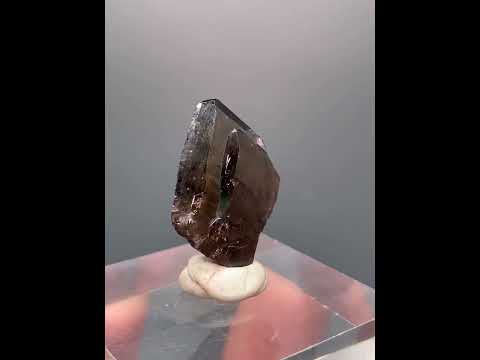
color changing Axinite blade crystal with excellent transparency from Pakistan - Brown
This is an attractive and colorful example of gem Axinite crystal with secondary crystals shooting out along the main crystal. It has magnificent vivid dark smoky color, well crystalized all around with 360-degree view. It has nice Pleochroism effect of color change with a...- $120.00
- $120.00
- Unit price
- per
-
Brown
-
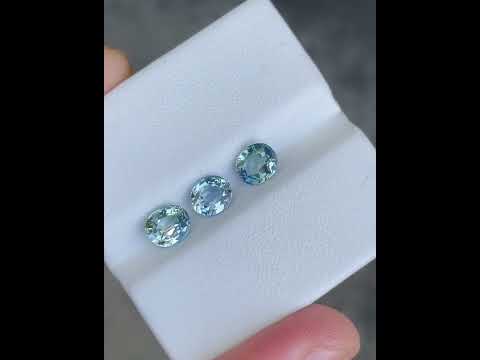
3.55 carats Blue Oval Sapphire Natural Gemstones Set from Sri Lanka - LightBlue
Indulge in the timeless allure of the 3.55 carats Blue Oval Sapphire Natural Gemstones Set, sourced from the pristine mines of Sri Lanka. This captivating ensemble boasts a trio of exquisite blue sapphires, each carefully crafted into an elegant oval shape. The intense and...- $730.00
- $730.00
- Unit price
- per
-
LightBlue
-
Gorgeous Golden Color Pyrite Cluster from Dara-I-Adam Khail, KPK Province, Pakistan - Yellowish Golden
Pyrite is a common mineral species mostly found in everywhere around the worldwide localities. This particular specimen is an attractive and showy example featuring lovely golden color cluster of dendritic shape Pyrite crystals. The crystals are shooting out in almost all directions with 360-degree...- $180.00
- $180.00
- Unit price
- per
-
Yellowish Golden
-
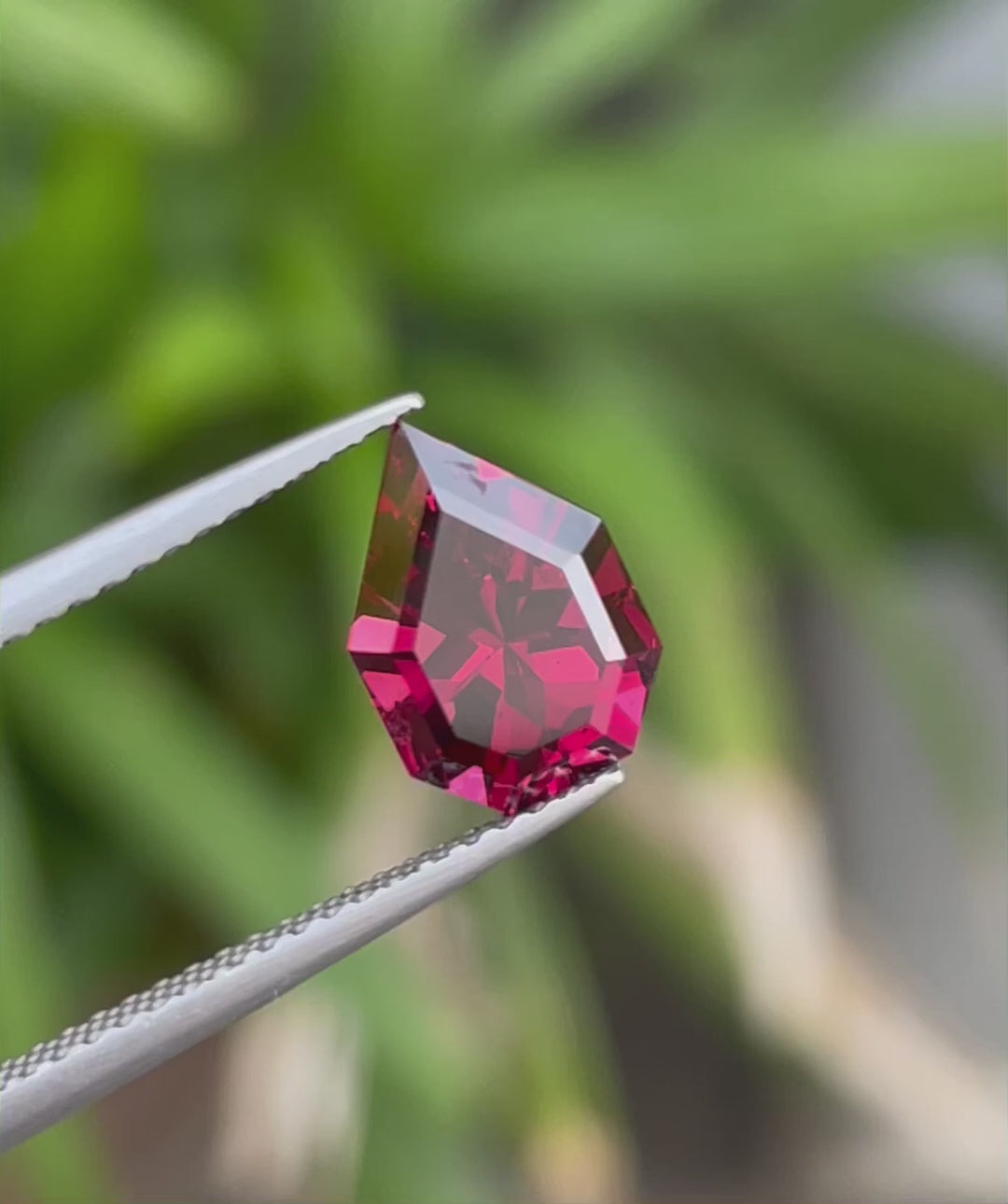
Gorgeous Deep Red Malawi Garnet Stone - Red
Gorgeous Deep Red Malawi Garnet Stone, available for sale at wholesale price, loose gemstone, flawless SI Clarity, 2.70 carats certified garnet gemstone from Malawi. Product Information: Gemstone Type Gorgeous Deep Red Malawi Garnet Stone Weight 2.70 carats Dimensions 9.9 x 6.9 x 5.5 mm...- $300.00
- $300.00
- Unit price
- per
-
Red
-
Hot Pink Loose Rhodolite Garnet Gemstone - Pink
Hot Pink Rhodolite Garnet Gemstone, available for sale at wholesale price, flawless SI clarity, loose gemstone, 4.17 carats, certified garnet gemstone from Africa. Hot Pink Rhodolite Garnet Gemstone Information: Gemstone Type Hot Pink Rhodolite Garnet Gemstone Weight 4.17 carats Dimensions 10.9 x 7.8 x...- $310.00
- $310.00
- Unit price
- per
-
Pink
-
Pink Natural kunzite Gemstone For Ring - Purplish Pink
Hot Pink Natural kunzite Gemstone For Ring, available for sale, eye clean clarity, 11.48 carats certified loose kunzite gemstone from Nigeria. Hot Pink Natural kunzite Gemstone For Ring: Gemstone Type Hot Pink Natural kunzite Gemstone For Ring Weight 11.48 carats Dimensions 14.7 x 10.7...- $420.00
- $420.00
- Unit price
- per
-
Purplish Pink
-
Multi-Color Stones Natural Sapphire Gemstone From Africa - White
Colorful Natural Sapphire From Africa, available for sale at wholesale price, natural high-quality flawless loose gemstone, certified sapphire gemstone. Colorful Natural Sapphire From Africa Information: Gemstone Type Colorful Natural Sapphire From Africa Weight 3.48 carats Each weight 0.78, 0.99, 0.85 and 0.84 carats Clarity...- $220.00
- $220.00
- Unit price
- per
-
White
-
Interesting Loose Purple Spinel - Purple
Interesting Loose Purple Spinel, available for sale at wholesale price, Emerald cut, Rectangular shape 1.50 carats loose certified spinel from Burma. Product Information: Gemstone Type Interesting Loose Purple Spinel Weight 1.50 carats Dimensions 7.6 x 5.5 x 3.9 mm Clarity SI Shape Rectangular Cut...- $245.00
$0.00- $245.00
- Unit price
- per
-
Purple
-
Spectacular Frosted Cut Amethyst Gemstone - Purple
Spectacular Frosted Cut Amethyst Gemstone, available for sale, natural high-quality loose gemstone, Loupe Clean clarity, 29.25 carats certified Amethyst from Brazil. Product Information: Gemstone Type Spectacular Frosted Cut Amethyst Gemstone Weight 29.25 carats Dimensions 20.4 x 17.9 x 14.2mm Clarity Loupe Clean Shape Cushion...- $300.00
- $300.00
- Unit price
- per
-
Purple
-
7.45 carats Faceted Multi Colors Tourmaline Lot - Green
Buy 7.45 carats Faceted Multi Colors Tourmaline Lot from Afghanistan with SI to Eye Clean Clarity which is for sale at wholesale price. Product Information: Gemstone Faceted Multi Colors Tourmaline Lot Weight 7.45 carats Individual Weight 1.95, 1.90, 1.35, 1.10 and 0.95 carats Clarity...- $395.00
- $395.00
- Unit price
- per
-
Green
-
20.05 carats Faceted Sky Blue Topaz Gemstone - Blue
Buy 20.05 carats of Faceted Sky Blue Topaz Gemstone which is for sale at wholesale price. Product Information: Gemstone Name Faceted Sky Blue Topaz Gemstone Weight 20.05 carats Dimensions 15 x 15 x 11.1 mm Clarity Loupe Clean Treatment Heated Shape Asscher cut ...- $265.00
$280.00- $265.00
- Unit price
- per
-
Blue
-
4.60 carats Intense Blue Vietnam Loose Aquamarine from Vietnam - LightBlue
4.60 carats Intense Blue Vietnam Loose Aquamarine from Vietnam is for sale at best price. The lowest price of 4.60 carats Intense Blue Vietnam Loose Aquamarine from Vietnam is $210 Product Information: Weight 4.60 carats Dimensions 12.5 x 8.8 x 6.0 mm Treatment None...- $320.00
- $320.00
- Unit price
- per
-
LightBlue
-
4.95 carats Loos Elongated Asscher Cut Aquamarine - LightBlue
4.95 carats Loos Elongated Asscher Cut Aquamarine is for sale at best price. The lowest price of this 4.95 carats Loos Elongated Asscher Cut Aquamarine is $165. Elongated Asscher Cut Aquamarine Weight 4.95 carats Dimensions 11.8x8.9x6.9 mm Treatment none Locality Africa Clarity SI Transparency...- $165.00
- $165.00
- Unit price
- per
-
LightBlue
-
Amazing Brownish Red Tourmaline Stone - Brownish Red
Amazing Brownish Red Tourmaline Stone, Available For Sale At Wholesale Price Natural High Quality 1.85 Carats Natural Loose Tourmaline From Africa. Product Information: Product Name Amazing Brownish Red Tourmaline Stone Weight 1.85 carats Dimensions 9.1 x 5.2 x 4.5 mm Treatment Heated Locality Africa...- $150.00
- $150.00
- Unit price
- per
-
Brownish Red
-
Faceted Natural Loose Citrine - Yellow
Faceted Natural Loose Citrine from Africa is available at the best price on GandharaGems. It is 8.55 carats in weight and 14.7 × 9.5 mm in Dimensions. Product Information: Gemstone Type Faceted Natural Loose Citrine Weight 8.55 carats Dimensions 14.7 × 9.5 mm Clarity...- $150.00
$155.00- $150.00
- Unit price
- per
-
Yellow
Free Shipping on order over $80
100% Authentic & Certified
Save Big in 2026
Product of the Week
The Gandhara Gems Product of the Week gives buyers a focused way to examine one current selection without turning the buying process into a race through hundreds of unrelated stones. The featured item may change as the available inventory changes, so the value of this page lies in giving one gemstone, crystal, mineral specimen or jewelry piece enough attention for its real characteristics to be considered carefully. A featured position should never replace normal quality checks, and buyers should still look closely at color, dimensions, condition, clarity, crystal form, treatment information or other factors that apply to the individual product shown.

Sidebar






Natural gemstones and mineral specimens are not standardized factory products, which means one piece can differ materially from another even when both share the same mineral name. A faceted gemstone may stand apart because of its color and proportions, while a mineral specimen may deserve attention for preserved crystal form, matrix or an unusual natural association. The Product of the Week format is therefore intended to make one current piece easier to study, not to suggest that every buyer needs the same gemstone or that a featured product is automatically superior to the rest of the collection.
Why a Featured Gemstone Should Still Be Judged on Its Own Quality
A product can be highlighted because its color is attractive, its crystal form is interesting, its proportions work well for jewelry or it simply represents something worth noticing within the current inventory. None of those reasons eliminates the need to evaluate the piece according to the qualities that actually matter for its gemstone or mineral species. A buyer considering a transparent faceted stone should examine color, clarity, cut, weight and dimensions, while someone considering a mineral specimen should pay greater attention to crystal form, matrix, natural surfaces, damage and display size.
This distinction helps keep the buying process grounded in the item itself. A large carat weight does not automatically make a faceted gemstone the best choice if the cut hides much of that weight below the girdle, just as a large mineral specimen is not automatically stronger if the focal crystals are badly damaged. Natural objects reward closer comparison because their individual strengths and compromises cannot be reduced to one headline measurement.
Buyers who want to compare the featured item against a larger selection can move naturally into the current range of loose gemstones, where color, cut, clarity and dimensions can be considered across many different stones rather than only the single item highlighted here.
Examine the Product Photographs Before Relying on the Product Name
The product name identifies what is being offered, but photographs often provide the most immediate evidence of how the individual piece actually looks. With faceted gemstones, face-up images can reveal color distribution, brightness, windows, extinction and visible inclusions, while side views help show depth and overall proportions. Mineral specimens benefit from several angles because a single frontal view may hide contact surfaces, damaged edges, matrix relationships or the true depth of a crystal cluster.
Color should always be interpreted with realistic expectations. Studio lighting helps show details clearly, but gemstones can look somewhat different under daylight, warm indoor lighting or lower-intensity conditions. Transparent stones may also appear more saturated against one background than another. A careful buyer therefore combines photographs with the written specifications rather than expecting either source to tell the complete story independently.
The same approach applies to surface condition. Natural crystal textures, inclusions and growth features can be part of the appeal of a specimen, while chips or fractures deserve separate consideration. A featured product should be appreciated for what it actually is rather than for an imagined version created by a title or promotional label.
Compare Dimensions and Weight According to the Type of Product Featured
Weight becomes useful only when it is interpreted alongside dimensions. A faceted gemstone's carat weight does not reveal its face-up spread, and a mineral specimen's gram weight does not show how large it will look in a cabinet. A deep stone can weigh more than another gem that appears larger from above, while a dense compact mineral can be heavier than a physically larger specimen of a lower-density species.
For jewelry stones, length, width and depth help determine whether the gemstone will fit an existing setting or whether a new piece of jewelry can be designed around it. Shape and length-to-width ratio also influence visual character, particularly with ovals, pears, cushions and rectangular cuts. For mineral specimens, overall height, width and depth determine the shelf space required and whether the item will display safely without additional support.
These measurements are particularly important when shopping online because close-up photographs intentionally show small details and can make an object appear larger than it is. Reviewing actual dimensions before purchasing helps align the visual impression from photography with the physical scale the buyer will experience after delivery.
Gemstone Identity, Treatments and Disclosure Still Matter on a Featured Product
A featured position should never substitute for accurate identification or relevant treatment information. Natural gemstones can be heated, irradiated, fracture filled, coated or enhanced in other ways depending on the species, while certain gem types are commonly encountered untreated. Mineral specimens can also require careful identification because visually similar minerals may overlap in color or habit.
The correct questions therefore depend on the product currently shown. A ruby buyer may care about heating and fracture filling, while someone considering blue topaz should understand that treatment is common within that market. Peridot presents a different treatment profile, and a natural mineral crystal introduces still another set of considerations. There is no useful one-size-fits-all treatment assumption across every product that could appear here.
Gandhara Gems' authenticity guarantee provides relevant purchasing context when identity is an important part of the decision. Buyers should use the information supplied for the actual featured item and avoid extending facts about one gemstone species to another simply because both appear within the same store.
Decide Whether the Featured Piece Fits Jewelry, Collecting or Display
The strongest reason to buy a gemstone or mineral is that the piece fits a real purpose. A faceted gemstone may be intended for a custom ring, pendant or earrings, in which case physical dimensions, durability and setting requirements become central. A crystal or mineral specimen may instead be purchased for a display cabinet, systematic mineral collection or personal appreciation, where natural form and preservation become much more important than jewelry suitability.
Some pieces can appeal to both perspectives. A transparent natural crystal may theoretically be suitable for cutting while also preserving attractive morphology that a collector would prefer to keep intact. In such cases, the buyer should consider what will be permanently lost if the stone is transformed. A complete crystal termination, matrix relationship or natural surface cannot be recreated once cutting begins.
The wider range of all gems makes it easier to compare the featured item with other options when its size, color or purpose is not quite right. The goal is not to make the highlighted product fit every buyer, but to make the decision around one individual piece more deliberate.
A Weekly Feature Should Not Create Artificial Urgency
A Product of the Week can draw attention to a particular stone, but the featured label should not pressure a buyer into ignoring normal quality checks or budget limits. Natural gemstones and mineral specimens can be unique, yet uniqueness alone does not mean a particular item is the correct purchase for every collector or jewelry project.
A useful buying decision still depends on whether the gemstone's color appeals to the buyer, whether its dimensions work for the intended setting, whether visible inclusions are acceptable and whether the price makes sense within the buyer's own priorities. Mineral specimen buyers should ask similarly practical questions about crystal condition, matrix stability, dimensions and display suitability.
This is why the page functions best as a closer look rather than as a countdown. Buyers who decide the current feature is not the right fit can continue through new arrivals, where recently added pieces may offer a different gemstone species, color, size or collecting direction without requiring a compromise simply because one product happens to be highlighted.
How to Compare the Product of the Week With Similar Options
Comparison becomes useful when it focuses on characteristics that materially change the buying outcome. For a faceted colored gemstone, those may include hue, tone, saturation, clarity, cut, dimensions and treatment disclosure. Two stones can share the same gem name and carat weight yet look very different because one has stronger saturation or more effective proportions. For mineral specimens, morphology, matrix, crystal completeness and visible damage can create equally large differences between specimens of the same species.
Price should be considered after those characteristics rather than before them. A lower-priced gemstone that does not fit the intended jewelry setting can become more expensive once redesign or replacement is required, while a mineral specimen that looks large in photographs but is visually weak in person may not satisfy the collecting goal. The most useful comparison asks which stone or specimen delivers the particular qualities the buyer values rather than merely identifying the lowest number.
Natural variation is part of what makes gemstone shopping interesting. It also means comparison should remain specific. The featured item can be attractive without being declared universally better than every alternative in the store.
Online Purchase Details Matter as Much as the Featured Label
A buyer should understand how the item will be delivered and what options exist after arrival, especially when purchasing a natural object that may look somewhat different in hand than on a backlit screen. Secure packaging matters for faceted stones and becomes even more important for projecting mineral crystals, delicate matrix specimens or pieces with sharp natural terminations.
The store's shipping information provides the practical conditions that apply to delivery, while the return policy explains the relevant terms if the individual product is not the right fit after inspection. Reading those conditions before purchasing allows the buyer to evaluate the transaction as carefully as the gemstone itself.
Once the item arrives, it should be examined in normal lighting and compared with the listed measurements and product description. A thoughtful inspection confirms whether the color, size, condition and overall character align with the qualities that motivated the purchase in the first place.
Product of the Week FAQs
What does Product of the Week mean at Gandhara Gems?
Product of the Week is a focused merchandising feature that brings attention to one current item rather than asking buyers to navigate a large inventory without a starting point. The featured piece may be a gemstone, mineral specimen, crystal or another relevant product, and the selection can change as inventory changes. The label should be treated as an invitation to examine that item closely rather than as a guarantee that it is objectively better than every other available product.
Is the Product of the Week always a discounted item?
A featured product and a discounted product are not necessarily the same thing. The purpose of a weekly feature can be to highlight an interesting stone, unusual crystal, attractive cut, new arrival or another product worth closer attention without implying that a special price is always attached. Buyers should rely on the price actually shown with the individual item and judge whether its color, dimensions, condition and other characteristics fit their needs rather than assuming a promotion from the featured label alone.
How should I evaluate a featured gemstone before buying it online?
Begin with the characteristics appropriate to the gemstone species, then compare photographs with the listed measurements and weight. A faceted stone should be checked for face-up color, cut, transparency, visible inclusions and physical dimensions, while a mineral specimen should be examined for crystal form, matrix, preservation and display size. Treatment or enhancement information should be considered where relevant, and the final choice should reflect the intended jewelry or collecting purpose rather than the fact that the item happens to be featured.
What if the current Product of the Week is not the gemstone I need?
There is no reason to force the featured selection into a jewelry project or mineral collection when its species, color, dimensions or condition do not match the actual goal. Natural gemstone buying is more successful when the stone is chosen for a specific use and personal preference rather than because it occupies a temporary promotional position. Comparing the current inventory gives buyers room to prioritize the qualities that genuinely matter instead of compromising on the wrong product.
Will the featured product remain the same permanently?
A Product of the Week page is designed around temporary merchandising rather than permanent ownership of one gemstone species, so the selection can change as products are featured and inventory evolves. Buyers returning later should evaluate the item currently displayed rather than assuming that information about an earlier feature still applies. This changing nature is also why the page avoids making permanent species-specific claims that could become inaccurate when a different gemstone or mineral takes the featured position.
Choose the Featured Product Only When Its Qualities Fit Your Purpose
Consider the current Product of the Week according to what the individual item actually offers: its gemstone or mineral identity, color, crystal form or cut, clarity, dimensions, condition, relevant treatment information and intended use. A featured position can make an interesting piece easier to notice, but the final buying decision should still come from careful comparison and personal priorities. Choose the item when its characteristics genuinely fit your jewelry plan, mineral collection, display space and budget, and continue comparing other available stones when a different size, color, species or natural form would serve you better.

Recently Viewed Products
Example product title
- $19.99
- $19.99
- Unit price
- / per
Example product title
- $19.99
- $19.99
- Unit price
- / per
Example product title
- $19.99
- $19.99
- Unit price
- / per
Example product title
- $19.99
- $19.99
- Unit price
- / per
Example product title
- $19.99
- $19.99
- Unit price
- / per
Example product title
- $19.99
- $19.99
- Unit price
- / per
Example product title
- $19.99
- $19.99
- Unit price
- / per
Example product title
- $19.99
- $19.99
- Unit price
- / per
Example product title
- $19.99
- $19.99
- Unit price
- / per
Example product title
- $19.99
- $19.99
- Unit price
- / per
- Choosing a selection results in a full page refresh.


