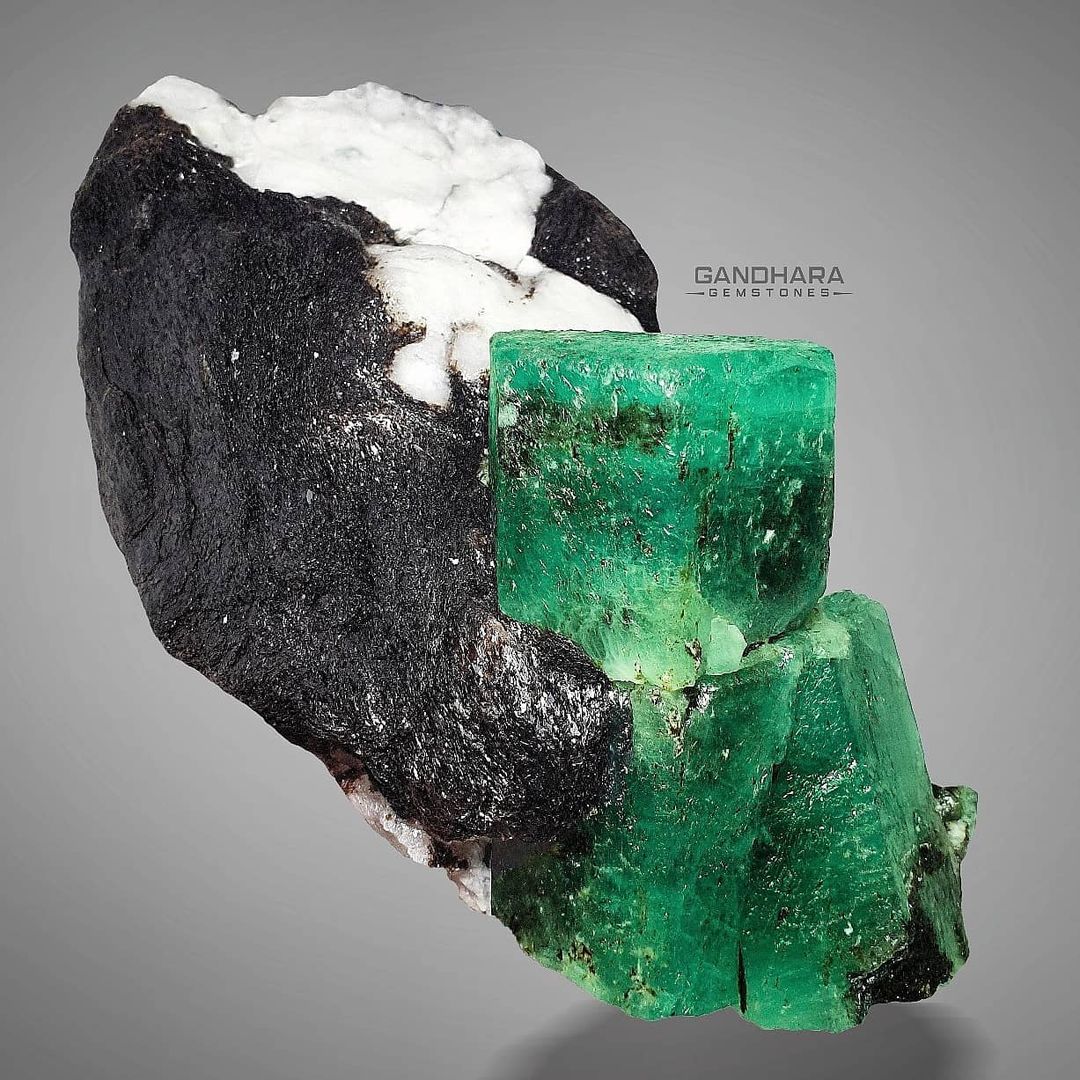
Emerald Minerals

Emerald mineral specimens should be selected for their natural crystal form, green color, matrix relationship, inclusions, termination, dimensions and preservation rather than judged by the same standards used for polished emerald gemstones. Emerald is the green variety of beryl, and naturally formed crystals can show the hexagonal prismatic habit characteristic of the mineral family. In a specimen, visible inclusions, growth features and host rock can add geological context instead of functioning simply as clarity defects.

Emerald Specimen for sale and meaning

This distinction is important because emerald appears elsewhere in several different forms. Buyers looking for polished jewelry stones can compare emerald gemstones, while lapidaries interested in uncut material can evaluate rough emerald. An emerald specimen serves another purpose: preserving enough natural form and mineral association to appreciate the crystal as it grew rather than only as potential material for cutting.

Emerald Crystal Form: Why Hexagonal Prisms and Natural Terminations Matter

Emerald belongs to the beryl family and commonly forms six-sided prismatic crystals. In well-developed specimens, this geometry can be one of the most attractive characteristics, especially when the crystal retains a recognizable termination and clearly defined faces.

A complete crystal is not the only worthwhile specimen. Broken or partially embedded emeralds can still be interesting when they show strong green color, unusual growth, attractive matrix or multiple crystals arranged naturally together. Condition should therefore be judged in context rather than reduced to an expectation that every crystal must be perfectly isolated and fully terminated.

Natural growth textures also deserve attention. Surface features, contact faces and slight irregularities can record the environment in which the crystal developed. These should be distinguished from fresh chips produced after mining. Collectors who prioritize morphology may place considerable value on intact edges and termination, while buyers interested in geological association may accept less complete crystals when the complete matrix specimen is more informative.

Emerald Specimen Color: Evaluating Green Hue Without Assuming Darker Is Better

Color remains an important part of an emerald mineral specimen, but the buying standard differs from faceted-gem grading. Emerald can vary in green hue, tone and saturation, and crystal thickness has a strong influence on apparent color. A thick section can look significantly darker than a thin edge even within the same crystal.

The darkest emerald crystal is not automatically the most attractive. Very deep tone can obscure transparency and internal growth features, while a lighter crystal may reveal structure more clearly. Matrix color can also change perception by creating contrast around the emerald.

For mineral specimens, color should therefore be considered alongside form, transparency, crystal size and composition. A moderate green crystal with excellent morphology may be more compelling than a saturated crystal whose major faces or termination are severely damaged.

The existing article on emerald as green beryl provides useful background on the gemstone species, while specimen selection should remain grounded in what the individual crystal visibly preserves.

Emerald Inclusions: Why Natural Internal Features Can Add Geological Interest

Inclusions are a familiar feature of natural emerald, and mineral specimens should not be expected to meet the clarity standards of transparent faceted stones. Crystals may contain fissures, mineral inclusions, fluid-related features and growth structures that reveal aspects of their formation.

For a specimen collector, these internal characteristics can be scientifically and visually interesting. A transparent area may allow light to reveal internal textures, while a more included crystal can still show excellent exterior morphology and saturated color.

Structural weakness is a separate consideration. A large surface-reaching fracture can make a crystal more vulnerable to damage even when the inclusion itself is natural. Buyers should therefore distinguish between inclusions that simply affect transparency and fractures that influence the physical stability of the specimen.

Emerald's internal character is one reason a mineral specimen should not be evaluated by asking whether it is “eye clean.” That criterion is far more relevant to certain polished gemstone purchases than to natural crystal collecting.

Emerald Matrix Specimens: How Host Rock Adds Geological and Visual Context

Emerald crystals can occur embedded in or attached to matrix, and the surrounding minerals can add significant character to a specimen. Contrasting host rock may make the green crystals stand out visually, while associated minerals can provide clues to the geological environment in which the specimen formed.

A strong matrix specimen does not require the largest emerald crystal. Several smaller crystals arranged naturally across the host can create a balanced composition, especially when their color contrasts effectively with the surrounding rock. Conversely, a single large crystal positioned prominently can serve as the focal point of the piece.

Attachment should also be assessed. Crystals projecting from matrix may be vulnerable at their base, particularly when fissures are present. A visually dramatic composition can therefore require more careful handling than a compact specimen.

Buyers comparing emerald with other mineral specimens and crystals should consider the entire mineral association rather than calculating how much emerald mass the piece contains.

Emerald Specimen Size vs Crystal Quality and Display Presence

Large emerald crystals attract attention, but dimensions alone do not determine specimen quality. A smaller crystal with clear hexagonal form, strong color and an intact termination may have greater collector appeal than a larger example with heavily damaged faces.

For matrix pieces, overall specimen dimensions should be considered separately from the size of the main emerald crystal. A 100 mm matrix specimen may contain a relatively small emerald, while a much smaller piece could be dominated by a single large crystal.

Length, width and height are generally more useful than total weight when planning a display because those dimensions show how much cabinet space the piece occupies. Matrix weight can also vary substantially according to host-rock density, making direct weight comparisons between specimens less meaningful.

The best size therefore depends on the collector's purpose. A compact specimen may fit a systematic collection, while a larger matrix piece can provide stronger room-scale display presence.

Emerald Hardness and Toughness: Why Specimens Still Require Careful Handling

Emerald has good surface hardness as a member of the beryl family, but natural fissures can reduce its toughness. This distinction matters considerably for mineral specimens because crystals may contain multiple surface-reaching fractures while projecting from fragile matrix.

A specimen should be handled by its secure base or host rock rather than by an exposed emerald crystal. Even a hard crystal can break if an existing fissure is stressed. Terminations and edges are particularly vulnerable to impact.

Cleaning also requires caution. Aggressive methods that might be tolerated by an intact mineral can cause problems when fractures, fills, delicate associated minerals or unstable matrix are present. The Gandhara Gems gemstone care information provides useful general guidance, but specimen-specific condition should always determine the final approach.

Emerald Treatments and Fracture Filling: Why Collectors Should Separate Origin From Enhancement

Natural emeralds frequently contain surface-reaching fissures, and clarity enhancement with oils or resins is well known in the emerald market. A natural crystal is therefore not automatically synonymous with an untreated crystal.

For mineral specimens, treatment history can matter differently than it does for jewelry. A collector interested in natural crystal appearance may care particularly about whether surface features have been modified after mining. At the same time, not every specimen requires laboratory-level treatment analysis, and the importance of this information depends on the buyer's collecting goals and the significance of the purchase.

The workbook-listed information on treated vs untreated gemstones helps distinguish natural origin from post-mining enhancement, while Gandhara Gems' authenticity guarantee provides relevant purchasing context regarding gemstone identity.

When precise treatment characterization is important, visual appearance alone should not be treated as definitive evidence.

Emerald Specimens vs Rough Emerald for Cutting: Choosing the Right Form

An emerald crystal can sometimes qualify physically as both a specimen and potential cutting rough, but the buyer's purpose changes how it should be evaluated. Rough intended for lapidary work is judged mainly by recoverable color, transparency, fracture distribution and dimensions. A specimen is judged more heavily by preserved crystal form, termination, matrix and natural presentation.

Cutting a well-formed emerald specimen may destroy features that cannot be restored. Conversely, an irregular broken crystal with little specimen appeal may contain a clean enough section to make useful lapidary rough.

This distinction becomes especially important when buying an attractive terminated crystal. If the natural morphology is part of what gives the piece its appeal, the theoretical finished gemstone yield should not automatically determine its use.

Buyers should decide whether they want to preserve geological structure or create jewelry before comparing specimens by price or size.

Emerald Locality and Provenance: Document Origin Instead of Inferring It From Appearance

Emerald is mined in several regions, and geographic origin can add substantial collecting interest when it is reliably documented. Color, inclusions and matrix can sometimes provide useful gemological clues, but appearance alone should not be used to assign a confident locality.

Crystals from different regions can overlap in color and form, while material from a single locality can vary considerably. Unsupported claims that a specimen comes from a famous source should therefore be avoided when provenance is unavailable.

Reliable locality information can enhance a mineral collection because it connects the specimen with a specific geological occurrence. When that information is supplied, collectors should preserve it with the specimen. When it is absent, the emerald should be judged according to its actual visible mineralogical characteristics.

Buying Emerald Mineral Specimens Online: What to Check Before Ordering

Compare each emerald specimen by green hue, crystal definition, termination, inclusions, matrix association, overall dimensions and visible damage. Look closely at exposed edges and the top of the main crystal because these are areas where chips can materially change specimen appearance. Natural contact faces and internal fissures should be distinguished from obvious post-growth breakage.

For matrix pieces, assess whether the emerald appears securely attached and whether the complete specimen has a practical display orientation. The largest crystal is not always the best choice if a smaller specimen has stronger form, better preservation or a more balanced composition.

Online purchasing also depends on handling after the order is placed. Gandhara Gems' shipping information explains applicable delivery considerations, while the return policy provides relevant terms for evaluating a specimen after arrival.

Emerald Mineral Specimen FAQs

Is emerald a mineral or a gemstone?

Emerald is the green gem variety of the mineral beryl. It can be collected as a natural crystal specimen or cut and polished as a gemstone.

What makes a good emerald mineral specimen?

Important characteristics can include recognizable crystal form, attractive green color, intact faces or termination, interesting inclusions, appealing matrix and good overall preservation.

Are inclusions bad in emerald specimens?

Not necessarily. Natural inclusions can add geological interest. Their main practical concern is whether fractures make the crystal structurally vulnerable.

Is a darker emerald crystal always better?

No. Color should be considered with crystal form, transparency, saturation and overall specimen condition. Excessively dark crystals may reveal less internal structure.

Are natural emerald specimens untreated?

Not automatically. Natural origin and treatment status are separate characteristics, and emerald can be clarity enhanced with oils or resins.

Should I choose an emerald specimen by weight?

Usually not. Crystal dimensions, morphology, color, condition and matrix composition provide more useful information than total weight.

Should an attractive emerald crystal be cut into a gemstone?

That depends on its purpose. A well-formed mineral specimen may lose its most distinctive natural characteristics if cut, whereas irregular rough with limited specimen appeal can be better suited to lapidary work.

Choose Emerald Minerals by Natural Crystal Form, Green Color and Preservation

Compare the current emerald specimens by crystal shape, green hue and saturation, termination, natural inclusions, matrix relationship, physical dimensions and visible condition. A collector seeking natural morphology should prioritize well-preserved crystal architecture, while buyers who enjoy geological associations may prefer an emerald positioned attractively in its host matrix. Rather than automatically choosing the largest or darkest specimen, select the individual emerald whose natural form and overall composition best fit the collection or display you want to build.

Gemstone expert consultations available

Welcome to my shop! Contact Us

Recently Viewed Products
