


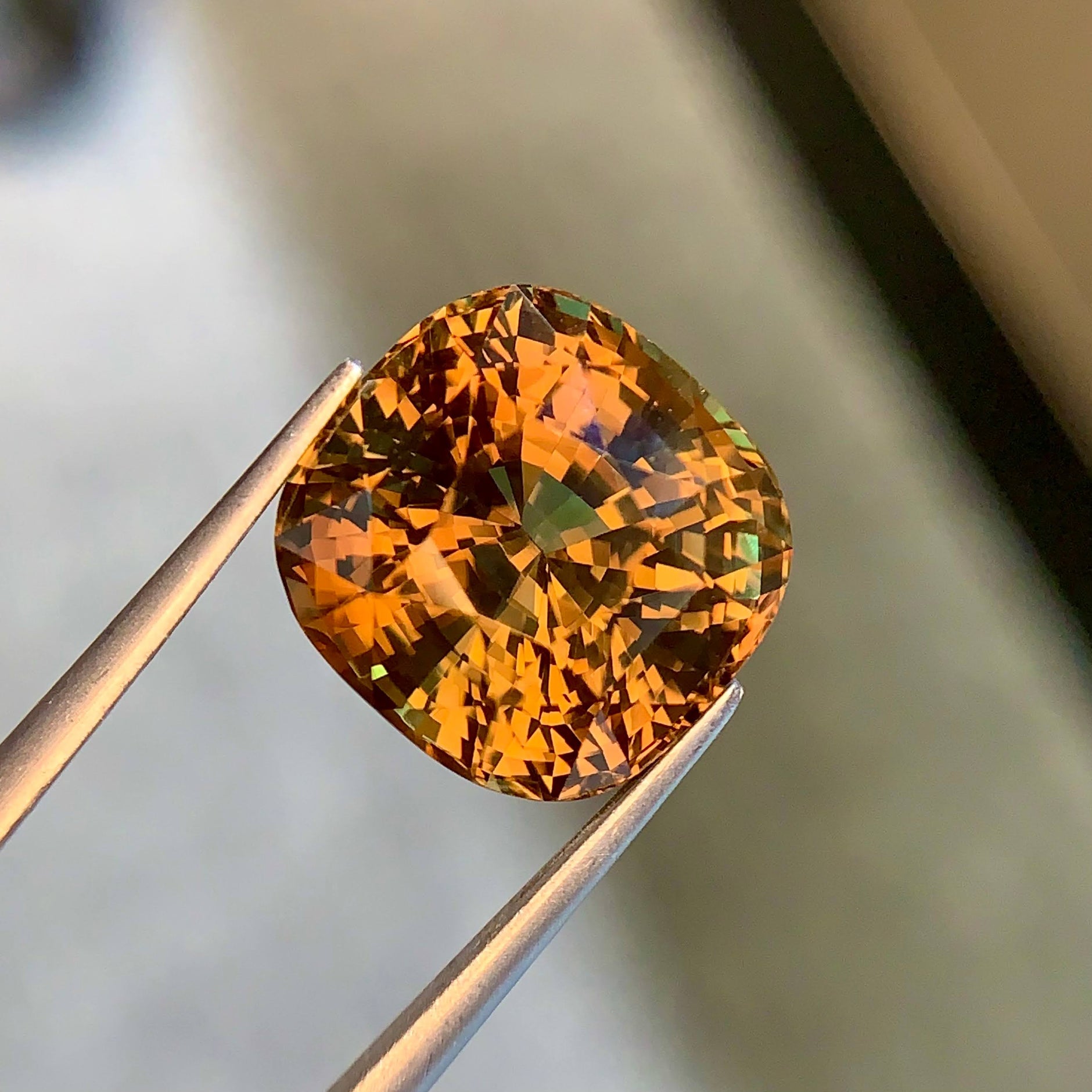


Hexagon Gemstones for Engagement Rings
Hexagon gemstones for engagement rings offer a striking alternative to conventional round, oval, and cushion center stones. Their six-sided outlines create a distinctive geometric appearance that can feel contemporary, architectural, or quietly vintage, depending on the setting. Natural sapphire and spinel are particularly attractive for rings worn regularly because they combine desirable colors with good durability. Aquamarine provides a beautiful blue alternative for more careful wear, while garnet, tourmaline, and other colored gemstones create further possibilities when their physical properties suit the intended design.
Unlike familiar engagement-ring shapes, hexagonal gemstones may have equal sides, elongated proportions, or deliberately modified corners. Their faceting also varies: some display broad step-cut reflections, while others use brilliant or custom patterns that create more frequent flashes of light. These differences influence not only appearance but also how the gemstone must be secured in the mounting. A six-sided stone cannot always be fitted successfully into a standard round or octagonal setting.
The best hexagonal engagement ring begins with a natural gemstone whose color and cutting are attractive from above, followed by a mounting designed around its exact measurements. Corner protection, pavilion depth, girdle thickness, band proportions, and wearing comfort all deserve consideration. An exceptional gemstone should remain appealing under normal lighting and practical enough for the wearer to enjoy rather than becoming a delicate piece that is rarely worn.

Why six-sided gemstones create such distinctive engagement rings
The appeal of a hexagonal center stone comes from the relationship between its six outer edges and the internal pattern of its facets. Straight edges create a structured silhouette, while the corners give the gemstone a character that differs from the continuous curve of a round or oval.
Some hexagon cuts are nearly regular, with six sides of similar lengths. Others have two longer parallel sides or proportions deliberately adjusted to fit the original crystal. A ring featuring an elongated hexagon can appear almost shield-like, while a regular six-sided stone creates a more compact, symmetrical impression.
The visual effect also depends on orientation. A hexagonal gemstone can be set with a point facing toward the fingertip, or rotated so a flat side sits at the top. The same stone may look surprisingly different in these two arrangements.
A point-up design emphasizes the geometric outline, whereas a flat-top orientation can create a more structured, architectural appearance. Neither is inherently better, but the orientation affects where prongs or bezel edges will be positioned and how the stone looks against the width of the band.
For a buyer who prefers distinctive jewelry without excessive ornamentation, a well-cut hexagonal sapphire or spinel can become the central feature of a simple ring. The shape provides enough visual interest that elaborate accent stones are not always necessary.
The most suitable gemstones for a hexagonal engagement ring
Choosing a durable gemstone matters because an engagement ring is often exposed to much more wear than a pendant or pair of earrings. The mineral's scratch resistance, toughness, cleavage, inclusions, and treatment history all influence how suitable it is for frequent use.
| Gemstone | Mohs hardness | Engagement-ring considerations |
|---|---|---|
| Sapphire | 9 | Excellent scratch resistance and generally good toughness |
| Ruby | 9 | Favorable durability, subject to the stone's condition and treatments |
| Spinel | 8 | Good toughness and appealing pink, red, lavender, and blue colors |
| Aquamarine | 7.5–8 | Suitable for carefully worn rings with an appropriate protective setting |
| Garnet | Approximately 6.5–7.5 for many varieties | Greater care may be needed, depending on the species |
| Tourmaline | 7–7.5 | Attractive color variety, with fractures and thermal sensitivity to consider |
| Topaz | 8 | Perfect cleavage creates impact and setting risks |
| Citrine or amethyst | 7 | Accessible alternatives for rings worn more carefully |
Hardness measures scratch resistance rather than the complete ability of a gemstone to withstand damage. A hard stone may still chip at a vulnerable corner, while a comparatively softer gemstone may have adequate toughness for jewelry that is treated carefully.
For an engagement ring expected to be worn through years of normal daily activity, sapphire and spinel provide especially attractive starting points. Other gemstones should be considered according to the individual's activities and willingness to remove the ring during potentially damaging tasks.
Sapphire: A strong combination of durability and geometric color
Sapphire is particularly appealing in hexagonal designs because of its hardness, generally good toughness, and considerable variety of natural colors. Traditional blue sapphire can look elegant in a six-sided setting, while teal, green, pink, yellow, and parti-colored varieties create more individual appearances.
A teal sapphire may be particularly attractive in yellow gold, where the metal provides warmth against its blue-green color. A deep blue sapphire can create a more restrained effect in platinum or white gold, while a pink sapphire can look beautiful in either warm or cool metals depending on its hue.
The cutting orientation deserves careful examination. Sapphire crystals can display color zoning and pleochroism, meaning that some directions or regions of the rough may show different color intensities. A cutter producing a hexagonal outline must consider whether the finished facets distribute those colors attractively.
A gemstone may have perfectly straight sides and still appear uneven if one region is substantially darker than the rest. That variation can be appealing in a deliberately parti-colored sapphire, but it may be less desirable when the buyer wants a consistently saturated blue center.
The range of natural sapphire gemstones also illustrates why color, treatments, and dimensions should be evaluated separately from shape. A smaller untreated sapphire with attractive color may be more satisfying than a heavier stone whose faceting creates excessive darkness.
The jeweler should examine the gemstone's corners and girdle before selecting the mounting. Sapphire's hardness makes it practical for frequent wear, but its six corners still need appropriate security.
Spinel: Beautiful colors in a less conventional engagement shape
Natural spinel offers a distinctive alternative to sapphire, especially when the desired color is lavender, violet, vivid pink, red, or an unusual shade of blue.
Spinel has a Mohs hardness of approximately 8 and generally good toughness. A sound gemstone can therefore be suitable for many regularly worn rings when the setting is designed correctly.
The optical properties of spinel can produce attractive brilliance in a well-proportioned hexagonal design. A cutter may use a brilliant-style pattern to create lively reflections or choose a more geometric arrangement that emphasizes the six-sided silhouette.
The stone's bodycolor remains important. A highly saturated red or blue spinel can look impressive, but excessive darkness may hide the very facet reflections that make a custom hexagon interesting. A lighter lavender or pink gemstone may display a more open, luminous appearance.
Natural hexagon-cut spinels are also less commonly encountered than conventional cushions and ovals in many retail selections. That can make an individual stone feel distinctive, although unusual cutting alone does not prove greater rarity or higher value.
For engagement jewelry, the visual benefits need to be considered alongside the actual dimensions and condition of the selected stone. A strong color and attractive cut will have little practical advantage if the mounting cannot secure the corners safely.

Aquamarine: When a larger six-sided center stone is desirable
Aquamarine can create a beautiful geometric engagement ring for someone who appreciates light blue or slightly greenish-blue color and is comfortable with more careful wearing habits.
Fine aquamarines often have attractive transparency, allowing their facet patterns to remain visible without extensive internal interference. A six-sided design can emphasize that clarity, particularly when the cutter produces clean, balanced reflections across the gemstone.
A useful example is the 3.71-carat natural Nigerian hexagon-cut aquamarine, which measures 10.3 × 10.2 × 6.8 mm and is described as untreated with SI clarity. Its broad face-up dimensions could create a substantial center stone, while the depth would need to be considered carefully during mounting.
A gemstone measuring more than 10 mm across may be too prominent for a buyer who prefers a discreet everyday ring. The depth also affects how low the stone can sit, particularly when the design includes a continuous bezel or a substantial band.
Aquamarine is approximately 7.5–8 on the Mohs scale, providing reasonable resistance to scratches but less than sapphire. The wearer should avoid unnecessary impacts, and the jeweler should inspect the stone for fractures and vulnerable girdle areas.
Color is another consideration. Pale aquamarine can look almost colorless when its pavilion allows too much light to pass through the center. A carefully cut example should retain attractive blue color without relying on excessive depth.
For an engagement ring worn with care, aquamarine offers elegance and visual presence, although it should not be presented as equally resistant to demanding wear as sapphire.
Choosing between step facets and brilliant faceting
The external hexagon does not dictate the pattern of facets inside the stone.
A step-faceted hexagon can display orderly reflections that echo the six-sided outline. This approach emphasizes geometry and transparency, making it attractive for a gemstone with clean color and appealing clarity.
Brilliant-style hexagons produce a different visual effect. Their smaller facets can create more frequent flashes of light as the hand moves, which may appeal to someone who wants the sparkle associated with brilliant-cut engagement rings.
Neither style is universally better. The optical properties of the mineral, cutting angles, and color saturation influence which arrangement produces the most attractive result.
For example, a pale aquamarine may benefit from a cutting pattern that creates enough contrast to preserve its blue appearance. A deeply colored sapphire may require careful facet proportions to prevent unwanted darkness.
A more elaborate designer pattern does not automatically produce better brilliance. For a hexagonal engagement ring, the finished stone should look attractive in the lighting the wearer encounters every day, not simply when presented beneath powerful showroom lights.
Protecting the corners without hiding the gemstone's shape
The setting is one of the most consequential decisions in hexagonal engagement-ring design.
A hexagonal gemstone has six corners, but it does not necessarily require six prongs. Prong number and placement depend on the geometry, girdle thickness, size, and structural condition of the actual stone.
A carefully made bezel can follow the six-sided perimeter and protect the girdle. This is particularly attractive for a modern geometric ring, where the surrounding metal becomes part of the design.
Prong settings offer a more open appearance. They can expose additional facets and allow light to enter from different directions, although the jeweler must ensure that the gemstone cannot rotate or loosen.
Corner placement matters. Prongs applied directly to vulnerable areas may create pressure, particularly when the girdle is thin or fractured. A suitable arrangement must secure the stone without damaging its most delicate edges.
A hexagonal bezel should also preserve the actual outline. If the metal is excessively wide or uneven, the ring may lose the precise geometric character that makes the cut desirable.
A low-profile ring may require a different gemstone
A low setting is attractive for buyers who prefer a comfortable ring with fewer exposed edges, but not every hexagonal gemstone can be mounted close to the finger.
The pavilion must have enough clearance beneath the stone. A deeply cut gem may require a taller gallery, even when its face-up dimensions appear suitable for a compact design.
A lower-profile stone may be practical when its proportions still provide attractive light return. However, choosing a shallow gemstone merely to reduce setting height can introduce windowing or weak brilliance.
The jeweler should consider the complete relationship between gemstone depth, band thickness, setting construction, and finger clearance.
For a large hexagonal center stone, a wider band may create a more balanced appearance. The exact design must also consider comfort, durability, and whether the gemstone projects beyond the width of the finger.
The most comfortable engagement ring is not necessarily the smallest or lowest. It is one whose proportions work naturally with the wearer's hand and activities.
The design can be modern without becoming overly decorative
Hexagonal gemstones lend themselves to restrained engagement-ring designs because the outline itself creates visual interest.
A simple bezel can emphasize the six sides in a contemporary way, particularly when the gemstone has strong color. A narrow prong-set solitaire can create a lighter appearance, allowing the natural gem to remain the focal point.
Art Deco-inspired details can also complement the cut. Tapered side stones, carefully proportioned baguettes, or subtle geometric metalwork may create a coordinated design without overwhelming the center.
A three-stone ring requires particular planning. Side stones should complement the main hexagon rather than create an awkward transition between unrelated outlines.
The metal color can influence the final appearance, especially with transparent stones. Yellow gold may enhance the perceived warmth of a greenish sapphire, while platinum can emphasize the cool character of blue aquamarine.
These effects should be evaluated using the actual gemstone and metal rather than relying on a photograph of a different stone.
The most attractive design is often one in which the gemstone's geometry determines the supporting details, not the other way around.
How to keep the ring budget under control
A custom hexagonal setting may involve additional design and manufacturing work compared with a conventional mounting made for calibrated round stones.
The cost depends on the metal, ring construction, center-stone dimensions, protective features, accent stones, and labor required to secure the gemstone.
A deeply cut stone may need a taller mounting or specialized seat. A large gemstone can require more substantial metalwork, while an unusual girdle profile may complicate the setting process.
The loose gemstone's price also varies with mineral species, color, clarity, size, treatments, rarity, and cutting quality.
A smaller natural sapphire or spinel may cost more than a larger aquamarine or citrine, even when both have attractive hexagonal outlines. Those differences reflect gemstone characteristics and market demand rather than a universal premium for the shape.
The buyer should establish a realistic budget for both the gemstone and the complete ring. A visually balanced stone with secure craftsmanship can be a more satisfying purchase than a heavier gem mounted with unnecessary compromises.
For custom jewelry projects involving natural gemstones, accurate measurements and early communication with the jeweler are particularly important because the final mounting must fit the individual stone.
Inspect the actual gemstone before committing to manufacture
A hexagonal gemstone should be examined while loose, before the pavilion and girdle become partly concealed by the mounting.
The buyer should confirm that the outline is balanced, the faceting creates attractive reflections, and the color remains appealing across different lighting conditions.
The jeweler should inspect the corners for chips, fractures, or unusually thin areas. Even a gemstone with excellent face-up symmetry may be unsuitable for a particular setting if its physical condition creates a risk during manufacture.
Natural identity and treatment information should also be established. A naturally formed sapphire can be heated, while the absence of treatment must be supported by appropriate disclosure or examination rather than inferred from appearance.
Any laboratory report should correspond to the actual stone, including its mineral identity and identifying characteristics.
Once the gemstone has been mounted, some issues become harder to inspect and alterations may affect return eligibility. Completing those checks before permanent setting protects the quality of the finished ring and the buyer's ability to resolve important concerns.
Conclusion
Hexagon gemstones for engagement rings create a distinctive appearance through their six-sided outlines, unusual facet patterns, and natural colors. Sapphire and spinel offer particularly attractive choices for frequent wear, while aquamarine and selected other gemstones can create beautiful rings for someone comfortable with their additional care requirements. The ideal engagement ring combines a well-proportioned stone with secure corner protection, comfortable mounting height, and craftsmanship suited to the individual gemstone.
When selecting a center stone, compare the actual color, cut, clarity, weight, dimensions, and physical condition before the final setting is made. Gandhara Gems' natural loose gemstone selection includes different shapes and mineral varieties that can be assessed for a personal engagement-ring design.
Frequently Asked Questions
Are hexagon-cut gemstones suitable for engagement rings?
Yes. Hexagonal gemstones can make attractive engagement-ring centerpieces when the mineral species and setting suit frequent wear. Natural sapphire and spinel are particularly appealing because of their favorable durability, while aquamarine, garnet, and other varieties may require additional care. The six-sided outline introduces corners that need to be secured appropriately. A jeweler should examine the actual gemstone's girdle, pavilion depth, fractures, and dimensions before deciding how it will be mounted.
Is sapphire or spinel better for a hexagonal engagement ring?
Both are good candidates, although they have different advantages. Sapphire has a Mohs hardness of 9 and generally excellent toughness, making it especially attractive for rings worn regularly. Spinel has a hardness of approximately 8, good toughness, and a beautiful range of pink, red, lavender, violet, and blue colors. A particular spinel may have more appealing color or cutting than a sapphire of similar price. The strongest choice depends on the individual stone's appearance, physical condition, treatment history, and intended setting.
Does a hexagon-cut engagement stone need six prongs?
Not necessarily. The correct number and arrangement of prongs depend on the gemstone's outline, girdle thickness, dimensions, and physical condition. Some hexagons can be secured through carefully positioned prongs, while others suit a fitted bezel that follows the perimeter. A setting must prevent the gemstone from moving without placing damaging pressure on vulnerable areas. The jeweler should design the mounting around the actual stone instead of assuming every hexagon requires the same six-point construction.
Can I use a large hexagon-cut aquamarine in an engagement ring?
A large aquamarine can create an attractive engagement ring, but its dimensions and wearing requirements deserve careful consideration. Aquamarine has a hardness of approximately 7.5–8, making it more vulnerable to abrasion than sapphire. A stone measuring around 10 mm across may also require a substantial mounting, especially when its pavilion is deep. The jeweler should determine whether the proposed ring will be comfortable and sufficiently protective. A large aquamarine may suit someone who prefers a statement ring and is prepared to remove it during potentially damaging activities.
Does a hexagonal gemstone sparkle as much as a round brilliant?
It depends on the facet arrangement and mineral species. Some hexagonal gemstones use brilliant-style faceting that produces numerous lively reflections, while others have broad step facets emphasizing geometry and color. The round brilliant is not a universal benchmark for colored gemstones because different minerals require different proportions for attractive light return. A beautifully cut hexagon can display excellent brilliance, but the shape alone does not guarantee it. Photographs and videos of the individual stone are more useful than its commercial cut name.
Is a bezel setting better for a hexagonal engagement ring?
A bezel can be particularly attractive because it follows the six-sided outline and provides continuous support around the girdle. It may also reduce exposure of the edges during daily wear. However, a bezel can conceal part of the gemstone and must be fitted carefully to avoid harmful setting pressure. Prong settings can also work well when properly designed. The better choice depends on the gemstone's shape, fractures, cutting depth, and the desired visual character of the finished ring.
Why do hexagon-cut engagement rings sometimes cost more to make?
A hexagonal gemstone may require a custom mounting because standard settings do not always match its exact side lengths, corners, and pavilion dimensions. Manufacturing a fitted bezel or individually positioned prongs can involve additional design and labor. The ring's metal, profile, accent stones, and complexity also affect cost. The gemstone itself may command a premium because of color, rarity, size, or cutting workmanship, but there is no fixed surcharge applied to every hexagon cut. A jeweler should assess the actual stone before providing a reliable manufacturing estimate.


