

-
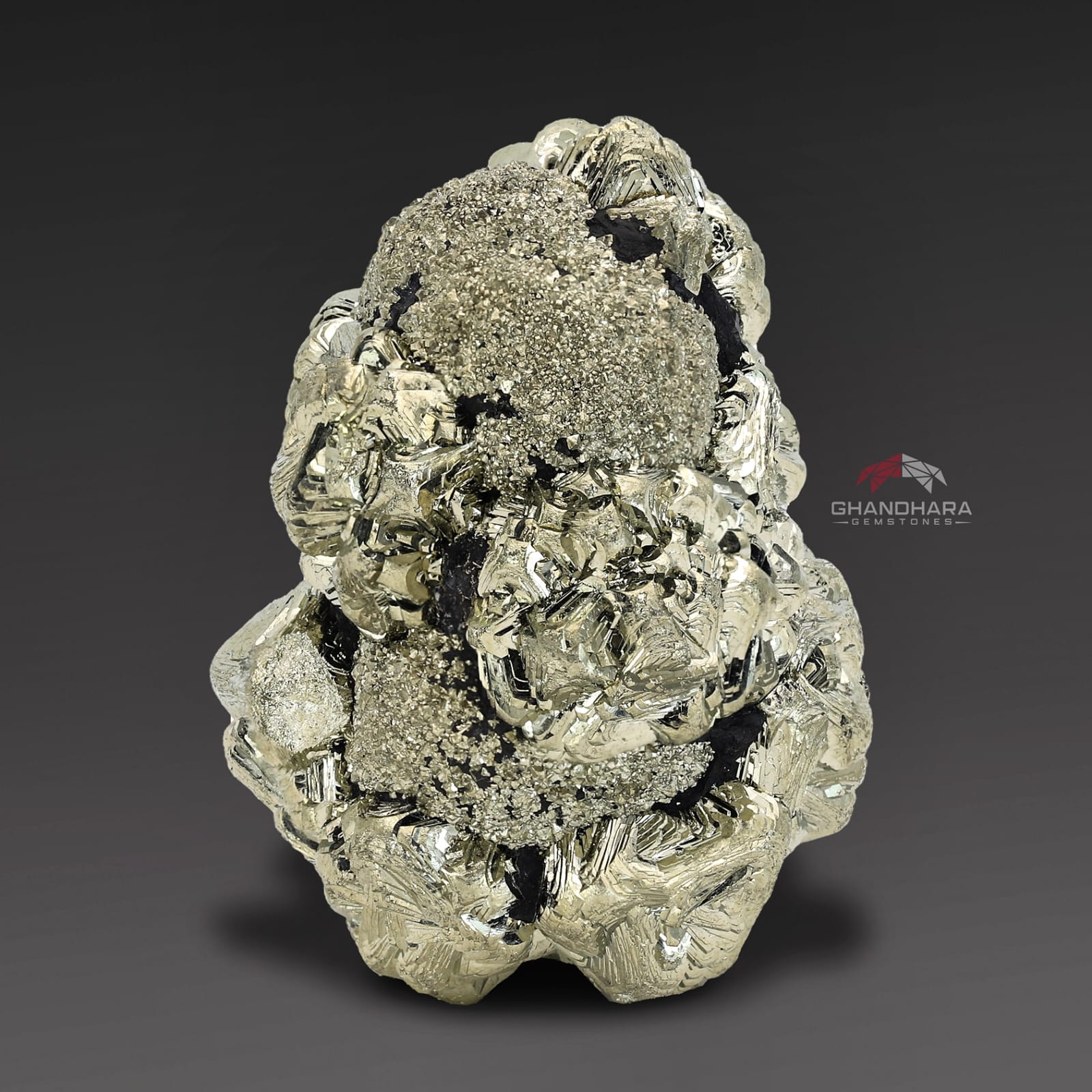
Aggregate of Glittery Light Gold Pyrite Crystals from Peru - LightGold
This striking specimen showcases an aggregate of glittery, light gold Pyrite crystals, sourced from the renowned mineral deposits of Peru. The Pyrite forms in a dazzling array of inter grown cubic and octahedral crystals, creating a mesmerizing, mirror-like surface that catches and reflects light...- $450.00
- $450.00
- Unit price
- per
-
LightGold
-
multiple growth of Pyrite on Marcasite with great luster from Pakistan - Gold
This impressive specimen of Golden Pyrite stalactite from Pakistan is a striking example of natural mineral beauty. Exhibiting a radiant metallic luster, the pyrite gleams with a rich golden hue, capturing the essence of its nickname, "Fool's Gold." The stalactite formation adds a unique...- $100.00
- $100.00
- Unit price
- per
-
Gold
-
crystallography of Pyrite Marcasite on Lemonite matrix from Pakistan - Gold
The Pyrite Marcasite on Limonite matrix from Pakistan is an extraordinary mineral specimen characterized by its unique crystallographic features and striking visual appeal. Pyrite, known for its metallic luster and pale brass-yellow hue, often crystallizes in cubic or octahedral forms. In contrast, Marcasite, which...- $280.00
- $280.00
- Unit price
- per
-
Gold
-
iridescent Marcasite crystals on Lemonite matrix from Pakistan - Gold
Iridescent Marcasite crystals on Limonite matrix from Pakistan are a stunning display of natural mineral beauty. The Marcasite crystals exhibit a captivating play of colors, often showing hues of green, gold, and blue as light dances across their surfaces. These crystals, known for their...- $180.00
- $180.00
- Unit price
- per
-
Gold
-
Pyrite Cluster Specimen: Sparkling Beauty from Earth's Depths from Pakistan - Gold
This is an attractive and colorful example for the golden color Pyrite crystals nicely scattered all around on contracting Limonite matrix. The Pyrite crystals has magnificent metallic luster with high luster and intergrown crystal form. Its well crystalized all around with 360-degree view and...- $130.00
- $130.00
- Unit price
- per
-
Gold
-
Golden Color Pyrite crystal on matrix from Skardu, Pakistan - Gold
Pyrite is a common mineral specie forming prismatic and mostly golden color crystals. This particular specimen is an attractive and neat example featuring nice Pyrite crystal on contrasting matrix. The Pyrite crystal is well crystalized all around with natural art on the crystal surface....- $120.00
- $120.00
- Unit price
- per
-
Gold
-
Gorgeous Golden Color Pyrite Cluster from Dara-I-Adam Khail, KPK Province, Pakistan - Yellowish Golden
Pyrite is a common mineral species mostly found in everywhere around the worldwide localities. This particular specimen is an attractive and showy example featuring lovely golden color cluster of dendritic shape Pyrite crystals. The crystals are shooting out in almost all directions with 360-degree...- $180.00
- $180.00
- Unit price
- per
-
Yellowish Golden
-
198 grams Gorgeous Golden Pyrite Specimen - Gold
198 grams Gorgeous Golden Pyrite Specimen is available for sale at wholesale price from Skardu District, Gilgit Baltistan, Pakistan. Gorgeous Golden Pyrite Specimen Skardu District, Gilgit Baltistan, Pakistan. Presenting this gorgeous example of a common mineral from an uncommon locality for such species. It's...- $120.00
- $120.00
- Unit price
- per
-
Gold
Free Shipping on order over $80
100% Authentic & Certified
Save Big in 2026
Pyrite Minerals
Pyrite minerals are best selected by comparing natural crystal form, pale brass-yellow metallic luster, face striations, matrix relationships, physical dimensions, surface condition and structural stability rather than by choosing the brightest or heaviest specimen automatically. Pyrite is iron disulfide, FeS₂, and crystallizes primarily in the isometric system. It has Mohs hardness around 6 to 6.5, a metallic luster and a density close to 5, while natural crystals can develop cubes, pyritohedra, octahedral modifications and complex intergrown groups.
Sidebar

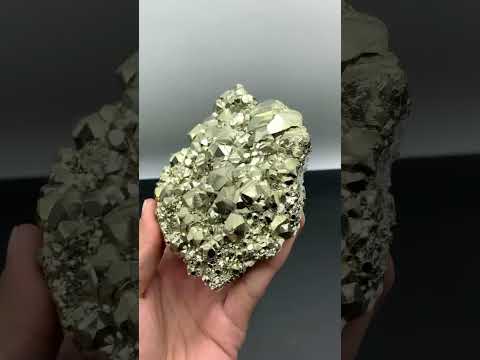

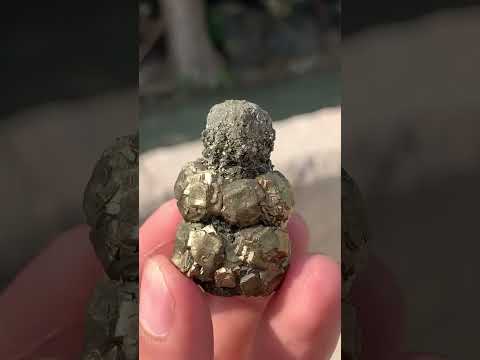

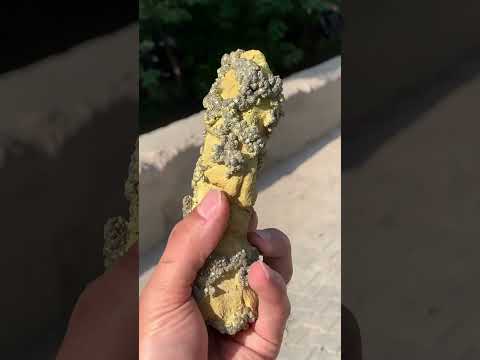

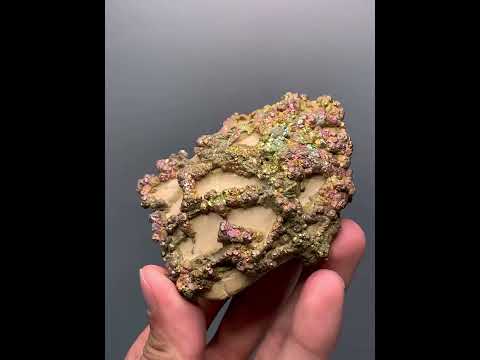

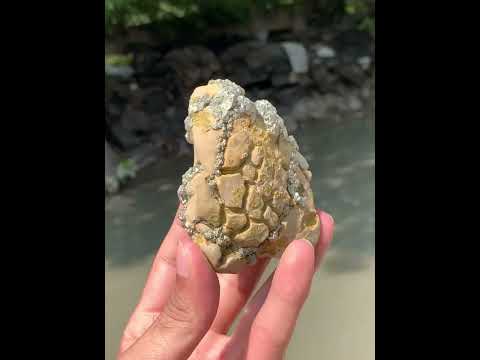


Pyrite's visual appeal comes from geometry as much as metallic color. A sharply formed cube with crisp edges and natural striations can make an exceptional mineral specimen even when it is relatively small, while a larger massive piece may offer less crystallographic interest if individual faces are poorly developed. Buyers comparing pyrite with other mineral specimens and crystals should therefore judge how clearly the specimen preserves the mineral's natural symmetry rather than relying on weight or shine alone.
Pyrite Crystal Form: Cubes, Pyritohedra and Complex Intergrowths
Pyrite is famous for natural cubes that can appear remarkably geometric even before any human cutting or polishing. These cubes may occur individually, in clusters or partly embedded in matrix, and their faces commonly show parallel striations that can change direction from one face to the next.
Pyritohedra create a different appearance. Instead of simple square faces, the crystal develops twelve pentagonal-like faces that produce a rounded yet strongly geometric form. Octahedral faces and combinations of several forms can add further complexity to collector specimens.
The best morphology depends on the collecting goal. A textbook cube may appeal to someone building a systematic collection, while an intricate intergrown cluster can create stronger sculptural presence. In either case, crisp edges and complete focal faces usually matter more than sheer size.
Pyrite Striations: Natural Face Patterns That Should Not Be Mistaken for Scratches
Parallel striations are a characteristic surface feature on many pyrite cubes and can be especially useful when examining natural crystal faces. These lines developed during crystal growth and commonly run in different orientations on adjacent cube faces.
Under directional light, striations can make a specimen visually dynamic because the reflected brightness changes as the crystal is rotated. A face may appear strongly metallic from one angle and much darker from another even though the surface remains unchanged.
Natural striations should be distinguished from random scratches caused by handling. Growth lines usually follow an organized pattern related to crystal structure, while accidental abrasion crosses the surface irregularly and may dull the metallic finish.
Pyrite Color and Metallic Luster: Why Brass-Yellow Is Not the Same as Gold
Fresh pyrite typically shows a pale brass-yellow color with strong metallic luster, which led to the familiar nickname “fool's gold.” The resemblance is superficial. Pyrite and native gold differ substantially in hardness, density, malleability, streak and crystal behavior.
Pyrite is hard enough to resist a steel knife more strongly than gold, while native gold is soft and malleable rather than brittle. Pyrite also commonly develops sharply geometric crystals, whereas natural gold more often forms irregular masses, wires, flakes or other native-metal habits.
Collectors should value pyrite for what it is rather than as an imitation of gold. Its cubic symmetry, strong metallic surfaces and natural striations give the mineral an identity that is scientifically and aesthetically distinctive without needing the comparison.
Pyrite vs Marcasite: Same FeS₂ Formula, Different Crystal Structures
Pyrite and marcasite share the same FeS₂ chemical formula but are distinct minerals because their crystal structures differ. Pyrite is the isometric form, while marcasite crystallizes orthorhombically and commonly develops tabular, spear-like, cockscomb or radiating habits rather than classic cubes.
Collectors can compare pyrite with marcasite mineral specimens to see how the same basic chemistry can produce dramatically different outward forms. This relationship is a useful example of polymorphism, where identical composition does not necessarily mean identical mineral structure.
Marcasite is also generally less stable under ordinary environmental conditions than good-quality pyrite, although preservation depends strongly on specimen chemistry, inclusions, humidity and storage.
Pyrite Hardness and Brittleness: Metallic Appearance Does Not Mean Malleable Metal
Pyrite has Mohs hardness around 6 to 6.5, giving it considerably greater scratch resistance than native gold. Despite its metallic appearance, however, pyrite is brittle rather than malleable and can chip or fracture under impact.
Sharp cube corners deserve special care because they can break if a heavy specimen is dropped. Intergrown clusters may contain narrow attachment points that are even more vulnerable, especially where individual crystals project from matrix.
The practical recommendations under gemstone care provide a useful foundation, but pyrite deserves additional attention to moisture and storage environment. Stable dry conditions are preferable to repeated exposure to dampness or aggressive chemical cleaning.
Pyrite Oxidation: Why Storage Conditions Matter to Long-Term Preservation
Some pyrite specimens can oxidize when exposed to unfavorable combinations of moisture, oxygen and reactive impurities, producing iron sulfates and acidic by-products. Collectors sometimes refer to severe deterioration as “pyrite decay” or “pyrite disease,” although not every specimen is equally vulnerable.
Stable well-crystallized pyrite can remain attractive for many years under normal dry indoor conditions, while certain fine-grained, porous or impurity-rich specimens may deteriorate more readily. Warning signs can include dulling, powdery or crusty products, cracking, unusual odor or damage developing around the specimen.
The practical response is preventive rather than alarmist. Keep pyrite dry, avoid prolonged high humidity, do not seal an actively deteriorating specimen against other minerals, and separate any piece that begins producing reactive powder from the rest of a collection until its condition can be evaluated.
Pyrite Matrix Specimens: Quartz, Calcite and Other Associations
Pyrite occurs in a wide range of geological environments and can form with quartz, calcite, fluorite, sphalerite, galena and numerous other minerals. Matrix specimens can therefore preserve relationships that make the piece scientifically richer than an isolated crystal.
Bright brass-yellow cubes against pale calcite or quartz can create particularly strong visual contrast, while pyrite associated with darker sulfide minerals produces a more subdued but geologically interesting composition.
The matrix should also be evaluated for stability. A sharp pyrite cube can remain perfectly intact while the host rock is fractured, friable or water-sensitive. Buyers should therefore judge the whole specimen rather than assuming the durability of the focal pyrite determines the durability of the entire piece.
Pyrite Crystal Size: Why Small Sharp Cubes Can Outperform Large Masses
Pyrite can occur as tiny glittering crystals, centimeter-scale cubes and much larger crystal groups. Size certainly affects visual impact, but crystal definition often matters more to collectors than total mass.
A small cube with six sharply developed faces and intact corners can serve as a textbook representation of pyrite symmetry, while a much larger massive specimen may offer little recognizable crystallography. Complex clusters occupy a middle ground because repeated cubes or pyritohedra can create substantial display presence without relying on one oversized crystal.
Macro photography can make small pyrite crystals appear enormous, so actual dimensions should always be checked before purchase. A specimen's length, width and height provide a far more useful sense of display scale than image magnification.
Pyrite Authenticity and Identification: Metallic Yellow Minerals Need Careful Comparison
Several metallic minerals can resemble pyrite at a glance. Chalcopyrite can also appear brass-yellow but is generally softer and often shows richer yellow coloration or iridescent tarnish, while marcasite shares the same chemistry but develops different crystal structure and habit.
Native gold presents another familiar comparison, yet its softness, malleability, much higher density and non-cubic natural habits separate it from ordinary pyrite. A streak test or hardness test can be informative on expendable material, but destructive testing should not be performed casually on an attractive collector specimen.
Gandhara Gems' authenticity guarantee provides relevant purchasing context where mineral identity matters. Well-preserved natural crystal form often provides useful evidence, but serious or unusual specimens may justify more formal identification when exact mineral status is important.
Pyrite Tarnish and Surface Condition: Natural Patina vs Active Deterioration
Fresh pyrite commonly displays bright metallic luster, but natural surfaces can tarnish over time and develop darker, bronze or iridescent tones. Light stable tarnish does not automatically mean the specimen is deteriorating and can sometimes add visual character.
Active oxidation is different. Powdery reaction products, expanding cracks or acidic residues suggest chemical alteration that requires more attention than a simple surface color change.
Buyers should therefore distinguish cosmetic patina from structural instability. A slightly toned but stable crystal can remain an excellent specimen, while a brilliantly polished-looking piece with active hidden deterioration may present greater long-term risk.
Pyrite Meaning and Traditional Associations vs Mineralogical Facts
Pyrite has been connected with symbolic ideas about prosperity, confidence and protection in modern crystal traditions, while its historical nickname “fool's gold” reflects its visual resemblance to native gold. These cultural interpretations can be interesting, but they should remain separate from scientifically established mineral properties.
Mineralogically, pyrite is iron disulfide characterized by metallic luster, isometric crystallization, moderate hardness and common sulfide-mineral associations. Claims that pyrite treats disease or produces measurable medical effects are not established by those properties.
Keeping symbolism separate from mineral science allows collectors to appreciate cultural traditions without confusing personal belief with evidence about the physical specimen.
Buying Pyrite Minerals Online: Compare Geometry, Luster and Stability Together
A careful online comparison should begin with crystal form, checking whether cubes, pyritohedra or intergrowths preserve sharp edges and recognizable natural faces. Surface luster, striations, matrix, dimensions and visible oxidation should then be considered together.
Several viewing angles are particularly useful because bright metallic reflections can hide small chips or make irregular surfaces look more complete than they are. Buyers should also look for signs of powdery alteration around the matrix rather than judging only the strongest polished-looking face.
Gandhara Gems' shipping information provides the practical delivery framework, while the return policy explains the applicable conditions for evaluating crystal condition, scale and stability once the specimen arrives.
Pyrite Mineral FAQs
What makes a high-quality pyrite mineral specimen?
A strong pyrite specimen usually combines well-developed cubic, pyritohedral or other recognizable crystal form with sharp edges, metallic luster and stable surfaces. Natural striations can add considerable character, while an attractive matrix association may strengthen both display and geological context. Large size can be impressive, but a smaller complete cube often has greater crystallographic value than a much heavier massive piece.
Why is pyrite called fool's gold?
Pyrite earned the nickname because its pale brass-yellow metallic appearance can resemble gold to an inexperienced observer. The minerals are physically very different, however. Pyrite is harder, brittle and commonly forms geometric crystals, while native gold is soft, highly malleable and much denser. The nickname is historical shorthand rather than evidence that pyrite is chemically related to gold.
Is pyrite the same as marcasite?
No. Pyrite and marcasite both have the formula FeS₂, but they are separate minerals with different crystal structures. Pyrite is primarily isometric and commonly forms cubes or pyritohedra, while marcasite is orthorhombic and often develops tabular, spear-like or radiating forms. Their differing structures also influence stability and external appearance.
Does every pyrite specimen eventually decay?
No. Many pyrite specimens remain stable for long periods when stored in dry indoor conditions. Susceptibility varies with impurities, porosity, crystal quality and environmental moisture. Fine-grained or reactive specimens can deteriorate more readily, so prevention focuses on avoiding sustained high humidity and watching for powdery oxidation products or expanding cracks.
How hard is pyrite?
Pyrite has Mohs hardness around 6 to 6.5, making it harder than glass and far harder than native gold. Its metallic appearance can suggest toughness, but the mineral is brittle and sharp crystal edges can chip if struck. Hardness protects against some scratching but should not be confused with resistance to impact.
Are the lines on pyrite cubes natural?
Parallel striations on cube faces are common natural growth features in pyrite. They often run in different directions on adjacent faces and can create striking changes in reflection as the crystal is rotated. Random scratches caused by handling are less organized and should be distinguished from these characteristic growth patterns.
How should pyrite minerals be stored?
Pyrite should be kept in a reasonably dry, stable environment away from prolonged humidity and unnecessary chemical exposure. Individual specimens should not rub against each other, and any piece showing powdery oxidation or cracking should be separated from neighboring minerals. Stable pyrite generally needs only sensible cabinet storage rather than elaborate treatment.
Choose Pyrite Minerals by Crystal Geometry, Metallic Luster and Stability
Compare the current Pyrite Minerals by cubic or pyritohedral crystal development, pale brass-yellow metallic luster, natural striations, matrix association, actual dimensions, edge preservation and signs of long-term stability. Give particular attention to crisp focal faces and intact corners because those features express pyrite's isometric structure most clearly. Choose the individual specimen whose geometry, condition and geological character best suit the mineral collection and display you are building.

Recently Viewed Products
Example product title
- $19.99
- $19.99
- Unit price
- / per
Example product title
- $19.99
- $19.99
- Unit price
- / per
Example product title
- $19.99
- $19.99
- Unit price
- / per
Example product title
- $19.99
- $19.99
- Unit price
- / per
Example product title
- $19.99
- $19.99
- Unit price
- / per
Example product title
- $19.99
- $19.99
- Unit price
- / per
Example product title
- $19.99
- $19.99
- Unit price
- / per
Example product title
- $19.99
- $19.99
- Unit price
- / per
Example product title
- $19.99
- $19.99
- Unit price
- / per
Example product title
- $19.99
- $19.99
- Unit price
- / per
- Choosing a selection results in a full page refresh.


