

-
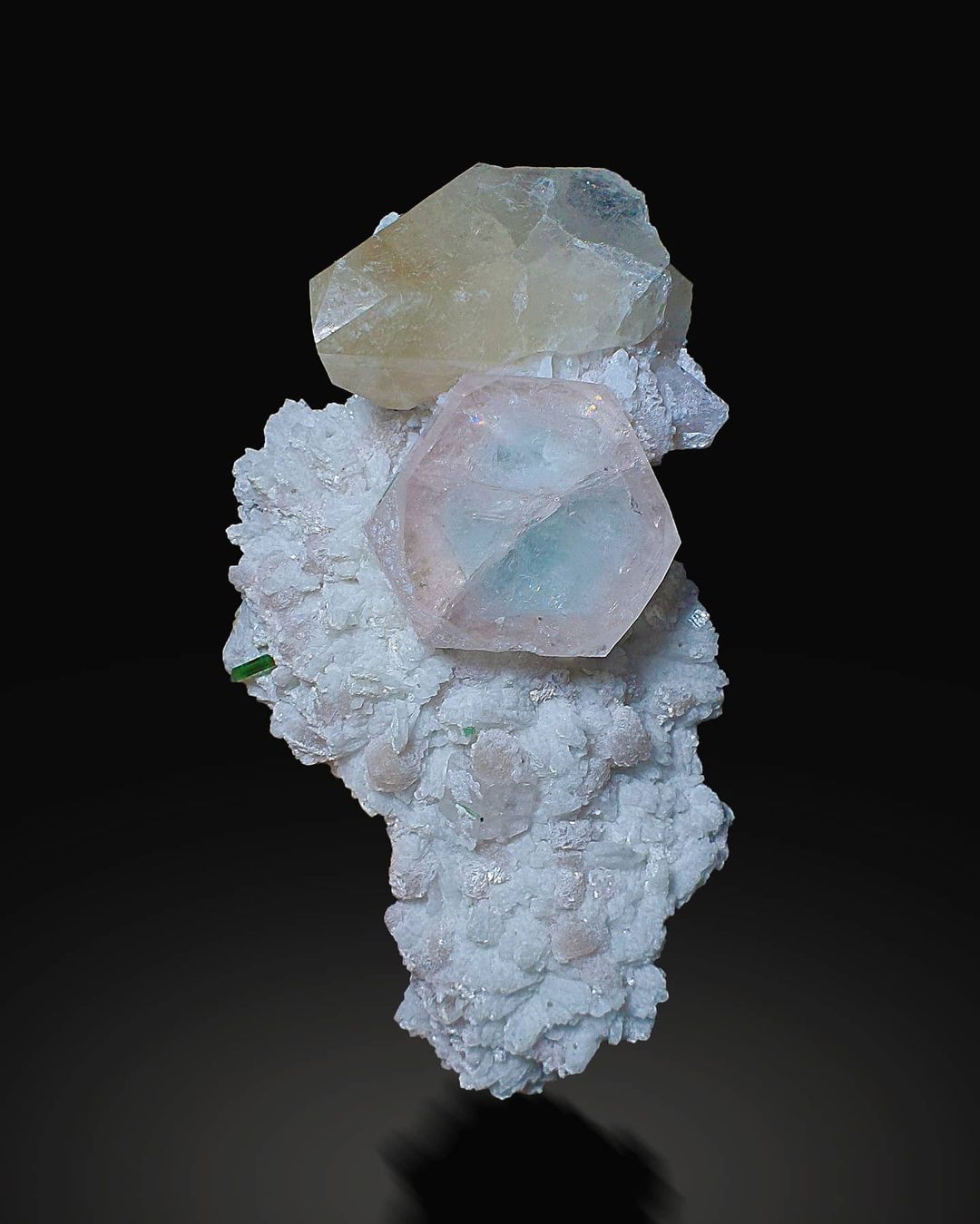
Couple of Morganite Crystals with Schorl on Quartz from Pakistan - Light-Yellow
This striking mineral specimen from Pakistan features a stunning combination of soft morganite crystals elegantly perched alongside deep black schorl tourmaline on a pristine quartz matrix. The morganite, a gem variety of beryl, displays excellent clarity with a delicate blush hue that contrasts beautifully...- $450.00
- $450.00
- Unit price
- per
-
Light-Yellow
-
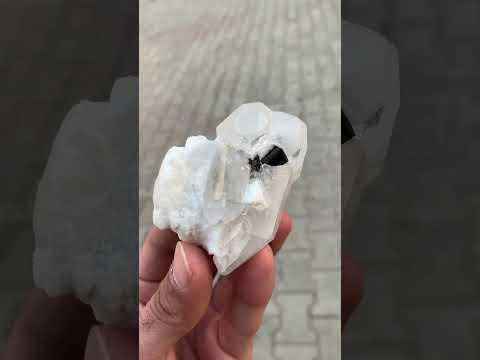
rare combination of gem Morganite with Pollucite and Tourmaline from Afghanistan - Pink
A captivating and rare marvel, the gem Morganite takes center stage in a mesmerizing composition alongside Pollucite and Tourmaline from the enchanting landscapes of Afghanistan. The delicate pink hues of Morganite, a variety of beryl, gracefully interplay with the ethereal translucence of Pollucite, creating...- $1,650.00
- $1,650.00
- Unit price
- per
-
Pink
Free Shipping on order over $80
100% Authentic & Certified
Save Big in 2026
Morganite Minerals
Morganite mineral specimens are best chosen for their natural pink-to-orange-pink color, beryl crystal form, transparency, inclusions, surface condition, matrix association and physical dimensions rather than by size or darkness alone. Morganite is the pink to orange-pink variety of beryl, the same mineral family that includes emerald and aquamarine, and natural crystals can preserve hexagonal growth, flat prism forms, internal features and subtle color variations that disappear once the stone is cut. A collector therefore evaluates a morganite crystal differently from a buyer choosing a polished jewelry gemstone.
Sidebar


Pastel color is characteristic of morganite, so an attractive specimen does not need extreme saturation. Pale pink, rose, peach, salmon and purplish-pink crystals can each have distinct visual appeal when their natural form is well preserved. Buyers primarily interested in a finished stone can compare morganite gemstones, where cut, face-up color and jewelry dimensions take priority. This collection instead emphasizes morganite as a natural mineral crystal, where morphology, internal character and preservation become central to the buying decision.
Morganite Crystal Form: How Natural Beryl Growth Shapes Specimen Quality
Morganite belongs to the hexagonal crystal system and can form attractive prismatic crystals. Compared with some other beryl varieties, natural morganite crystals can have relatively broad or flattened forms, and individual pieces may show complete prisms, partial terminations, broken crystal sections or crystals embedded in matrix.
For collectors, clearly readable natural form often matters more than flawless transparency. A crystal with distinct faces, an intact termination and attractive pink color can make a compelling specimen even when internal inclusions are visible. Natural growth markings, etched areas and contact surfaces may also record the conditions under which the crystal developed and should not automatically be interpreted as damage.
Recent chips are different because they remove part of the original morphology. Damage to a focal termination or prominent crystal edge usually affects presentation more than a small break on an inconspicuous rear surface. When comparing specimens, examine whether the main crystal still communicates its natural shape clearly rather than expecting every surface to resemble a polished gemstone.
The main mineral specimens and crystals collection provides useful context for comparing morganite's beryl habit with species that naturally develop cubes, blades, octahedra or other crystal forms.
Morganite Color: Comparing Pale Pink, Peach, Salmon and Purplish-Pink Crystals
Morganite is known primarily for delicate pastel shades. Pale pink and rose colors are familiar, while natural crystals may also show orangy-pink, peach or salmon components. Some material has a purplish influence, giving a cooler pink appearance.
The darkest crystal is not automatically the strongest specimen. Morganite's light colors can make transparency, internal features and crystal architecture especially visible, and an elegant pale crystal with intact natural form can be more appealing than a stronger-colored piece with extensive damage.
Crystal thickness also changes perceived color. A thicker central area can appear richer than a thin edge, while transmitted and reflected lighting may emphasize different pink or peach components. Buyers should therefore compare the entire crystal rather than choosing from one saturated photograph.
The existing Morganite Information: The Pink Beryl article provides additional context on the gemstone variety, while specimen buying should remain focused on the individual crystal's visible color and natural preservation.
Morganite Transparency and Inclusions: Why Natural Internal Features Are Not Automatically Defects
Morganite can form with high transparency, which allows internal growth structures to remain visible through natural crystal faces. Mineral inclusions, fluid-related features, fractures and other internal characteristics can occur and should be evaluated according to how they affect the specimen rather than against a universal eye-clean standard.
For a faceted gemstone, a central inclusion can interfere with brilliance. In a mineral specimen, the same feature may provide geological character or reveal how the crystal developed. Transparent crystals can be particularly interesting when their interiors contain visible growth patterns without losing the overall clean pastel appearance associated with morganite.
Structural fractures deserve separate attention. A natural inclusion that simply affects clarity is different from a major surface-reaching break that makes a crystal mechanically vulnerable. Buyers should consider whether fractures threaten an exposed termination, separate the crystal through its center or weaken a narrow matrix attachment.
This distinction between visual inclusion and structural stability is far more useful than asking whether a specimen is internally perfect.
Morganite Matrix Specimens: Evaluating Crystal Placement and Host-Rock Contrast
Morganite may occur as isolated crystals or attached to matrix. Matrix can increase a specimen's geological interest because it preserves part of the environment in which the beryl developed and may include associated minerals that create visual contrast.
A strong matrix piece does not necessarily need the largest morganite crystal. Several smaller pink crystals placed naturally across contrasting host rock can create a balanced composition, while a single prominent crystal can serve as a focal point when its faces and color remain clearly visible.
Attachment stability is especially important. Projecting crystals connected by narrow points can be vulnerable during handling and transport even when the morganite itself is reasonably hard. Associated minerals can also be softer or more fragile than beryl, so the entire specimen should be judged by its weakest component.
For display, consider whether the matrix has a stable base and whether its strongest viewing angle presents the morganite clearly without requiring risky positioning.
Morganite Mineral Size: Why Crystal Dimensions Matter More Than Weight Alone
Morganite can form in relatively large crystals, but size should not automatically dominate specimen selection. A compact crystal with clear geometry, appealing pastel color and an intact termination may offer greater collector appeal than a much larger damaged crystal.
Length, width and height provide the clearest impression of how a specimen will appear in a display cabinet. Weight alone cannot communicate visual scale, especially when one specimen contains substantial matrix and another consists mainly of beryl.
The dimensions of the focal morganite crystal should also be considered separately from the complete specimen. A broad matrix may make a piece physically large without increasing the size of the principal crystal.
This is particularly important when comparing mineral specimens with polished stones. Carat weight plays a prominent role in cut-gem descriptions, while physical dimensions and natural form are generally more informative for a crystal specimen.
Morganite Hardness and Specimen Durability: What Collectors Should Protect
Morganite has a Mohs hardness of approximately 7.5 to 8, giving intact beryl surfaces good resistance to scratching compared with many softer minerals. Hardness, however, does not make projecting crystal edges or fractured specimens immune to impact.
An exposed termination can chip if the piece is dropped, while internal fractures can extend under mechanical stress. Matrix attachments can introduce additional weak points that have little relationship to morganite's nominal hardness.
Collectors should therefore handle specimens by a secure base rather than grasping narrow crystal projections. Storage should prevent crystals from striking neighboring stones, particularly harder minerals or heavy specimens that could damage natural faces.
The Gandhara Gems gemstone care information provides general handling guidance, although matrix specimens should always be maintained according to every mineral present on the piece.
Morganite Treatments: Why Pink Color Should Be Considered Separately From Natural Origin
Morganite may be heat treated to reduce orange or yellow components and produce a purer pink appearance. This type of enhancement is relevant to the commercial morganite market, which means buyers should keep natural geological origin and treatment status conceptually separate.
A naturally formed crystal is natural morganite, but natural formation does not automatically establish that its present color has never been modified after mining. Where treatment disclosure is available, it should be considered as part of the specimen's history.
For mineral collectors who specifically value untouched natural coloration, treatment information may carry more importance than it does for someone choosing a decorative crystal primarily for appearance. Visual inspection alone may not resolve every treatment question.
Gandhara Gems' authenticity guarantee provides relevant purchase context when mineral and gemstone identity is important.
Morganite Minerals vs Faceted Morganite: Choosing Between Natural Form and Jewelry Appearance
A transparent morganite crystal may contain material capable of producing attractive faceted gemstones, but specimen and jewelry buying reward different characteristics. A faceted stone is selected for face-up pink color, transparency, brilliance, cut, carat weight and millimeter dimensions. A mineral specimen is selected for natural crystal form, termination, growth textures, internal character and matrix relationships.
Cutting a well-developed natural crystal permanently removes the surfaces and geometry that formed in the earth. For a specimen collector, preserving those features may be more valuable than recovering one or several polished gems.
An irregular crystal fragment with limited specimen value may be a different case. If natural morphology has already been lost but internal gemstone quality remains high, lapidary use can make more sense.
The workbook-mapped morganite gemstone buying guide addresses cut-stone selection, helping keep that buying decision distinct from choosing a natural specimen.
Morganite Value for Collectors: Color Is Only One Part of the Specimen
A mineral specimen should not be reduced to the price logic applied to polished morganite. Stronger pink color can add appeal, but crystal completeness, termination, transparency, inclusions, matrix, provenance and visible condition can be equally important to collectors.
A large crystal with multiple broken surfaces may therefore be less compelling than a smaller intact example. Similarly, a pale specimen with exceptional form can have stronger aesthetic presence than a deeply colored but poorly preserved piece.
The planned morganite gemstone price guide addresses value factors for cut stones. Mineral specimens require a more holistic comparison centered on the actual preserved object.
Rather than asking only how pink or heavy a specimen is, consider what natural features would be difficult to replace with another piece.
Buying Morganite Mineral Specimens Online: Final Checks Before Choosing
Compare the available specimens by pink or peach hue, crystal definition, termination, transparency, inclusions, matrix relationship and actual dimensions. Examine the focal crystal for fresh chips and determine whether irregular surfaces appear to be natural contacts, growth textures or later damage.
Consider your collecting priority before ordering. A buyer seeking an isolated beryl crystal may favor an intact prism and termination, while someone building a geological matrix collection may prefer a composition showing morganite alongside associated minerals.
Unique mineral specimens should also be evaluated within the store's practical purchasing conditions. Gandhara Gems' shipping information explains applicable delivery considerations, while the return policy provides the relevant terms if a specimen needs to be returned.
Morganite Mineral Specimen FAQs
What is morganite?
Morganite is the pink to orange-pink variety of the mineral beryl, the same mineral family that includes emerald and aquamarine.
What colors can natural morganite crystals show?
Morganite can show pale pink, rose, peach, salmon, orangy-pink and purplish-pink tones. Pastel coloration is normal for the gemstone.
Are inclusions undesirable in a morganite mineral specimen?
Not automatically. Natural inclusions can add geological interest. They become more concerning when fractures weaken the crystal or substantially affect the features a collector values.
Is darker pink morganite always better?
No. Strong color can be attractive, but natural crystal form, transparency, termination, surface condition and matrix can be just as important for a specimen.
Is morganite a durable mineral?
Morganite has Mohs hardness around 7.5 to 8, but natural crystals can still chip through impact, especially at terminations or where fractures are present.
Can natural morganite be heat treated?
Yes. Morganite may be heated to reduce orange components and produce a purer pink appearance. Natural origin and treatment history should therefore be considered separately.
Should a transparent morganite crystal be cut?
That depends on the buyer's goal. A well-formed specimen preserves natural crystal features that disappear permanently after cutting, while irregular material may be more suitable for lapidary use.
Choose Morganite Minerals by Pink Color, Crystal Form and Preservation
Compare the current Morganite Minerals by pastel hue, crystal architecture, transparency, natural inclusions, termination, matrix association, dimensions and visible condition. Prioritize intact natural form when collecting crystals, and consider how securely the specimen can be displayed and handled. Rather than selecting the largest or most saturated piece automatically, choose the individual morganite whose preserved geological character, color and overall composition best fit your mineral collection and budget.

Recently Viewed Products
Example product title
- $19.99
- $19.99
- Unit price
- / per
Example product title
- $19.99
- $19.99
- Unit price
- / per
Example product title
- $19.99
- $19.99
- Unit price
- / per
Example product title
- $19.99
- $19.99
- Unit price
- / per
Example product title
- $19.99
- $19.99
- Unit price
- / per
Example product title
- $19.99
- $19.99
- Unit price
- / per
Example product title
- $19.99
- $19.99
- Unit price
- / per
Example product title
- $19.99
- $19.99
- Unit price
- / per
Example product title
- $19.99
- $19.99
- Unit price
- / per
Example product title
- $19.99
- $19.99
- Unit price
- / per
- Choosing a selection results in a full page refresh.


