

-
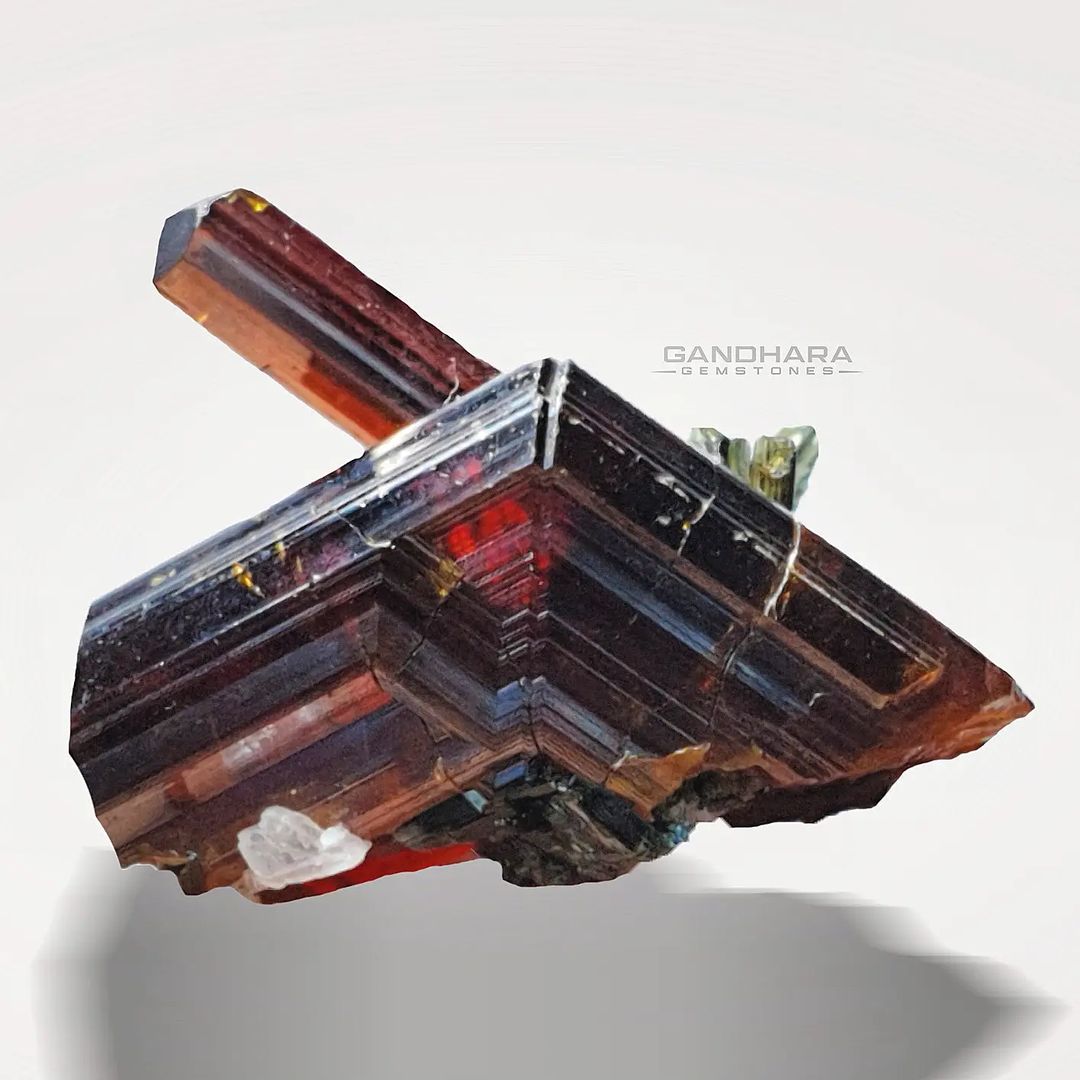
Interesting Golden Rutile Crystal - Gold
Presenting this lusterious and vibrant orangey red color Rutile with magnificent striations. Its well crystalized all around with 360-degree view and perfect terminations. It has no repair, damage free and indeed intersting find from such locality. Product Information: Specimen Type Interesting golden Rutile...- $120.00
- $120.00
- Unit price
- per
-
Gold
Free Shipping on order over $80
100% Authentic & Certified
Save Big in 2026
Rutile Minerals
Rutile minerals are best selected by comparing natural crystal form, red-brown to black color, adamantine or metallic luster, twinning, matrix relationships, physical dimensions and visible preservation rather than by choosing the darkest, brightest or largest specimen automatically. Rutile is titanium dioxide, TiO₂, and crystallizes in the tetragonal system. Natural crystals can appear blood red, reddish brown, brownish yellow, gray-black, black or other subtler tones, while crystal habit ranges from compact prismatic forms to slender acicular needles. A well-preserved small specimen can therefore communicate far more mineralogical character than a substantially heavier piece whose important edges, faces or terminations have been broken.
Sidebar


Rutile also has unusually strong visual variety because it can occur as isolated crystals, sharply twinned groups, fine needles embedded within quartz or complex matrix associations where contrasting minerals make the darker rutile easier to appreciate. Buyers comparing rutile with other mineral specimens and crystals should focus on how effectively the individual piece preserves those natural relationships. Weight, darkness and dramatic close-up photography are useful only when they support a specimen whose morphology and condition remain clear.
Rutile Crystal Form: Prismatic and Needle-Like Growth That Defines the Specimen
Rutile commonly develops prismatic crystals elongated along the tetragonal axis, and many specimens show vertical striations or furrows that run along the length of the crystal. These natural surface features are part of the growth habit rather than scratches, and they can give even relatively dark crystals strong visual texture when light moves across them. Slender acicular crystals create a completely different appearance, often producing fine needles that may occur independently, in clusters or enclosed within another mineral.
The most attractive specimen depends on what the collector wants to see. A thick isolated crystal can make the tetragonal form easier to study, while a group of thin needles may be valued for delicacy and complexity. Crystal completeness matters in either case because rutile can be brittle, and damage to the principal termination or a prominent edge can alter the visual character considerably.
Natural contact surfaces should not automatically be classified as damage. A crystal that developed against another mineral may have an incomplete face because growth was physically restricted, while a fresh chip interrupts a surface that had already formed. Several viewing angles are therefore more useful than one frontal photograph when deciding how much of the original rutile crystal remains intact.
Rutile Color: Red, Brown, Golden and Black Crystals Under Different Lighting
Rutile occurs in a much wider color range than the black needles familiar from some included quartz. Natural crystals can appear deep red, reddish brown, brownish yellow, golden brown, gray-black or nearly black, and thin crystal edges may transmit noticeably different color from thicker areas. A specimen that seems black under ordinary reflected light can reveal reddish or brown tones when viewed against strong illumination.
Color should always be considered together with luster and crystal thickness. An adamantine reddish-brown crystal may show bright reflective surfaces even when the body color is deep, while a dark metallic-looking specimen can reveal its geometry largely through reflected light rather than transparency.
The strongest color is not automatically the strongest specimen. A lighter red-brown crystal with complete form and high natural luster can provide more collector interest than a black crystal whose most important termination is missing. Mineral collecting rewards the relationship between color, form and preservation rather than one isolated visual trait.
Rutile Luster: Why Adamantine and Metallic Surfaces Matter
Rutile can show adamantine to metallic luster, and this reflective quality often plays a major role in specimen appeal. Adamantine surfaces can look especially bright and crisp, while darker crystals with metallic reflections may reveal their faces only when directional light reaches the correct angle.
Surface preservation therefore deserves close attention. A crystal with several intact reflective faces can change dramatically as it is rotated, allowing its geometry to emerge from what initially looks like a uniformly dark body. Abrasion and fresh damage can reduce that effect because irregular broken surfaces scatter light differently from natural crystal faces.
Buyers should not expect every rutile crystal to look polished. Natural striations, growth textures and contact areas can create uneven surfaces without reducing authenticity or collector interest. The practical question is whether the focal faces retain enough natural luster and structure for the crystal to present clearly.
Rutile Twinning: V-Shaped, Geniculated and Reticulated Crystal Forms
Twinning is one of rutile's most distinctive collector features. Natural crystals can form geniculated or knee-shaped twins, V-shaped relationships and more complex repeated twin patterns. Fine rutile can also form net-like or reticulated groups traditionally associated with the term sagenite, creating highly recognizable geometric arrangements.
A twinned specimen should be evaluated as a complete structure rather than as several individual crystals competing for attention. The angle between the crystals, preservation of the junction and condition of the terminations all influence how clearly the twinning can be understood.
Thin twinned crystals can be especially delicate because several projecting sections may be joined through relatively small contact areas. A specimen with a beautifully preserved twin but modest dimensions can therefore be considerably more interesting than a larger piece whose original twin relationship has been partially destroyed.
Rutile and Quartz: Why Needle Inclusions Can Create a Completely Different Specimen
Rutile frequently attracts attention when slender needles occur inside transparent quartz. In these specimens, the quartz acts as a natural window through which the rutile can be observed from several directions, allowing intersecting needles or reticulated twins to become part of a three-dimensional internal composition.
The relationship between rutile and quartz mineral specimens is useful because it demonstrates how differently the same mineral can appear depending on its geological setting. An isolated rutile crystal emphasizes external morphology and luster, while rutilated quartz emphasizes the rutile's needle form, distribution and orientation inside another mineral.
Collectors should still verify that visible needles are correctly identified. Quartz can contain tourmaline, iron oxides and other acicular minerals that may resemble rutile in photographs, so color and shape alone should not be treated as absolute proof when mineral identity materially affects the purchase.
Rutile vs Brookite: Same TiO₂ Chemistry, Different Crystal Structures
Rutile, brookite and anatase are naturally occurring polymorphs of titanium dioxide, which means they share the same basic TiO₂ composition while crystallizing in different structures. Rutile is tetragonal, while brookite is orthorhombic, creating important differences in crystal habit and physical appearance despite the chemical similarity.
Collectors can compare rutile directly with brookite minerals to appreciate how strongly crystal structure changes the appearance of minerals that share a chemical formula. Rutile often develops prismatic or acicular tetragonal crystals, whereas brookite commonly displays tabular or bladed orthorhombic forms.
This relationship is a useful reminder that chemistry alone does not determine specimen appearance. Crystal system, growth environment, impurities, twinning and matrix associations all influence what a collector actually sees.
Rutile Hardness, Cleavage and Brittleness: Protecting Sharp Natural Crystals
Rutile has Mohs hardness around 6 to 6.5, giving it moderate scratch resistance while leaving it softer than quartz, beryl, topaz and corundum. The mineral is also brittle and has distinct cleavage, which means sharp terminations and thin needles can chip or break even when the crystal surfaces themselves resist light abrasion reasonably well.
This distinction matters particularly with long acicular crystals. A thin rutile needle can be visually striking but mechanically vulnerable, and pressure applied near the tip can create substantial leverage at its base. Twinned groups introduce similar concerns because their geometry can include narrow junctions that deserve careful handling.
The practical recommendations under gemstone care provide useful general handling principles. Natural mineral specimens should nevertheless be managed according to the complete structure, especially when rutile is embedded in quartz or attached to a matrix with different hardness and fracture characteristics.
Rutile Matrix Specimens: How Associated Minerals Change the Display
Rutile can occur in a variety of geological settings and may be associated with quartz, feldspar, mica and several metamorphic or igneous minerals. Matrix can make the specimen more informative by preserving the relationship between the rutile and its host rather than isolating the crystal from the environment in which it formed.
Contrast matters strongly with dark rutile. A reddish-brown or black crystal positioned against pale quartz or feldspar can become easier to see, while a matrix similar in color may make the focal crystal less visually distinct even when the mineralogical association is interesting.
The host also influences structural stability. A rutile crystal can be relatively robust while the matrix is fractured or crumbly, creating a weak attachment point that should be supported carefully. Buyers should therefore assess the entire specimen rather than assuming the durability of rutile alone determines safe handling.
Rutile Authenticity and Identification: Why Dark Needles Need More Than a Visual Guess
Rutile's appearance overlaps with several minerals, particularly when it occurs as thin dark inclusions or opaque prismatic crystals. Tourmaline, amphiboles and iron oxides can create similar-looking needles in photographs, while some dark metallic minerals can resemble massive or thick rutile at a glance.
Proper identification relies on a combination of crystal form, luster, hardness, optical properties and, when necessary, analytical information. A collector should therefore avoid assigning rutile solely because a specimen contains reddish or black needles.
Gandhara Gems' authenticity guarantee provides relevant purchasing context when mineral identity matters. Serious systematic collectors may also value documented locality or analytical information when the specimen has unusual chemistry, complex inclusions or a visually ambiguous habit.
Rutile Dimensions and Weight: Dense Crystals Can Look Smaller Than Expected
Rutile has relatively high density compared with quartz and many common silicate minerals, which means a compact crystal can feel surprisingly heavy for its physical dimensions. Weight alone therefore provides limited information about how large a specimen will appear in a cabinet.
Length, width and height give a far better sense of display scale. This is particularly important with matrix specimens because the host can contribute much of the total weight while the focal rutile remains relatively small. Needle-like rutile creates the opposite situation, producing considerable visual reach while contributing little mass.
Buyers should also consider clearance around fragile projections. A long acicular crystal may require more protected display space than a compact piece of similar weight because the termination can extend beyond the main matrix and become vulnerable to contact.
Buying Rutile Minerals Online: Compare Form, Twinning and Condition Together
A useful online comparison begins with crystal form and visible condition, then moves through color, luster, twinning, matrix relationships and dimensions. Several photographs are particularly important with dark or metallic rutile because different lighting angles can reveal natural faces that are difficult to see in a single view.
Collectors should pay close attention to thin needles and twin junctions because these areas can carry much of the specimen's visual interest while also being the most fragile. A specimen with fewer but intact focal crystals can offer stronger long-term collector value than a dense group in which many terminations are broken.
Gandhara Gems' shipping information provides the practical delivery framework for mineral specimens, while the return policy explains the applicable conditions for assessing physical scale, condition and display character after arrival.
Rutile Mineral FAQs
What makes a strong rutile mineral specimen?
A strong rutile specimen usually combines recognizable tetragonal crystal form with well-preserved terminations, attractive natural luster and an overall composition that makes the focal crystals easy to appreciate. Twinning can add substantial interest when the relationship between crystals remains intact, while rutile enclosed in quartz can be compelling because the host reveals fine needles from several directions. Size contributes visual presence, but a smaller complete crystal can be more collectible than a larger specimen whose most important edges or twin structures are damaged.
Is rutile always black?
No. Rutile can appear blood red, reddish brown, brown, yellowish brown, gray-black, black and several less common tones. Thick crystals often look darker than thin edges, and some nearly black-looking specimens reveal reddish or brown transmitted color under strong illumination. This variation is one reason buyers should judge actual crystal appearance under realistic lighting rather than assuming all natural rutile belongs to one dark color category.
What is sagenite in relation to rutile?
The term sagenite has historically been used for particular twinned and reticulated forms of rutile, especially when fine crystals produce net-like geometric patterns. The word has also been used more loosely in lapidary contexts for quartz or chalcedony containing needle-like inclusions, which can create confusion because those inclusions are not always rutile. Collectors should therefore focus on the actual mineral identification and crystal structure rather than relying on the trade term alone.
Is rutilated quartz the same thing as a rutile crystal specimen?
Rutilated quartz is quartz containing rutile needles, so the rutile is present as an inclusion within another mineral rather than necessarily as the main external crystal. A stand-alone rutile specimen emphasizes rutile's own tetragonal surfaces, luster and twinning, while rutilated quartz emphasizes the visual relationship between transparent quartz and enclosed rutile needles. Both can be collectible, but they preserve different aspects of the same mineral species.
How durable are rutile mineral specimens?
Rutile has Mohs hardness around 6 to 6.5, but it is brittle and can show cleavage, so exposed needles, sharp terminations and twinned groups should be handled carefully. Thick compact crystals can tolerate more routine handling than delicate acicular groups, yet even they can chip if dropped onto a hard surface. Secure cabinet display and handling from a stable base offer better protection than relying on hardness alone.
Why can rutile and brookite have the same chemical formula but look different?
Rutile and brookite are polymorphs of TiO₂, meaning they share the same basic chemical composition but arrange their atoms in different crystal structures. Rutile crystallizes in the tetragonal system, while brookite is orthorhombic, producing different habits, symmetry and face relationships. This structural difference explains why two titanium dioxide minerals can look distinctly different even though their formulas are the same.
Choose Rutile Minerals by Crystal Form, Twinning and Preservation
Compare the current Rutile Minerals by tetragonal crystal development, reddish-brown to black color, natural luster, twinning, matrix association, dimensions and visible condition. Give particular attention to intact terminations, needle groups and twin junctions because these structures contribute heavily to the mineral's character and can be difficult to replace once damaged. Choose the rutile specimen whose natural geometry, preservation and display proportions best fit the mineral collection you are building rather than relying on darkness, weight or maximum size alone.

Recently Viewed Products
Example product title
- $19.99
- $19.99
- Unit price
- / per
Example product title
- $19.99
- $19.99
- Unit price
- / per
Example product title
- $19.99
- $19.99
- Unit price
- / per
Example product title
- $19.99
- $19.99
- Unit price
- / per
Example product title
- $19.99
- $19.99
- Unit price
- / per
Example product title
- $19.99
- $19.99
- Unit price
- / per
Example product title
- $19.99
- $19.99
- Unit price
- / per
Example product title
- $19.99
- $19.99
- Unit price
- / per
Example product title
- $19.99
- $19.99
- Unit price
- / per
Example product title
- $19.99
- $19.99
- Unit price
- / per
- Choosing a selection results in a full page refresh.


