

-
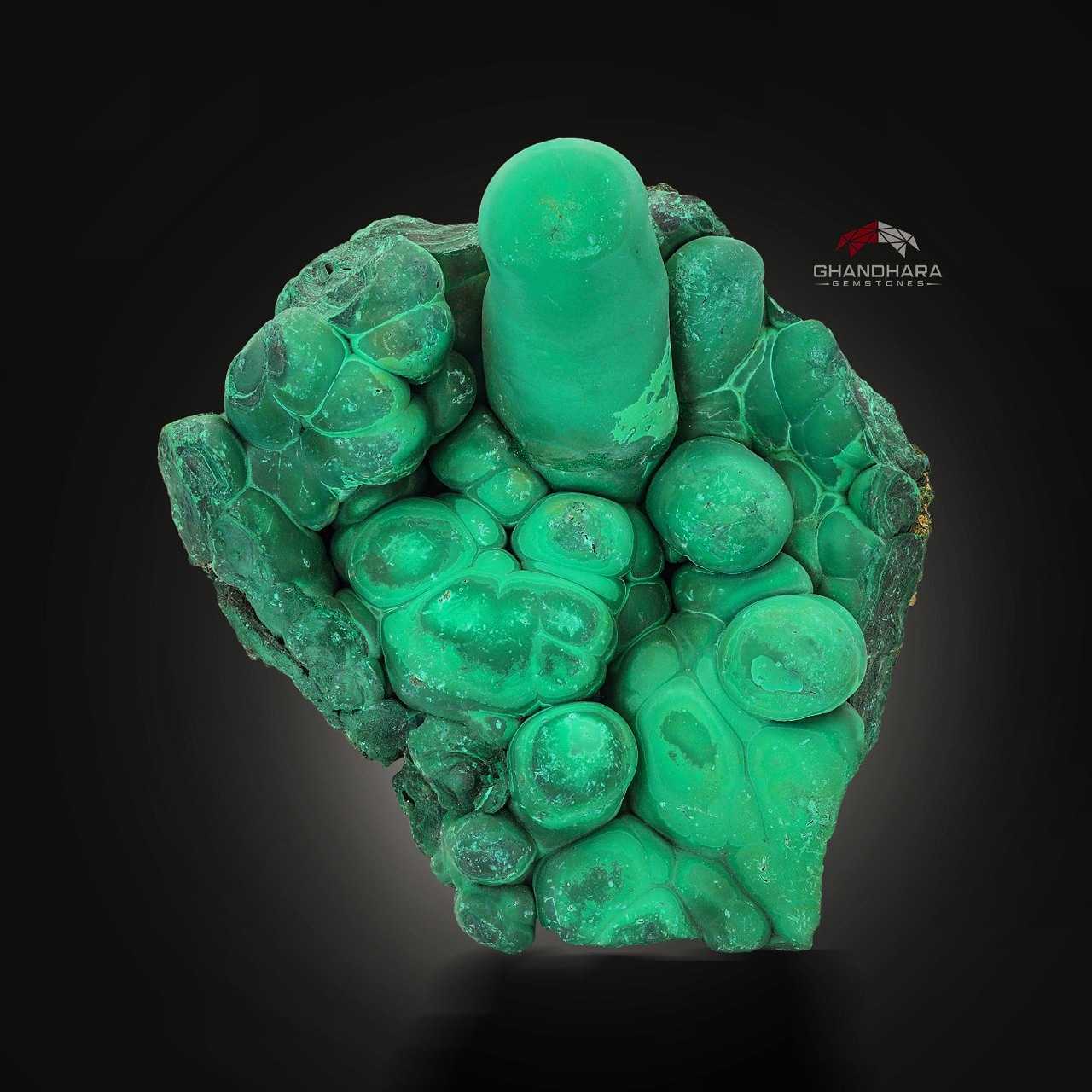
Buy 2446 Grams Forest Green Malachite Crystals - Green
Buy 2446 Grams of Forest Green Malachite Crystals which is for sale at wholesale price from Shilu Mine, Yangchun County, Yangjiang Prefecture, Guangdong, China. Forest Green Malachite Crystals Shilu Mine, Yangchun County, Yangjiang Prefecture, Guangdong, China. Presenting this beautiful-looking large cabinet of Malachite featuring...- $650.00
- $650.00
- Unit price
- per
-
Green
-
Buy 489 Grams Forest Green Malachite with Interesting Botryoidal Formation - Green
Buy 489 Grams of Forest Green Malachite with Interesting Botryoidal Formation which is for sale at wholesale price from Shilu Mine, Yangchun County, Yangjiang Prefecture, Guangdong Province, China. Forest Green Malachite with Interesting Botryoidal Formation Shilu Mine, Yangchun County, Yangjiang Prefecture, Guangdong Province, China....- $220.00
$240.00- $220.00
- Unit price
- per
-
Green
Free Shipping on order over $80
100% Authentic & Certified
Save Big in 2026
Malachite Minerals
Malachite minerals are best selected by comparing natural green color, botryoidal or fibrous growth, crystal definition, banding, matrix relationships, dimensions and visible preservation rather than by choosing the brightest green or largest specimen automatically. Malachite is a copper carbonate hydroxide with the formula Cu₂CO₃(OH)₂. It crystallizes in the monoclinic system, has a Mohs hardness around 3.5 to 4, and commonly develops bright to dark green colors that make it one of the most recognizable secondary copper minerals.
Sidebar


Collector specimens can look dramatically different from one another because malachite occurs as botryoidal crusts, velvety fibrous surfaces, stalactitic forms, radiating aggregates, massive banded material and less commonly distinct individual crystals. That diversity means a rounded botryoidal specimen should not be judged by the same standards as a rare crystalline spray. Buyers comparing malachite with other mineral specimens and crystals should focus first on the natural growth style that makes the individual specimen distinctive.
Malachite Green Color: Why Natural Variation Adds Collector Character
Malachite ranges from bright green and emerald-like green through deep forest tones, with some crystalline areas becoming so dark they can appear nearly black until strong light reaches their edges. This range is natural and can occur within one specimen when layers or fibers grew under changing conditions.
Color intensity should be evaluated together with surface structure. A medium-green botryoidal specimen with excellent silky luster can be far more visually dynamic than a uniformly dark piece whose texture is difficult to see.
Banding adds another dimension because lighter and darker greens may alternate in massive or polished malachite. On natural specimens, subtle color differences can reveal successive stages of growth without requiring the material to be cut or polished.
Botryoidal Malachite: Rounded Growth With Strong Natural Texture
Botryoidal malachite forms rounded surfaces resembling clusters of grapes or bubbles. These shapes develop as fine fibrous crystals grow outward from many closely spaced centers, producing smooth or velvety domes rather than obvious large individual crystals.
The quality of a botryoidal specimen depends strongly on preservation. Intact rounded surfaces can create flowing patterns of light and shadow, while broken domes expose internal fibrous or banded structures. A few natural contacts may add geological interest, but extensive crushing can destroy the sculptural appearance that makes the habit desirable.
Size is not the only consideration. A compact specimen containing several well-formed overlapping spheres can display more naturally than a much larger crust with extensive damaged areas.
Fibrous and Velvety Malachite: Why Surface Luster Can Change With the Viewing Angle
Fine fibrous malachite can produce silky or velvety surfaces where thousands of tiny crystals reflect light collectively. The appearance can shift dramatically as a specimen is rotated, with bright green bands moving across the fibers according to illumination.
These surfaces are visually attractive but can also be delicate. Fine fibers should not be rubbed, scrubbed or handled repeatedly because pressure can flatten or break structures that are difficult to restore.
Photography may emphasize this effect strongly, so buyers should consider several angles rather than assuming the brightest image represents a permanently glowing surface. The moving silky reflection is part of the specimen's natural character.
Crystalline Malachite: Why Distinct Individual Crystals Are Different From Massive Material
Distinct well-developed malachite crystals are less commonly encountered than massive, fibrous or botryoidal material. When present, they can form slender prisms, needles or crystal sprays and may show deeper green color than surrounding aggregates.
Collector priorities change with crystalline specimens. Termination quality, individual crystal separation and matrix placement become more important than banding or rounded botryoidal texture.
A small crystal spray with intact terminations can therefore carry substantial mineralogical interest even when it contains far less malachite than a large massive specimen. The two forms should be appreciated according to what each preserves naturally.
Malachite and Azurite: Closely Associated Copper Minerals
Malachite commonly occurs with azurite because both minerals form in the oxidized zones of copper deposits. Their strong color contrast can create striking specimens, with vivid green malachite beside deep blue azurite.
Azurite can also alter to malachite under suitable geological conditions, so some specimens preserve partial replacement textures rather than two entirely independent minerals. A surface may show green malachite developing around or replacing areas that were originally azurite.
Collectors interested in the blue member of this association can compare natural azurite mineral specimens, while a mixed blue-green specimen should be evaluated as one geological composition rather than simply by calculating which color occupies more area.
Malachite Banding: How Layered Green Patterns Develop
Massive malachite can show concentric, curved or irregular bands of lighter and darker green. These patterns form through repeated mineral deposition and can become especially obvious on broken or polished surfaces.
In a natural collector specimen, visible banding can add geological interest even without polishing. A broken area may expose internal growth that contrasts with botryoidal texture on the exterior, allowing the collector to see two aspects of the same specimen.
Banding should remain subordinate to structural condition, however. An attractive internal pattern does not compensate automatically for unstable fractures or badly damaged focal surfaces.
Malachite Hardness and Brittleness: Protecting Soft Copper-Carbonate Surfaces
Malachite has Mohs hardness approximately 3.5 to 4, making it softer than quartz, feldspar and many common gem minerals. It is also brittle and possesses cleavage, so exposed crystals and delicate fibrous areas can be damaged by surprisingly modest impact.
Storage should prevent malachite from rubbing against harder specimens. Even a polished-looking natural surface can scratch, while fine fibers may be permanently flattened through handling.
The practical recommendations under gemstone care are especially relevant because carbonate minerals should be kept away from acidic cleaners and harsh chemical treatments. Gentle dry cleaning is often preferable for fragile collector specimens.
Malachite and Acids: Why Chemical Cleaning Is a Poor Choice
Malachite is a carbonate-bearing mineral, so acids can attack it chemically. Household acidic cleaners, vinegar and similar products should therefore not be used to brighten or clean a specimen.
The risk is not merely cosmetic. Chemical attack can dull natural luster, etch surfaces and damage fine fibrous growth that originally made the specimen attractive.
Matrix associations create additional uncertainty because another mineral on the specimen may react differently from malachite. Conservative cleaning protects the complete association rather than solving one surface issue at the expense of another mineral.
Malachite Dust Safety: Solid Specimens and Lapidary Work Are Different Situations
Malachite contains copper, so cutting, grinding or sanding can produce mineral dust that should not be inhaled or ingested. This is principally a concern during lapidary or specimen-preparation work rather than ordinary cabinet display.
Collectors should avoid creating dust unnecessarily. Anyone shaping malachite should use appropriate professional wet-working methods, dust controls and personal protection designed for mineral lapidary work rather than dry grinding the stone casually.
An intact collector specimen can simply be handled sensibly, with hands washed after extensive handling and the mineral kept away from food preparation areas. There is no reason to perform destructive tests on an attractive piece.
Malachite Matrix Specimens: Copper-Mineral Associations Add Geological Context
Malachite forms as a secondary mineral in oxidized copper deposits and can occur with azurite, chrysocolla, cuprite, limonite, calcite and many additional species depending on the deposit.
Matrix can strengthen both appearance and geological meaning. Bright green malachite on pale calcite may provide strong contrast, while mixed copper minerals can show several stages of alteration within one piece.
The host should still be assessed for stability. A heavy malachite crust attached to fractured matrix can detach even when the green surface itself appears solid. Buyers should inspect the base and contact areas rather than focusing only on the most colorful side.
Malachite vs Similar Green Minerals
Malachite's intense green color is distinctive, yet several green minerals can resemble it in massive or fine-grained form. Chrysocolla, green calcite, certain copper phosphates and other secondary minerals can overlap partly in color.
Crystal habit, streak, hardness, density, chemistry and associated minerals provide stronger identification evidence than green color alone. Distinct banding can be highly suggestive, but polished decorative material should still be identified accurately rather than assumed from pattern.
Gandhara Gems' authenticity guarantee provides relevant purchase context where mineral identity matters, particularly for specimens sold primarily because of natural crystal or botryoidal form.
Malachite Meaning and Traditional Associations vs Scientific Properties
Malachite has a long history in ornament, pigment, architecture and personal symbolism because its green coloration is visually distinctive and easily recognized. Modern crystal traditions also associate it with various emotional or spiritual themes.
Those beliefs should remain separate from mineral science. Malachite is scientifically important as a copper carbonate mineral with characteristic color, hardness, cleavage and geological occurrence. Claims that it treats diseases or provides measurable medical effects are not established by those physical properties.
Its genuine geological and cultural history already provides substantial interest without requiring unsupported health claims.
Malachite Dimensions and Display Planning
Botryoidal and stalactitic specimens can occupy more space than their weight suggests because rounded or projecting surfaces extend in several directions. Massive pieces can present the opposite situation, feeling relatively heavy while remaining compact.
Length, width and height therefore provide a clearer sense of display requirements than weight alone. Fine crystal sprays also need clearance from neighboring minerals so that delicate needles or fibers are not accidentally touched.
Macro photography can make small botryoidal spheres appear very large, so buyers should always compare close-up detail with the listed physical dimensions before deciding how the specimen will fit into a cabinet.
Buying Malachite Minerals Online: Compare Growth Habit and Condition First
A careful online comparison begins by identifying the specimen's dominant growth style, whether botryoidal, fibrous, crystalline, banded or massive. Color, luster, matrix, dimensions and condition can then be judged according to that natural form.
Several viewing angles are especially important with botryoidal specimens because damage can hide between rounded growths, while crystalline pieces should be examined for complete tips and stable attachment. Bright lighting should not substitute for evaluating actual surface preservation.
Choose the current Malachite Mineral whose green color, natural texture and structural condition best fit the type of specimen you want to display rather than selecting solely by total size.
Malachite Mineral FAQs
What makes a strong malachite mineral specimen?
A strong specimen preserves the natural feature that makes the piece distinctive, whether that is smooth botryoidal growth, silky fibers, sharp crystals, banding or an attractive copper-mineral association. Rich green color helps, but condition and surface preservation are equally important. A smaller intact botryoidal piece can be much more satisfying than a larger specimen whose focal surfaces have been crushed or heavily scratched.
Why does malachite form rounded botryoidal surfaces?
Botryoidal malachite develops when many fine fibrous crystals grow outward from closely spaced centers. Their combined growth produces rounded grape-like or bubble-like surfaces rather than a few large visible crystals. This structure can also create silky reflections because the fine fibers interact with light collectively.
Is malachite always associated with azurite?
No, but the two minerals occur together frequently because both can form in oxidized copper deposits. Azurite can also alter into malachite under suitable geological conditions, so mixed blue and green specimens are common enough to be familiar to collectors. Malachite can nevertheless occur without visible azurite.
How hard is malachite?
Malachite has Mohs hardness around 3.5 to 4, making it relatively soft compared with quartz and many familiar gemstones. Its surfaces can scratch through contact with harder minerals, while crystalline and fibrous forms may also chip or crush. Separate, stable storage is therefore preferable to frequent handling.
Can I clean malachite with vinegar or another acidic cleaner?
No. Malachite is a copper carbonate hydroxide, and acidic substances can attack carbonate minerals. Vinegar and acidic household cleaners can etch or dull natural surfaces. Gentle, conservative cleaning is more appropriate, especially for fibrous and botryoidal collector specimens.
Is malachite dangerous to handle?
An intact specimen can be handled sensibly as a collector mineral. The greater concern arises when malachite is cut, ground or sanded because those activities can create copper-bearing mineral dust that should not be inhaled or ingested. Lapidary work should therefore use appropriate wet methods, ventilation, dust control and personal protection.
Is darker green malachite more valuable than lighter green material?
Not automatically. Color is only one part of specimen quality. Natural growth habit, surface preservation, luster, crystal definition, matrix association and provenance can all matter substantially. A lighter green specimen with exceptional botryoidal structure or intact crystals may be far more collectible than a darker but heavily damaged piece.
Choose Malachite Minerals by Green Color, Natural Growth and Preservation
Compare the current Malachite Minerals by vivid green color, botryoidal or fibrous growth, crystal development, banding, matrix association, physical dimensions and visible condition. Give particular attention to intact rounded surfaces, delicate fibers and stable crystal attachments because these natural structures carry much of the specimen's character. Choose the individual malachite whose growth form, preservation and copper-mineral context best fit your collection and display.

Recently Viewed Products
Example product title
- $19.99
- $19.99
- Unit price
- / per
Example product title
- $19.99
- $19.99
- Unit price
- / per
Example product title
- $19.99
- $19.99
- Unit price
- / per
Example product title
- $19.99
- $19.99
- Unit price
- / per
Example product title
- $19.99
- $19.99
- Unit price
- / per
Example product title
- $19.99
- $19.99
- Unit price
- / per
Example product title
- $19.99
- $19.99
- Unit price
- / per
Example product title
- $19.99
- $19.99
- Unit price
- / per
Example product title
- $19.99
- $19.99
- Unit price
- / per
Example product title
- $19.99
- $19.99
- Unit price
- / per
- Choosing a selection results in a full page refresh.


