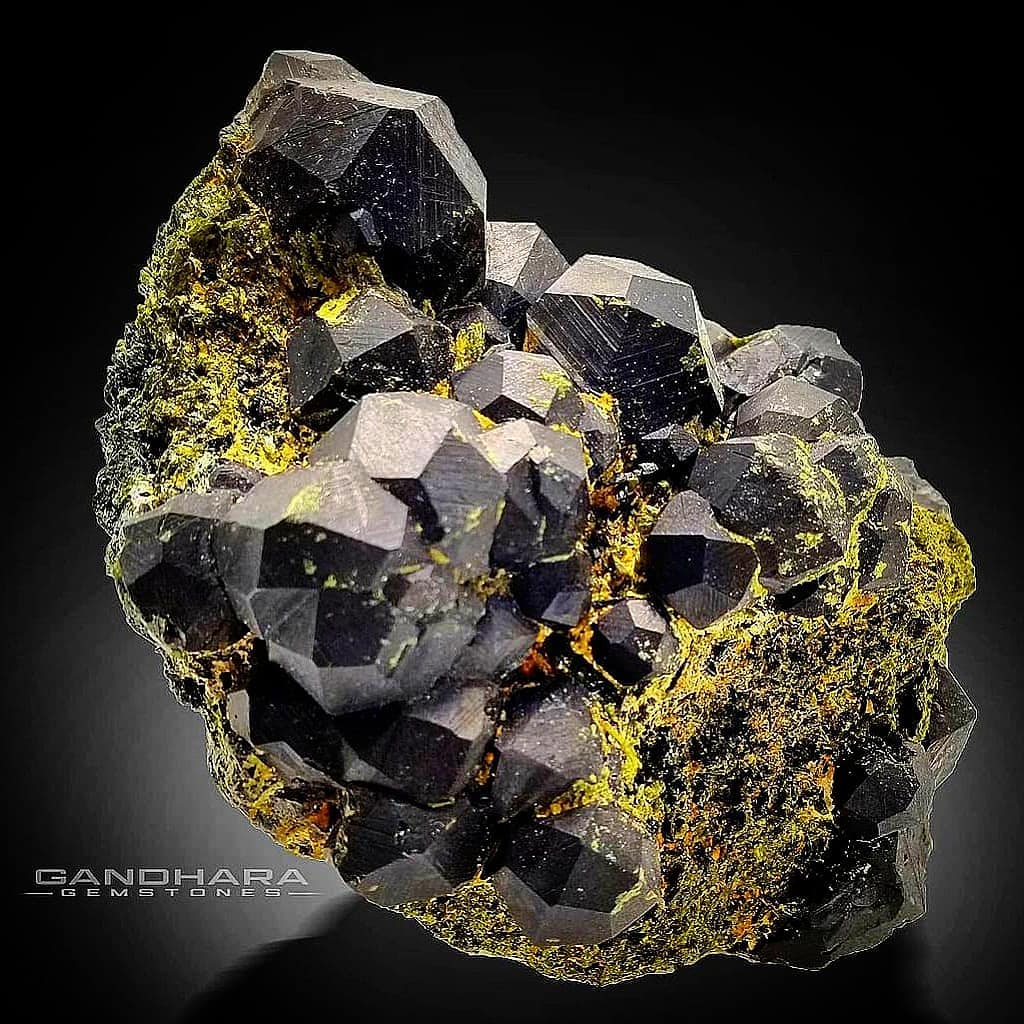
Garnet Minerals

Garnet mineral specimens should be selected by examining natural crystal form, color, luster, matrix association, dimensions and preservation rather than judging them by the same standards used for faceted garnet gemstones. Garnet is a mineral group, not a single mineral variety, and natural crystals can occur in familiar deep reds and reddish browns as well as orange, green and other colors depending on composition. Well-formed dodecahedral or trapezohedral crystals can make especially distinctive collector specimens because their natural geometry remains visible without cutting or polishing.

Garnet Crystal

For specimen buyers, inclusions and surface textures can add geological character rather than simply reducing clarity. An intact crystal embedded in contrasting matrix may have stronger collector appeal than transparent cutting material whose natural form is poorly preserved. Buyers seeking finished jewelry stones can compare garnet gemstones, while lapidaries who want material to shape themselves can evaluate rough garnet. Garnet mineral specimens serve a different purpose by preserving the crystal as part of its natural mineralogical context.

Garnet Crystal Form: Dodecahedral and Trapezohedral Shapes Collectors Look For

Garnets crystallize in the isometric crystal system and commonly develop highly recognizable equant forms. Dodecahedral crystals with twelve rhombic faces and trapezohedral forms with a greater number of kite-like faces are among the structures collectors may encounter, while natural crystals can also combine several forms or appear as clusters.

This geometry gives garnet specimens a distinctly different character from elongated minerals such as tourmaline or aquamarine. A compact garnet crystal may look almost deliberately shaped even though its symmetry formed naturally.

Crystal definition is an important buying factor. Sharp edges, complete faces and an intact overall form can make a modest-sized garnet particularly appealing. Natural contacts or embedded areas are not necessarily defects because a crystal may have grown against surrounding minerals. More important damage includes fresh chips or broken regions that disrupt the focal crystal's original symmetry.

Collectors should therefore look at how completely the crystal habit can be appreciated rather than demanding that every surface remain exposed.

Garnet Mineral Color: Why the Group Extends Far Beyond Deep Red

Deep red is strongly associated with garnet, but it represents only part of the group's natural color range. Depending on composition, garnets can occur in red, reddish brown, orange, yellowish, green and other tones. This diversity means color alone cannot reliably establish which garnet species or compositional variety a specimen represents.

Thick crystals can also appear considerably darker than their thin edges. A garnet that looks nearly black in ordinary reflected light may reveal deep red or brown-red coloration when strong light passes through an edge. Transparent or translucent zones can create striking effects, particularly in crystals with smooth, lustrous faces.

The darkest crystal is not automatically the strongest specimen. Color should be considered with natural form, luster, matrix and condition. A lighter crystal with exceptional geometry may have greater visual impact than a darker but badly damaged example.

The existing garnet gemstone overview provides additional context on how diverse the garnet family can be.

Garnet Species and Identification: Why Crystal Color Does Not Tell the Whole Story

The garnet group includes members such as almandine, pyrope, spessartine, grossular and andradite, along with intermediate compositions. Natural garnets frequently form solid-solution relationships, so an individual crystal may not fit a simplistic color-based identification.

For collectors, this means a red garnet should not automatically be labeled almandine or pyrope based on appearance alone, just as a green specimen should not receive a precise species name without supporting evidence. Color provides useful context, but composition is the defining factor.

Crystal form, refractive behavior, density and other properties can assist identification, while advanced analytical testing may be required for definitive compositional classification. Gandhara Gems' authenticity guarantee provides relevant purchasing context for mineral and gemstone identity.

A systematically organized collection benefits from preserving any supplied species identification, locality and associated documentation with the specimen rather than relying on memory or color once the piece has been separated from its original label.

Garnet Luster and Surface Condition: Reading Natural Crystal Faces Correctly

Garnet crystals commonly display vitreous to resinous luster depending on composition and surface condition. Smooth natural faces can reflect light strongly enough to emphasize the crystal's geometric structure, while growth textures or partial coatings can produce a less uniform appearance.

Surface irregularity is not automatically damage. Natural etching, contacts with neighboring minerals and uneven growth can all form before the specimen is mined. These features often provide evidence of the crystal's geological history.

Fresh chips deserve separate consideration because they interrupt the original form. Their importance depends on location. Minor damage on the base of a matrix specimen may have little visual impact, while a large chip on the main face of an isolated dodecahedron can substantially alter its symmetry.

Buyers should therefore evaluate the specimen from its strongest display direction and ask whether the focal crystal still communicates its natural morphology clearly.

Garnet Matrix Specimens: How Host Rock and Associated Minerals Add Context

Garnet commonly occurs within matrix, and the contrast between equant crystals and surrounding host rock can create compelling collector specimens. A single prominent garnet may dominate the composition, or a specimen may contain numerous smaller crystals distributed across a larger surface.

The best composition depends on personal collecting goals. A systematic collector may prefer one clearly defined crystal whose form can be studied easily, while another buyer may value a complex matrix piece showing several garnets and associated minerals.

Matrix stability should always be considered alongside appearance. A garnet may itself be relatively durable, yet a soft or fractured host rock can make the specimen fragile. Crystals projecting from matrix may also be vulnerable at their attachment points.

The main mineral specimens and crystals selection provides useful context for comparing garnet matrix pieces with minerals that occur as elongated prisms, blades or tabular crystals.

Garnet Size and Density: Why Carat or Gram Weight Does Not Equal Display Size

Garnets generally have relatively high density compared with quartz and some other common collector minerals. This means a compact garnet specimen can feel surprisingly heavy for its physical dimensions.

For display planning, length, width and height therefore provide far more intuitive information than total weight. A dense single crystal and a larger lightweight matrix specimen may have similar masses while occupying very different amounts of cabinet space.

Weight becomes even less useful when matrix is involved because the host rock contributes its own density. A heavier piece does not necessarily contain larger garnet crystals or represent stronger specimen quality.

Collectors should instead compare focal crystal dimensions, overall specimen size, crystal completeness and composition. These characteristics provide a better indication of how the piece will actually look in hand or on display.

Garnet Hardness, Lack of Cleavage and Specimen Durability

Members of the garnet group generally fall around 6.5 to 7.5 on the Mohs hardness scale, although exact hardness varies with composition. Garnet also lacks a distinct cleavage direction, which helps explain its suitability as both a jewelry gemstone and a durable mineral specimen.

That does not make natural crystals unbreakable. Impacts can chip edges, fractures can extend, and projecting crystals may separate from matrix. An isolated crystal should therefore be stored so that it does not repeatedly strike other hard minerals, while matrix specimens should be supported from their strongest base.

The gemstone care information provides useful general handling principles. For natural specimens, however, the matrix and associated minerals may introduce weaknesses that are not apparent from garnet's hardness alone.

Garnet Mineral Specimens vs Rough Garnet for Cutting

An unpolished garnet can potentially interest both collectors and lapidaries, but crystal form changes how the piece should be approached. A well-developed dodecahedral or trapezohedral crystal preserves natural morphology that disappears permanently once the stone is cut.

A broken crystal fragment with excellent transparency but little specimen form may make more sense as lapidary rough. In that case, recoverable color, clarity and dimensions become more important than natural surfaces.

A complete crystal presents a different decision. Cutting it may produce a polished gem, but the process destroys the geological structure that made the specimen distinctive. Buyers should therefore determine whether natural form or finished gemstone appearance is the higher priority before treating specimen quality as potential cutting yield.

This separation also prevents an intact collector crystal from being judged unfairly by the same criteria used for transparent faceting rough.

Garnet Birthstone Tradition and Mineral Collecting

Garnet is traditionally associated with January, which makes the mineral familiar far beyond specialist collecting. Birthstone tradition can provide personal meaning for a specimen, but it should remain separate from mineralogical identification and quality.

The January garnet birthstone tradition concerns garnet's cultural and jewelry role. A natural specimen should still be evaluated by crystal form, species information where available, color, matrix, locality and condition.

For someone building a birthstone-related mineral collection, an intact natural garnet crystal can provide a particularly useful contrast with a faceted jewelry stone because it shows the gemstone before human shaping and polishing.

Garnet Locality and Provenance: Why Documented Source Information Adds Value

Garnets occur in many geological settings around the world, and locality information can add substantial scientific interest when accurately documented. Crystal shape and color may sometimes resemble material from known deposits, but those visible characteristics should not be treated as proof of geographic origin.

Documented provenance helps place a garnet within its geological context and can be especially useful when the specimen includes characteristic host minerals. Collectors who organize their holdings geographically should preserve locality labels and any supporting records together with the specimen.

When reliable origin information is absent, assigning a prestigious locality based on appearance creates unnecessary uncertainty. The crystal remains useful as a garnet specimen based on its observable characteristics even when its exact source is unknown.

Buying Garnet Mineral Specimens Online: Final Checks Before Choosing

Compare available garnet specimens by crystal form, color, luster, matrix association, dimensions and visible condition. Determine whether your priority is an isolated crystal with clearly readable geometry or a more complex matrix piece that preserves geological associations.

Examine prominent edges for chips and determine whether irregular areas appear to be natural contact surfaces or later damage. For dark crystals, photographs under more than one lighting condition can help reveal whether red, brown or other color becomes visible through thinner portions.

Practical buying conditions matter as well, especially for unique specimens that cannot simply be replaced with an identical example. Gandhara Gems' shipping information explains applicable order considerations, while the return policy provides relevant conditions for evaluating a specimen after delivery.

Garnet Mineral Specimen FAQs

Is garnet one mineral?

Garnet is a group of related minerals rather than one single composition. Members include almandine, pyrope, spessartine, grossular and andradite, among others.

What natural crystal shapes does garnet form?

Garnet commonly forms equant crystals such as dodecahedra and trapezohedra, as well as combinations of these forms.

Are all garnet crystals red?

No. Garnets occur in red, brown, orange, yellowish, green and other colors depending on their composition.

Can you identify garnet species from color alone?

Not reliably. Color can provide clues, but precise species identification depends on composition and may require additional gemological or mineralogical testing.

Are garnet mineral specimens durable?

Garnet generally has good hardness and lacks a distinct cleavage direction, but natural crystals can still chip, fracture or separate from fragile matrix.

Is a garnet specimen better if it is transparent?

Not necessarily. Transparency may add visual interest, but mineral specimen quality also depends heavily on natural form, matrix, surface condition and preservation.

Should a complete garnet crystal be cut into a gemstone?

That depends on the buyer's goal. A well-formed natural crystal preserves mineralogical features that are permanently lost after cutting, while broken transparent material may be better suited to lapidary use.

Choose Garnet Minerals by Natural Geometry, Color and Preservation

Compare the current garnet mineral specimens by crystal form, natural color, surface luster, matrix relationship, actual dimensions and condition. Buyers seeking classic mineral morphology should prioritize clearly developed dodecahedral or trapezohedral forms, while those interested in geological associations may prefer crystals naturally embedded in contrasting matrix. Rather than selecting according to weight or darkness alone, choose the garnet whose natural structure and preservation make it the strongest fit for your collection or display.

Gemstone expert consultations available

Welcome to my shop! Contact Us

Recently Viewed Products
