

-
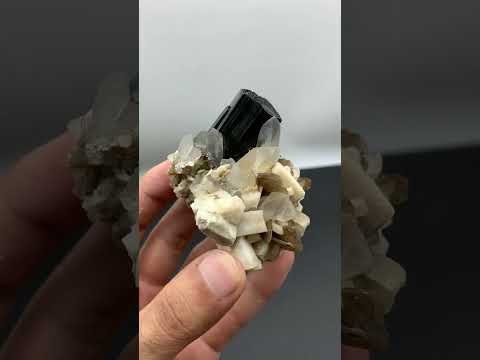
Lustrous Schorl Black Tourmaline with Quartz on Albite from Pakistan - Black
This specimen is a striking combination of lustrous Schorl Black Tourmaline crystals inter grown with clear Quartz, all set against a bed of white Albite. The jet-black Schorl exhibits sharp, well-defined prismatic formations with a glossy surface that contrasts beautifully against the translucent Quartz,...- $250.00
- $250.00
- Unit price
- per
-
Black
-
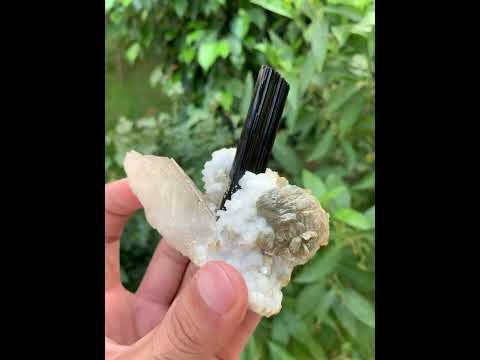
Free Standing Schorl Tourmaline on Albite with Smoky Quartz and Mica from Pakistan - Black
This stunning mineral specimen features a freestanding Schorl Black Tourmaline crystal, elegantly perched atop a bed of white Albite. The jet-black Schorl Tourmaline exhibits sharp, well-defined prismatic faces with vertical striations, creating a striking contrast against the pearly, snow-white Albite matrix. Accompanying the Schorl...- $350.00
- $350.00
- Unit price
- per
-
Black
-
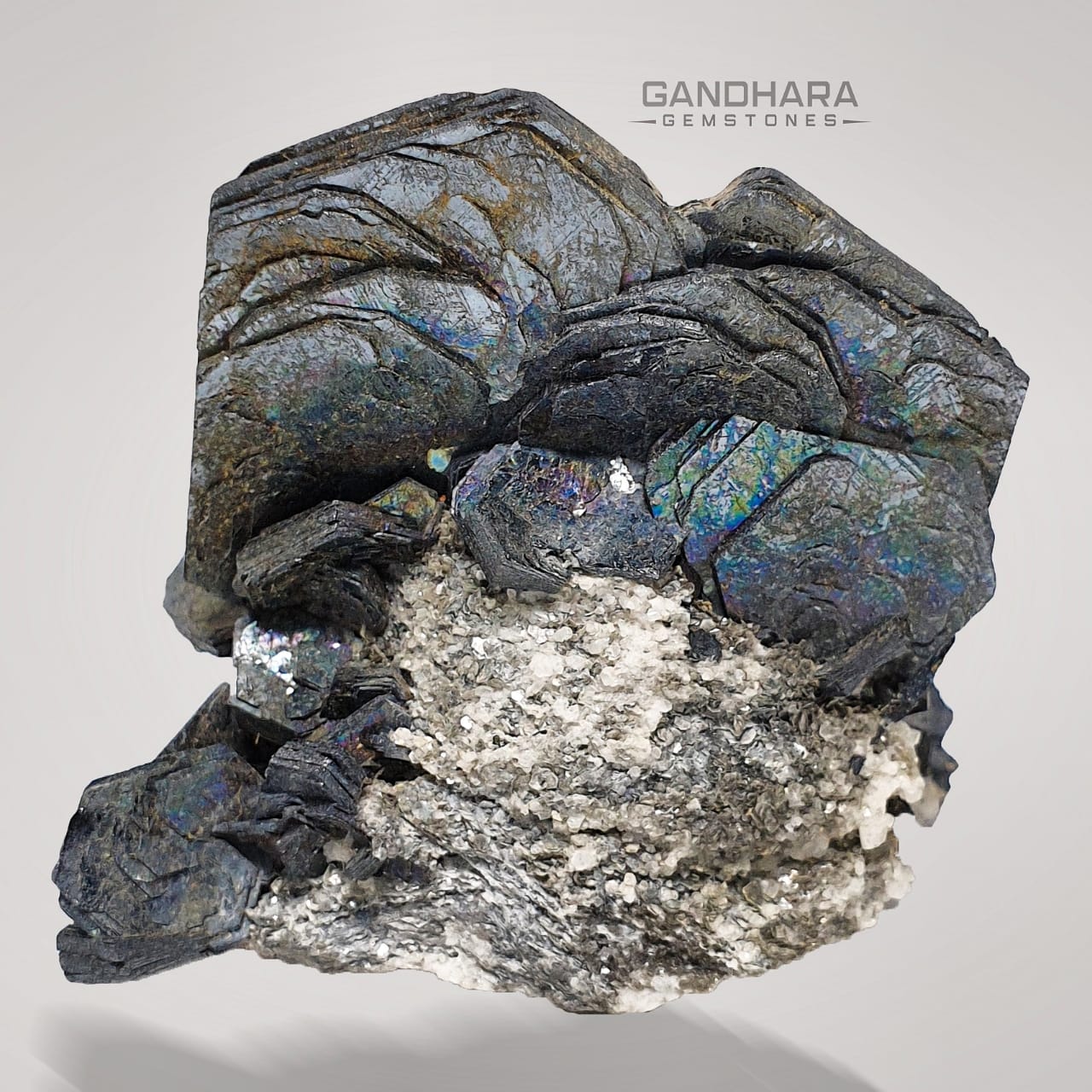
Impressive and lustrous Hematite rosette crystals on matrix from Pakistan - Black
A metallic luster Hematite crystal aggregate is a remarkable mineral specimen characterized by its captivating appearance and unique structural features. Hematite, with its iron-rich composition, forms intricate crystal aggregates that can exhibit twinning, a phenomenon where two or more crystal structures grow together, creating...- $1,900.00
- $1,900.00
- Unit price
- per
-
Black
-
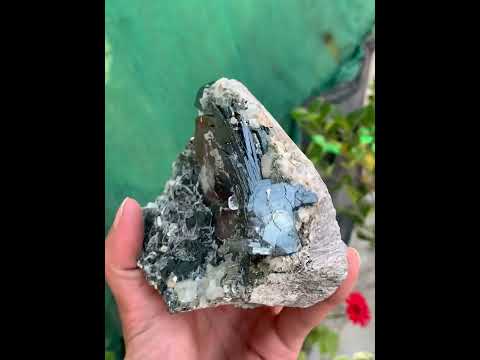
Shiny Twinned Metallic Luster Hematite Crystal Aggregate from Pakistan - Black
A twinned metallic luster Hematite crystal aggregate is a remarkable mineral specimen characterized by its captivating appearance and unique structural features. Hematite, with its iron-rich composition, forms intricate crystal aggregates that can exhibit twinning, a phenomenon where two or more crystal structures grow together,...- $280.00
- $280.00
- Unit price
- per
-
Black
Free Shipping on order over $80
100% Authentic & Certified
Save Big in 2026
Hematite Minerals
Hematite minerals are best selected by comparing natural crystal form, metallic to submetallic luster, surface preservation, matrix relationship, dimensions and overall specimen character rather than by assuming that the darkest or heaviest piece is automatically the strongest choice. Hematite is iron oxide with the formula Fe₂O₃, and its appearance is remarkably diverse. Well-crystallized specimens can look steel-gray to nearly black with bright metallic faces, while fine-grained or earthy hematite may appear red, reddish brown or rust colored. The mineral's characteristic reddish-brown streak provides an important reminder that external color alone does not tell the complete identification story.
Sidebar




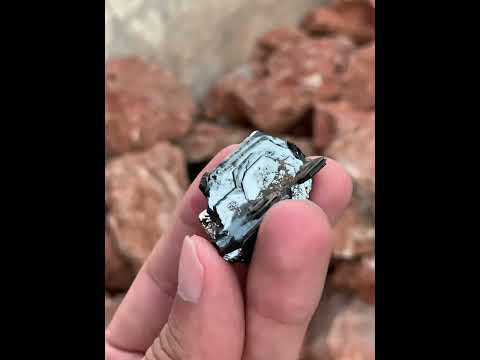
For collectors, hematite can range from sharply crystallized metallic pieces to botryoidal, massive, platy or earthy forms, and each habit creates a different kind of specimen appeal. A compact crystal group with strong natural luster may make an excellent cabinet piece, while an unusual matrix association can offer more geological context than an isolated crystal. Buyers comparing hematite with other mineral specimens and crystals should therefore concentrate on what the individual specimen preserves rather than trying to force every hematite into one visual standard.
Hematite Crystal Form: Why Metallic Faces and Natural Growth Matter
Hematite crystallizes in the trigonal system and can occur in several habits, including tabular, platy and more complex crystal forms. Some specimens develop broad reflective faces that create a striking metallic appearance, while others consist of tightly intergrown crystals whose individual geometry becomes more apparent under directional lighting. This variation means a collector should examine how clearly the specimen expresses its natural growth rather than simply judging the size of the overall mass.
Natural surfaces can include growth textures, contact areas and uneven regions where neighboring minerals restricted development. These features are not automatically damage because they formed as part of the specimen's geological history. Fresh chips are different when they interrupt a previously continuous crystal edge or expose a newly broken surface in a visually important area.
A smaller hematite specimen with intact faces and strong luster may therefore communicate the mineral's crystal character more effectively than a much larger piece whose important surfaces have been heavily abraded. The useful comparison is between preservation, morphology and visual coherence rather than maximum dimensions alone.
Hematite Metallic Luster: From Mirror-Bright Faces to Submetallic Surfaces
Metallic luster is one of hematite's most recognizable collector features, but not every natural specimen has the same degree of reflectivity. Some crystals produce brilliant silver-gray reflections from smooth faces, while other pieces appear more submetallic, dull or earthy depending on crystal size, surface condition and texture.
Strong luster can make even a relatively dark crystal visually dynamic because its faces catch light at different angles. A specimen with several orientations may flash from one surface to another as it is moved, emphasizing crystal geometry that would otherwise be difficult to see against the steel-gray body color.
Surface preservation is especially important when luster is a major part of the specimen's appeal. Abrasion, scratches and oxidation-related coatings can change the appearance of reflective faces, although natural surface variation should not automatically be treated as a defect. The best approach is to identify which surfaces form the visual focus and determine whether they retain enough natural character to present the specimen attractively.
Hematite Color vs Reddish-Brown Streak: An Important Identification Difference
Hematite can appear steel-gray, silver-gray, blackish, reddish brown or bright earthy red, which is why external color alone is not sufficient for reliable identification. One of its classic diagnostic characteristics is a reddish-brown to rust-red streak, meaning the powdered mineral shows a red-brown color even when the specimen itself looks almost black and metallic.
That difference between body color and streak is particularly useful when understanding why metallic hematite and earthy red hematite belong to the same mineral species. The external appearance changes with crystal size and texture, while the iron oxide composition remains consistent.
Collectors should nevertheless avoid performing destructive streak testing on valuable or well-formed specimens merely to confirm an identification that can be established through existing documentation or less damaging methods. Preserving natural crystal surfaces is usually more important than reproducing a basic diagnostic test on a display-quality specimen.
Specular Hematite and Platy Crystals: When Reflective Texture Becomes the Main Feature
Some hematite specimens consist of thin, highly reflective plates or densely packed sparkling crystal surfaces. This type of appearance is often associated with specular hematite, where numerous small metallic faces create an almost glittering effect without artificial enhancement.
The appeal of such material differs from a specimen dominated by a few large, sharply defined crystals. A platy surface may be valued for texture, reflectivity and the way thousands of small faces interact with light, while an isolated crystal may be collected primarily for morphology.
Buyers should examine whether delicate plates remain intact because thin crystal edges can be more vulnerable than a massive-looking piece suggests. Strong reflectivity does not make the mineral immune to chipping, and rough handling can flatten or damage the structures responsible for the specimen's distinctive appearance.
Hematite Matrix Specimens: How Host Rock Changes the Display
Matrix can add considerable context to hematite minerals when the host rock or associated minerals contrast with the dark metallic crystals. A reflective hematite group on pale matrix can create a particularly strong visual composition because the mineral stands out clearly rather than blending into a uniformly dark background.
The amount of matrix is less important than its relationship with the focal crystals. A large host rock containing only a small damaged patch of hematite may offer limited display value, while a compact matrix specimen with several well-positioned crystals can preserve both geological context and strong visual balance.
Stability also matters because the host may be softer or more fractured than hematite itself. A specimen should be supported from its strongest base rather than lifted by projecting crystals, especially when narrow attachment points connect the mineral to the matrix.
Hematite Hardness, Brittleness and Safe Handling
Hematite generally has Mohs hardness around 5 to 6, giving it moderate resistance to scratching but making it softer than quartz and many common gem minerals. It is also brittle, so sharp crystal edges and thin plates can chip if the specimen is dropped or struck.
A dark metallic appearance can make hematite look extremely robust, but visual density should not be confused with toughness. Crystal groups containing thin projecting structures deserve careful handling, while heavy massive specimens can damage themselves or neighboring minerals if allowed to shift inside a storage drawer.
The practical principles under gemstone care are useful when storing mineral specimens, although hematite should always be treated according to the structure of the individual piece and any associated matrix. Keeping specimens separated and avoiding unnecessary rubbing helps preserve reflective surfaces.
Hematite Weight and Density: Why Compact Specimens Can Feel Surprisingly Heavy
Hematite has relatively high specific gravity, so a compact piece can feel heavier than its physical dimensions might suggest. This density is one reason weight alone provides a poor measure of how large a specimen will look in a cabinet.
A small dense hematite crystal group may weigh as much as a physically larger specimen of a less dense mineral, while a matrix piece can introduce further variation depending on the composition of the host rock. Buyers should therefore compare length, width and height alongside weight rather than using grams as a substitute for visible scale.
Dimensions also help determine whether the specimen can be displayed safely. A heavy piece with a narrow or irregular base may require secure support even if its overall size is modest, while broad, low specimens may rest more naturally without a stand.
Hematite vs Magnetite: Similar Dark Minerals With Important Differences
Hematite and magnetite are both important iron oxides, and dark examples can sometimes appear superficially similar. Their properties differ, however, and magnetite is well known for strong magnetic behavior while ordinary natural hematite does not normally show the same powerful attraction to a simple magnet.
The reddish-brown streak of hematite also provides an important contrast because magnetite typically produces a darker streak. These differences illustrate why mineral identification should rely on several physical characteristics rather than color alone.
Buyers should also be cautious with commercial products described as “magnetic hematite.” Strongly magnetic manufactured beads and decorative objects sold under that label are not necessarily equivalent to natural crystalline hematite mineral specimens. A collector building a mineral collection should prioritize reliable mineral identity and natural specimen characteristics rather than a marketing name.
Hematite Meaning and Traditional Associations vs Mineralogical Facts
Hematite has accumulated symbolic and cultural associations over long periods, particularly because its red powder resembles blood and because polished material has been used ornamentally. Those traditions may be personally meaningful, but they should remain separate from statements about mineral chemistry, physical properties or health.
Scientifically, hematite is an iron oxide mineral whose collector interest comes from its crystal forms, metallic luster, distinctive streak, density and geological occurrence. Claims that a crystal can medically heal, alter circulation or treat disease are not established by those mineralogical properties.
Keeping symbolism and gemology separate allows buyers to appreciate cultural traditions without confusing them with evidence-based information about the specimen itself.
Hematite Authenticity and Provenance: Preserve Reliable Specimen Information
Hematite occurs in many geological environments and regions, which makes locality information particularly interesting when it is supported by reliable provenance. A specimen label can connect the piece to a particular occurrence and add scientific value beyond its visual qualities.
Appearance alone should not be used to assign geographic origin because metallic hematite from different regions can overlap substantially in crystal habit and color. Famous locality names should therefore be preserved when documented rather than inferred from resemblance.
Gandhara Gems' authenticity guarantee provides relevant purchasing context when mineral identity matters. Collectors should keep any reliable locality or identification information supplied with the specimen so those details remain connected to the piece over time.
Buying Hematite Minerals Online: Compare Luster, Form and Condition Together
A useful online comparison begins with crystal form and surface luster, then considers matrix, physical dimensions, visible damage and the stability of any projecting structures. Several photographs are especially helpful with metallic hematite because highly reflective surfaces can look dramatically different as the lighting angle changes.
Buyers should distinguish deliberate close-up photography from actual specimen size by checking length, width and height. A finely crystallized surface may appear enormous on screen even when the complete specimen fits easily in the palm, while a dense piece can weigh far more than its visual dimensions suggest.
Gandhara Gems' shipping information provides the practical conditions that apply to delivery, and the return policy becomes relevant when a collector wants to assess luster, condition and physical scale after seeing the specimen in ordinary lighting.
Hematite Mineral FAQs
Why can hematite look black or silver when its streak is red?
Hematite's visible surface color depends heavily on crystal size, texture and the way light reflects from the specimen, which is why well-crystallized material can look steel-gray, silver-gray or almost black. When hematite is reduced to fine powder, however, its characteristic reddish-brown iron oxide color becomes much more obvious. The difference between dark metallic body color and reddish streak is therefore a normal mineralogical characteristic rather than evidence that the specimen has been artificially colored.
Is natural hematite strongly magnetic?
Ordinary hematite is not generally strongly attracted to a simple magnet in the way magnetite is, although magnetic behavior can vary where other minerals are present or after certain processes. Commercial objects sold as “magnetic hematite” may also consist of manufactured or altered substances rather than collectible natural hematite crystals. Buyers interested in genuine mineral specimens should therefore rely on mineral identity and documentation rather than assuming strong magnetism is a defining quality of hematite.
What makes a hematite mineral specimen collectible?
Collector appeal can come from well-developed crystal form, strong metallic or submetallic luster, unusual platy growth, attractive matrix associations and good preservation. A large specimen is not automatically better because damaged reflective faces or broken focal crystals can reduce the qualities that made the piece visually interesting. Smaller hematite minerals with sharp geometry and strong natural luster can provide exceptional cabinet presence despite modest dimensions.
Is hematite durable enough for frequent handling?
Hematite's hardness of approximately 5 to 6 gives it moderate scratch resistance, but the mineral is brittle and thin plates or crystal edges can chip under impact. Frequent handling can also introduce fingerprints, abrasion or accidental contact with harder specimens, which may diminish reflective surfaces. A stable display position and careful handling from the specimen's strongest base are preferable to repeatedly picking up delicate crystal groups.
Does metallic hematite contain more iron than red earthy hematite?
Both metallic crystalline hematite and earthy red hematite are fundamentally the same iron oxide mineral, Fe₂O₃. Differences in apparent color and luster are mainly related to particle size, crystallinity, surface texture and other physical factors rather than one form simply being “more hematite” than the other. Impurities and associated minerals can vary between specimens, but external appearance alone should not be used to infer precise chemical purity.
Should I choose hematite by weight when buying online?
Weight can be useful for understanding how substantial a specimen may feel, but hematite's relatively high density makes it unreliable as a measure of visible size. A compact piece can feel surprisingly heavy, while a matrix specimen may gain additional mass from the host rock. Actual length, width and height, together with crystal quality and condition, provide a much clearer picture of how the specimen will look in a collection.
Choose Hematite Minerals by Natural Luster, Crystal Form and Preservation
Compare the current Hematite Minerals by metallic or submetallic luster, natural crystal development, surface preservation, matrix relationship, actual dimensions and stability rather than simply choosing the darkest or heaviest piece. A compact specimen with strong reflective faces can be more compelling than a much larger mass with limited crystal definition, while matrix pieces can add geological context when the hematite remains visually prominent. Choose the individual specimen whose natural structure, condition and display character best fit the collection you are building.

Recently Viewed Products
Example product title
- $19.99
- $19.99
- Unit price
- / per
Example product title
- $19.99
- $19.99
- Unit price
- / per
Example product title
- $19.99
- $19.99
- Unit price
- / per
Example product title
- $19.99
- $19.99
- Unit price
- / per
Example product title
- $19.99
- $19.99
- Unit price
- / per
Example product title
- $19.99
- $19.99
- Unit price
- / per
Example product title
- $19.99
- $19.99
- Unit price
- / per
Example product title
- $19.99
- $19.99
- Unit price
- / per
Example product title
- $19.99
- $19.99
- Unit price
- / per
Example product title
- $19.99
- $19.99
- Unit price
- / per
- Choosing a selection results in a full page refresh.


