

-
cabinet size piece of Microcline Feldspar with Smoky Quartz from pakistan - White
A cabinet sized specimen of Microcline Feldspar with Smoky Quartz from Pakistan is a striking and visually captivating mineral combination. The Microcline Feldspar, known for its blocky, well-formed crystals, typically exhibits a pale to light greenish color, often referred to as Amazonite when the...- $650.00
- $650.00
- Unit price
- per
-
White
-
Twinned Microcline Feldspar with etched crystal surface from pakistan - White
This exquisite specimen features twinned Microcline Feldspar with an intricately etched crystal surface, sourced from the renowned mineral-rich regions of Pakistan. The twinning in the Microcline creates a captivating interplay of symmetry and geometry, enhancing the aesthetic appeal of the mineral. The etched surface...- $550.00
- $550.00
- Unit price
- per
-
White
-
Impressive Microcline Feldspar with Quartz and Cleavelandite from pakistan - White
The impressive Microcline Feldspar specimen from Pakistan is a stunning geological marvel that captivates with its intricate composition and aesthetic appeal. The dominant feature of this specimen is the exquisite Microcline Feldspar crystals, displaying a captivating interplay of colors ranging from delicate greens to...- $650.00
- $650.00
- Unit price
- per
-
White
-
Gorgeous museum grade Microcline Feldspar Crystal specimen from pakistan - White
Immerse yourself in the breathtaking beauty of a museum-grade Microcline Feldspar Crystal specimen from Pakistan, a true testament to the Earth's artistic prowess. This exquisite crystal, resplendent in its clarity and form, captivates the beholder with its ethereal charm. Mined from the rich geological...- $1,500.00
- $1,500.00
- Unit price
- per
-
White
Free Shipping on order over $80
100% Authentic & Certified
Save Big in 2026
Microcline Minerals
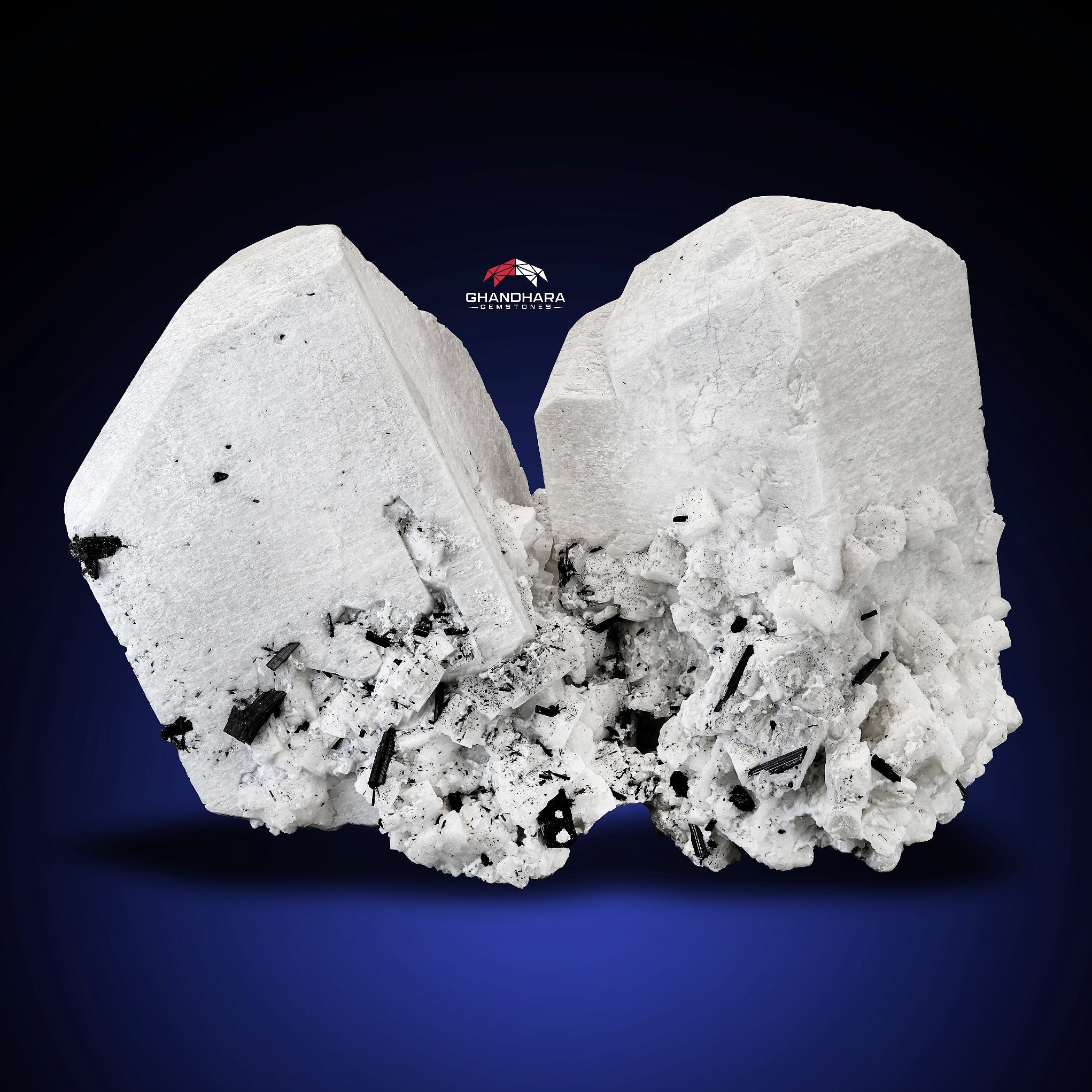
Microcline minerals are best selected by comparing natural crystal development, white to salmon-pink or green color, surface luster, cleavage, matrix relationships, physical dimensions and visible preservation rather than by choosing the largest or most colorful specimen automatically. Microcline is a potassium feldspar with the formula KAlSi₃O₈, crystallizes in the triclinic system and commonly appears white, cream, gray, tan, salmon-pink, yellowish or green. Its Mohs hardness is approximately 6 to 6.5, with vitreous luster and a pearly appearance commonly visible on cleavage surfaces.
Sidebar

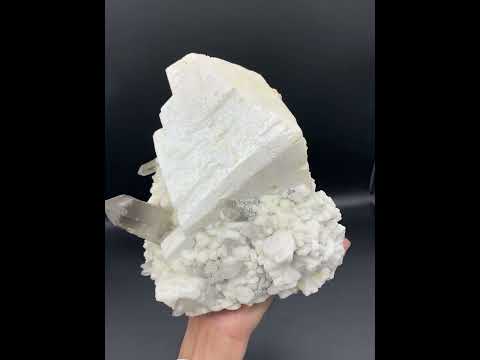

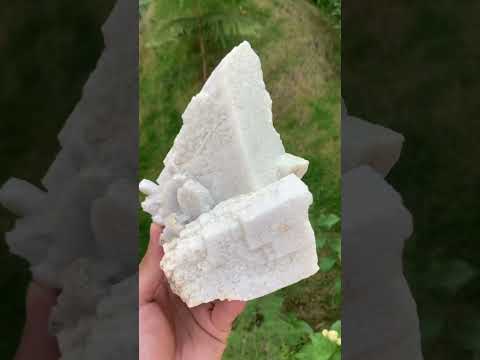


Microcline is also one of the major feldspar minerals encountered in granites and pegmatites, environments capable of producing crystals large enough to become impressive collector specimens. Yet scale alone does not determine quality. A smaller microcline crystal with recognizable form, sharp edges and an attractive association with quartz, mica or another pegmatite mineral can tell a clearer geological story than a much heavier block whose natural faces have been extensively broken. Buyers comparing microcline with other mineral specimens and crystals should therefore consider form and preservation before weight.
Microcline Crystal Form: Why Blocky Triclinic Feldspar Can Be Highly Collectible
Microcline commonly forms blocky, tabular or short prismatic crystals, and large pegmatitic examples can preserve broad natural faces that make the mineral easy to recognize in a cabinet. Although the overall shape may initially appear simple, individual faces can show subtle asymmetry because microcline belongs to the triclinic crystal system rather than the monoclinic symmetry seen in some related potassium feldspars.
Crystal completeness matters because the broad faces and corners define much of a specimen's visual character. A large piece with one major fractured side can still be interesting when several original faces survive, but a compact complete crystal often presents more clearly because its natural geometry can be understood from several directions.
Contact surfaces should not automatically be treated as damage. A microcline crystal that developed against quartz, mica or another feldspar may have irregular areas where free growth was physically blocked. Fresh chips are different because they interrupt a previously formed face or edge, often exposing a brighter interior surface that contrasts with the naturally weathered exterior.
Microcline Color: White, Cream, Salmon-Pink and Green Feldspar
Microcline occurs across a wide range of light colors, including white, gray, cream, yellowish, tan and salmon-pink. Certain material develops bluish-green to green coloration and is commonly known as amazonite, one of the most visually distinctive appearances within microcline.
Color should be judged with crystal form rather than used as the only quality standard. A strongly pink or green specimen can certainly attract attention, but exceptional coloration does not compensate automatically for major damage, unstable matrix or poor crystal definition. Conversely, a pale cream specimen with sharp complete faces can make an excellent reference example of the species.
Surface weathering can also change how color appears. Fresh broken feldspar may look lighter or brighter than naturally exposed faces, while iron staining or associated minerals can add yellow, brown or darker areas without changing the underlying identity of the microcline itself.
Amazonite and Microcline: Blue-Green Color Within the Feldspar Family
Amazonite is the familiar blue-green to green variety commonly associated with microcline feldspar. Its color distinguishes it visually from ordinary white or salmon-colored microcline, yet it remains part of the same mineral species rather than becoming a separate species simply because of its appearance.
Collector-quality amazonite can range from pale bluish green to richer green or turquoise-like tones and may show white streaking or perthitic textures. The color is visually important, but natural crystal form and condition still need to be assessed in the same way as any other microcline specimen.
Not every green feldspar should be identified visually without supporting context, particularly when crystal form is incomplete. The better approach is to treat color as one diagnostic clue among structure, cleavage, locality and other mineralogical properties rather than allowing hue alone to determine identity.
Microcline Twinning: Why Cross-Hatched Structure Matters in Identification
Microcline is well known for characteristic twinning that can produce a cross-hatched or tartan pattern when examined optically or in suitably prepared material. This structure helps distinguish microcline from some related feldspars because intersecting twin systems reflect the mineral's triclinic ordering.
The feature is not always visible on an ordinary hand specimen with the unaided eye, so buyers should not expect every microcline crystal to display an obvious external checkerboard pattern. In many collector specimens, the most useful visible characteristics remain blocky crystal habit, cleavage and geological association.
Twinning nevertheless matters scientifically because it helps explain why microcline can look structurally different from orthoclase or sanidine even though these minerals share closely related potassium feldspar chemistry.
Microcline vs Orthoclase and Sanidine: Similar Chemistry, Different Structural States
Microcline, orthoclase and sanidine are closely related potassium feldspars and can share the same broad KAlSi₃O₈ composition. Their distinction lies largely in structural ordering and crystallographic state, which develops under different geological cooling conditions. Microcline represents a highly ordered triclinic form and is especially associated with slowly cooled rocks such as granites and granitic pegmatites.
This relationship means visual appearance alone may not always separate them confidently. A pale blocky potassium feldspar crystal can look similar across species, particularly when diagnostic twinning is not obvious.
For ordinary collecting, reliable identification and locality information are often sufficient. Systematic collectors concerned with precise structural classification may rely more heavily on optical examination or X-ray diffraction rather than assuming every blocky pink feldspar is microcline.
Microcline Cleavage and Hardness: Why Large Crystals Can Still Chip
Microcline's Mohs hardness of roughly 6 to 6.5 gives it reasonable scratch resistance, yet the mineral has strong cleavage that can create broad flat break surfaces. This means a crystal can resist light abrasion while still separateting or chipping when struck along a vulnerable structural direction.
Large blocky specimens may look extremely robust, but corners and cleavage edges deserve protection. A heavy microcline crystal dropped onto a hard surface can lose an important face or corner even when the mineral itself is harder than many common collector species.
Storage should keep major faces from rubbing against quartz or harder minerals, while heavy specimens should sit on a stable base where they cannot shift. The practical principles under gemstone care are useful, although mineral specimens should always be handled according to their weight, cleavage and matrix condition rather than hardness alone.
Microcline Matrix Specimens: Quartz, Mica and Pegmatite Associations
Microcline commonly occurs in granitic pegmatites, where slow crystallization can produce large feldspar crystals together with quartz, mica, tourmaline, beryl and other minerals. These associations can make matrix specimens particularly informative because the crystal remains connected to the environment in which it developed.
A strong matrix specimen should still allow the microcline to remain visually identifiable. Pale feldspar beside smoky quartz or dark tourmaline can create excellent contrast, while mica can add reflective texture around the main crystal.
Matrix stability matters as much as appearance. Large microcline can be heavy, and an attached quartz or mica group may be more fragile than the focal feldspar. The specimen should therefore be supported from its strongest area rather than carried by projecting associated crystals.
Microcline Perthite Textures: Natural Intergrowth Can Add Character
Potassium feldspar can contain intergrowths with sodium-rich feldspar that develop as the crystal cools. These perthitic textures may appear as pale streaks, lamellae or irregular patterns within microcline, especially on polished or broken surfaces where internal relationships become easier to see.
Such textures are natural mineralogical features rather than defects. They record compositional separation within feldspar during cooling and can add scientific interest to a specimen even when the external crystal form is relatively simple.
A collector focused on morphology may prefer clean broad external faces, while someone interested in feldspar textures may deliberately choose a specimen where perthitic structure is obvious. Neither preference makes one specimen universally superior because they emphasize different aspects of the mineral.
Microcline Mineral Identification: Why Feldspar Color Alone Is Unreliable
White, cream and pink feldspars are common enough that color alone cannot establish microcline identity confidently. Orthoclase, plagioclase and other feldspars can overlap in appearance, while weathering may further reduce visible differences.
Crystal system, cleavage, twinning, optical behavior and geological setting provide stronger identification evidence when combined. In difficult cases, precise structural determination can require more specialized examination than an ordinary visual comparison provides.
Gandhara Gems' authenticity guarantee provides useful purchasing context where mineral identity matters. Collectors should also retain any locality and specimen labels because geological source can become valuable supporting information when visually similar feldspars need to be distinguished later.
Microcline Dimensions and Weight: Large Feldspar Can Dominate a Cabinet
Microcline can form substantial crystals, especially in pegmatites, so dimensions deserve careful attention before purchase. A specimen that looks moderate in a close-up photograph may occupy considerable shelf space once its actual length, width and height are considered.
Weight can also become significant because large feldspar blocks are dense enough to require stable shelving even though microcline is not unusually heavy compared with metallic minerals. Matrix pieces containing additional quartz can increase the total mass further.
Buyers should therefore consider the display location before choosing a large specimen. A smaller complete microcline crystal may integrate more easily into a cabinet while still preserving excellent morphology, particularly when the collecting goal is representation of the species rather than maximum physical size.
Buying Microcline Minerals Online: Compare Form, Color and Structural Condition
A useful online comparison begins with crystal shape and surface preservation, then considers color, cleavage, matrix relationships, dimensions and any visible fractures. Several photographs from different directions are especially helpful because large blocky crystals can hide fresh damage on a rear or basal surface.
Buyers should decide whether their priority is classic pale feldspar, salmon-colored microcline, green amazonite-type appearance or an association specimen showing pegmatite minerals together. These pieces can all belong within a microcline collection while offering very different visual and geological character.
Gandhara Gems' shipping information provides the practical delivery framework, while the return policy explains the applicable conditions for checking scale, condition and overall specimen appearance after arrival.
Microcline Mineral FAQs
What makes a strong microcline mineral specimen?
A strong microcline specimen usually preserves recognizable blocky feldspar crystal form, intact major faces, attractive natural luster and a color that suits the collector's preference. Matrix associations with quartz, mica or other pegmatite minerals can add context when they remain balanced and stable. A smaller complete crystal can be more satisfying than a much larger feldspar block if extensive breakage has removed most of the original morphology.
Is amazonite a type of microcline?
Amazonite is commonly the blue-green to green variety of microcline feldspar, although mineralogical evaluation remains useful when precise identification matters. Its distinctive color makes it popular among collectors, but the same structural considerations that apply to ordinary microcline still matter, including cleavage, crystal form and condition. Green coloration should therefore enhance rather than replace the underlying mineral quality.
How hard is microcline?
Microcline has Mohs hardness around 6 to 6.5, giving it moderate resistance to scratching. It also has strong cleavage, so a hard-looking blocky crystal can still separate or chip if it receives a sharp impact along a vulnerable plane. Stable display and handling from a secure base remain important, especially with large heavy specimens.
How is microcline different from orthoclase?
Microcline and orthoclase are closely related potassium feldspars with similar chemistry, but their internal ordering and crystal symmetry differ. Microcline is triclinic and generally represents a more ordered structural state, while orthoclase is monoclinic. Their external appearance can overlap enough that precise separation sometimes requires optical or analytical evidence rather than color alone.
What is cross-hatched twinning in microcline?
Microcline can show intersecting twin systems that create a characteristic cross-hatched or tartan pattern under appropriate optical examination. This feature is useful in feldspar identification, although it may not be obvious on every ordinary hand specimen. A collector should not reject a genuine microcline crystal simply because that pattern is not visible without specialized observation.
Why is locality useful when buying microcline?
Microcline occurs widely, so locality can connect a specimen with a particular pegmatite, granite body or mineral association. Documented source information can be especially valuable when the piece contains unusual color, associated minerals or exceptionally large crystal development. Appearance alone should not be used to assign a famous locality when provenance has not been preserved.
Choose Microcline Minerals by Crystal Form, Color and Preservation
Compare the current Microcline Minerals by triclinic feldspar crystal development, white to salmon-pink or green color, vitreous luster, cleavage, matrix relationship, dimensions and visible condition. Give particular attention to intact broad faces and stable corners because those features preserve the characteristic blocky form that makes microcline recognizable. Choose the individual specimen whose morphology, color and geological association best fit your mineral collection and available display space.

Recently Viewed Products
Example product title
- $19.99
- $19.99
- Unit price
- / per
Example product title
- $19.99
- $19.99
- Unit price
- / per
Example product title
- $19.99
- $19.99
- Unit price
- / per
Example product title
- $19.99
- $19.99
- Unit price
- / per
Example product title
- $19.99
- $19.99
- Unit price
- / per
Example product title
- $19.99
- $19.99
- Unit price
- / per
Example product title
- $19.99
- $19.99
- Unit price
- / per
Example product title
- $19.99
- $19.99
- Unit price
- / per
Example product title
- $19.99
- $19.99
- Unit price
- / per
Example product title
- $19.99
- $19.99
- Unit price
- / per
- Choosing a selection results in a full page refresh.


