

-
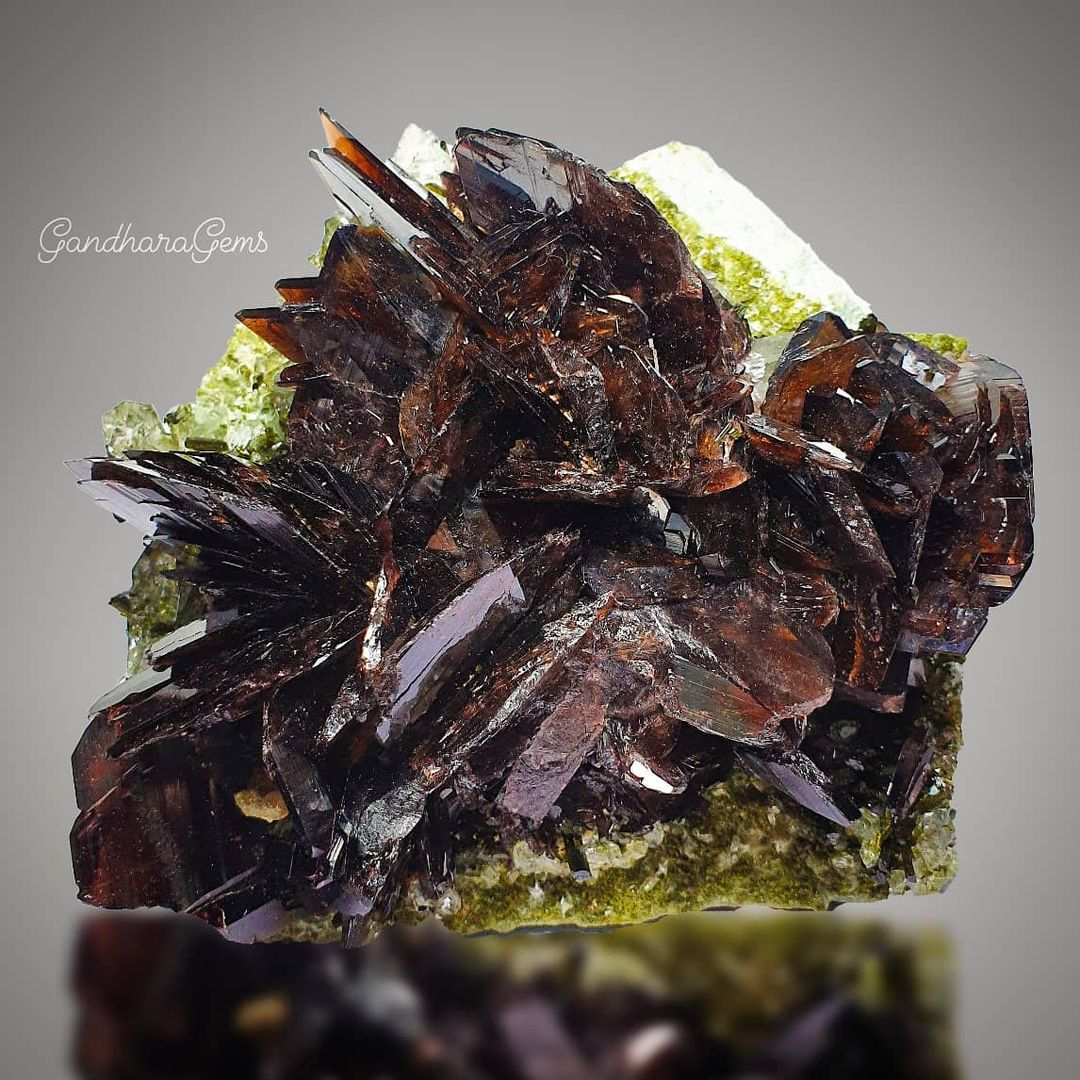
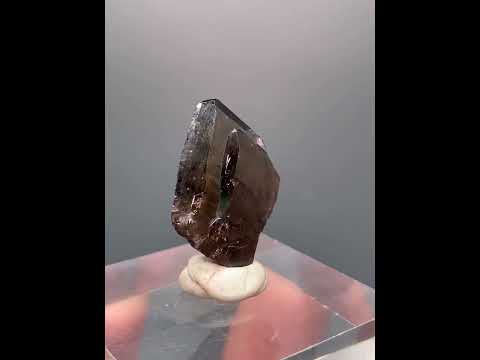
color changing Axinite blade crystal with excellent transparency from Pakistan - Brown
This is an attractive and colorful example of gem Axinite crystal with secondary crystals shooting out along the main crystal. It has magnificent vivid dark smoky color, well crystalized all around with 360-degree view. It has nice Pleochroism effect of color change with a...- $120.00
- $120.00
- Unit price
- per
-
Brown
Free Shipping on order over $80
100% Authentic & Certified
Save Big in 2026
Axinite Minerals
Axinite minerals are best chosen by examining natural crystal form, brown-to-golden coloration, transparency, vitreous luster, matrix association, dimensions and preservation rather than simply selecting the largest or darkest specimen. Axinite refers to a mineral group whose members share closely related structures but differ according to which chemical elements dominate particular positions within the crystal. Common collector material may belong to axinite-(Fe), axinite-(Mn), axinite-(Mg) or related group members, which helps explain why crystals can vary from clove-brown and golden-yellow through lilac-brown, greenish, pale blue and other subtler tones.
Sidebar

The name axinite comes from a reference to an axe because natural crystals commonly develop thin, wedge-like forms with sharp edges and strongly asymmetric geometry. This unusual habit is one of the main reasons mineral collectors value axinite. A relatively small specimen with a complete wedge-shaped crystal and strong vitreous luster can communicate the mineral's identity more effectively than a much larger piece where the focal crystals are broken or mostly buried in matrix.
Collectors comparing axinite with other mineral specimens and crystals should therefore give particular weight to morphology and condition. Axinite's triclinic geometry creates an angular natural architecture that differs markedly from cubic fluorite, prismatic quartz or equant garnet.
Axinite Crystal Form: Why Thin Wedge-Shaped Growth Defines the Mineral's Character
Axinite crystallizes in the triclinic system, which allows it to form sharply inclined, flattened and wedge-shaped crystals without the high symmetry seen in cubic or hexagonal minerals. Well-formed specimens can look unusually angular, with intersecting faces producing thin blade-like or axe-head profiles that immediately attract attention under directional lighting.
A complete crystal does not need to be perfectly isolated from matrix to show good form. Partially embedded axinite can still display prominent faces, sharp edges and a recognizable termination while preserving geological context that an isolated loose crystal would lack. Conversely, an entirely detached crystal can be especially useful for collectors who want to study the shape from several directions.
Condition should be interpreted alongside natural growth. Contact areas can occur where a crystal developed against another mineral and therefore never formed a complete free face, while recent chips interrupt previously continuous edges. The distinction is important because natural contacts contribute to geological history, whereas fresh damage can alter the appearance and stability of the specimen.
Axinite Color: Brown, Golden, Lilac and Other Natural Variations
Many axinite specimens are associated with brown or clove-brown coloration, particularly iron-dominant axinite, but the group is capable of a much wider palette. Golden-yellow, yellowish, lilac-brown, violet-tinged, pale blue, green and other colors may occur depending on composition and the specific group member represented.
Thin crystals can show color particularly well because light passes through the wedge-shaped edges more easily than through thick areas. A crystal that looks very dark brown from one direction may reveal warmer golden, reddish or violet components around its edges when illuminated properly. This makes viewing angle and lighting especially important when comparing specimens online.
Color alone cannot establish the exact member of the axinite group. Brown material is often associated with axinite-(Fe), while manganese- or magnesium-dominant varieties can show different tendencies, but precise identification depends on chemistry rather than a simple visual rule. A collector should therefore appreciate the color that is actually present without assigning a specific species solely from appearance.
Axinite Pleochroism and Viewing Direction: Why Color Can Change as the Crystal Moves
Axinite can show noticeable pleochroism, meaning the apparent color may change according to the direction from which light travels through the crystal. In transparent or translucent specimens, this can make a brown crystal reveal somewhat different reddish, violet or yellowish components as it is rotated.
This optical behavior adds another layer of interest to thin natural crystals because the wedge-shaped habit allows several orientations to be viewed easily. A specimen displayed under directional light may therefore look more dynamic than one photographed from a single fixed position.
Pleochroism should not be confused with artificial color change or surface coating. It is an optical property related to the way an anisotropic crystal absorbs light differently along different directions. For the buyer, the practical lesson is simply that one photograph may not communicate the complete visual character of an axinite specimen.
Axinite Luster and Transparency: Why Natural Faces Matter More Than Perfect Clarity
Axinite commonly displays vitreous luster, and intact natural faces can reflect light strongly enough to emphasize the angular geometry of even relatively dark crystals. Transparent or translucent edges may reveal internal color and inclusions, while thicker sections can appear substantially more opaque.
Perfect clarity is not necessary for a strong mineral specimen. Inclusions, internal fractures and growth features can contribute natural character, particularly when the external crystal form remains attractive. A crystal with some internal complexity but exceptional faces may be more interesting to a mineral collector than a clearer fragment whose original morphology has been lost.
Surface condition deserves special attention because luster is most effective when the natural faces remain intact. Abrasion, chips and contact damage across the focal face can reduce the visual sharpness of a specimen, while minor imperfections on less visible areas may have comparatively little influence.
Axinite Group Identification: Why “Axinite” Covers More Than One Mineral Species
Axinite is a group name rather than one chemically uniform mineral species. Axinite-(Fe), axinite-(Mn) and axinite-(Mg) are among the recognized members, with differences in dominant iron, manganese or magnesium contributing to variations in chemistry and appearance.
Most collectors do not need a complete chemical analysis before appreciating an axinite specimen, but the distinction matters when precise mineral labeling is important. Calling every brown crystal axinite-(Fe), for example, would go beyond what appearance alone can support, even though iron-dominant material is common.
This is one reason reliable identification and specimen records deserve to be preserved. Gandhara Gems' authenticity guarantee provides relevant purchasing context for mineral identity, while advanced chemical analysis may be necessary when a collector requires definitive species-level classification rather than a group-level identification.
Axinite Hardness, Cleavage and Brittleness: Handling Collector Crystals Safely
Members of the axinite group generally fall around Mohs hardness 6 to 7, with common axinite-(Fe) around 6.5 to 7. This provides moderate resistance to scratching, but axinite is brittle and can also show useful cleavage directions, meaning thin wedge-shaped crystals should not be treated as mechanically robust simply because their hardness is respectable.
The crystal habit itself creates vulnerability. A narrow edge or thin blade can chip if the specimen is dropped, while projecting crystals attached to matrix can experience significant leverage when pressure is applied near the tip. Collectors should therefore handle specimens by a secure base or host rock rather than by gripping the focal crystal.
Storage should prevent individual pieces from knocking against harder minerals or heavy specimens. The general gemstone care principles become especially useful here because preserving sharp edges and vitreous faces is a major part of maintaining the qualities that made the specimen collectible in the first place.
Axinite Matrix Specimens: How Associated Minerals Strengthen the Composition
Axinite frequently appears on matrix, and the host rock can add considerable visual and geological interest when the focal crystals remain well exposed. Pale matrix can create strong contrast with clove-brown crystals, while associated minerals can make the specimen more complex and provide context for the environment in which the axinite formed.
The strongest matrix piece is not necessarily the specimen containing the greatest number of crystals. A small group of sharply formed wedges positioned clearly on the host can create a more coherent composition than a larger surface where most crystals are incomplete or visually obscured.
Attachment stability deserves close inspection because thin axinite crystals can be vulnerable where they emerge from matrix. A specimen may look secure from the front while relying on a narrow attachment hidden underneath, making several viewing angles useful before purchase. The structural strength of the host rock matters as well because a stable crystal cannot compensate for a friable matrix that crumbles during handling.
Axinite Dimensions and Weight: Why Small Crystals Can Have Strong Collector Presence
Axinite crystals are often appreciated for detailed form rather than sheer size, which means a relatively small specimen can provide considerable collector interest when its wedge shape and luster are well developed. Close-up photography can magnify those details dramatically, so buyers should always compare the visual impression with actual length, width and height.
Weight alone offers limited information because matrix can contribute heavily to total mass. A specimen weighing substantially more than another may contain no larger or better axinite crystals if most of that difference comes from host rock.
Dimensions also help plan safe display. Thin projecting crystals require enough clearance that nearby specimens cannot touch them, while irregular matrix may need a stand or support to present the strongest viewing angle without stressing delicate growth. Practical display size should therefore be considered together with aesthetics rather than after the purchase.
Axinite Locality and Provenance: Document the Origin Instead of Guessing It
Axinite occurs in several geological environments and geographic regions, and locality can add considerable interest when it is supported by reliable provenance. Crystal shape, color and matrix may suggest similarities with known occurrences, but those features overlap enough that geographic origin should not be assigned confidently from appearance alone.
A documented locality helps place the specimen within a geological context and may allow collectors to compare differences among deposits. It can also become important when a particular occurrence is known for distinctive crystal habits or group members. When locality information is supplied, keeping it associated with the specimen preserves part of its scientific usefulness.
When provenance is unavailable, the better approach is to describe observable characteristics accurately rather than attaching an unsupported famous origin. A well-formed axinite crystal remains collectible because of its natural morphology, luster and composition even when its exact locality is not documented.
Buying Axinite Minerals Online: Examine Shape, Edges and Matrix Carefully
A useful online comparison starts with whether the specimen clearly displays axinite's characteristic wedge-like crystal habit, then considers color, luster, transparency, matrix relationship and overall condition. Sharp thin edges should be inspected for chips because damage in those areas can alter the natural geometry significantly, while contact faces and growth irregularities should not automatically be treated as defects.
Multiple photographs become particularly valuable with triclinic crystals because the strongest display angle may look completely different from the side or rear. A specimen that appears broad from the front may actually be quite thin, while hidden fractures or narrow matrix attachments may only become visible from another direction.
Gandhara Gems' shipping information is relevant when purchasing a specimen with delicate wedge-shaped projections, and the return policy provides the applicable framework for evaluating size, condition and overall appearance once the piece can be inspected in person.
Axinite Mineral FAQs
What makes axinite crystals distinctive in a mineral collection?
Axinite is particularly recognizable for its flattened, sharply angled and wedge-like triclinic crystals, which can resemble small axe heads when the natural form is well developed. Vitreous luster and brown, golden, lilac or other colors can make those shapes even more pronounced under directional light. A collector usually benefits from prioritizing preserved crystal architecture over maximum specimen size because the unusual geometry is one of axinite's defining visual characteristics.
Is axinite one mineral or a group of minerals?
Axinite is a mineral group containing related species whose chemistry differs according to the dominant elements occupying particular structural positions. Axinite-(Fe), axinite-(Mn) and axinite-(Mg) are among the recognized members, and their colors can overlap enough that exact species identification should not be assigned from appearance alone. For routine collecting, a reliable axinite-group identification can still be useful, while advanced collectors may prefer specimens supported by more precise mineralogical data.
What colors can natural axinite show?
Natural axinite can occur in brown, clove-brown, golden-yellow, lilac-brown, greenish, pale blue and other subdued tones depending on composition and group member. Thin crystal edges may transmit warmer or more vivid colors than the thicker center, while pleochroism can alter apparent hue as the viewing direction changes. This means one photograph may not fully represent the color behavior of a transparent or translucent specimen.
Is axinite durable enough to handle frequently?
Axinite has moderate hardness, commonly around 6 to 7, but its brittleness and thin crystal habit make frequent casual handling undesirable. Sharp wedge-shaped edges can chip through impact, and matrix crystals may break at narrow attachment points even when the mineral surface resists ordinary scratching reasonably well. A protected display and careful handling from the base are more appropriate than repeatedly picking the specimen up by exposed crystals.
Are transparent axinite crystals automatically better than darker specimens?
Transparency can reveal pleochroism and internal color beautifully, but it is not the only characteristic that determines collector appeal. A darker clove-brown crystal with exceptional wedge form, strong luster and intact edges may be more compelling than a transparent fragment with little remaining natural morphology. Buyers should compare transparency together with form, condition, matrix and overall composition rather than using clarity as a universal quality grade.
Should I choose an axinite specimen by weight?
Weight is rarely a useful primary measure for axinite because matrix can account for much of the mass and does not necessarily indicate larger or better crystals. Actual dimensions, crystal size, completeness, luster and preservation provide a clearer understanding of what the buyer will see on display. A smaller specimen with one complete wedge-shaped crystal can easily offer more collector interest than a heavier matrix piece containing several damaged fragments.
Choose Axinite Minerals by Wedge-Shaped Form, Luster and Preservation
Compare the current Axinite Minerals by natural triclinic crystal shape, brown-to-golden color, transparency, vitreous luster, edge condition, matrix relationship and actual physical dimensions. Give particular attention to the preservation of thin wedge-shaped crystals because their unusual geometry is central to the mineral's visual identity and can be difficult to replace once damaged. Choose the specimen whose natural form, condition and display scale best fit your mineral collection and budget rather than relying on weight or darkness alone.

Recently Viewed Products
Example product title
- $19.99
- $19.99
- Unit price
- / per
Example product title
- $19.99
- $19.99
- Unit price
- / per
Example product title
- $19.99
- $19.99
- Unit price
- / per
Example product title
- $19.99
- $19.99
- Unit price
- / per
Example product title
- $19.99
- $19.99
- Unit price
- / per
Example product title
- $19.99
- $19.99
- Unit price
- / per
Example product title
- $19.99
- $19.99
- Unit price
- / per
Example product title
- $19.99
- $19.99
- Unit price
- / per
Example product title
- $19.99
- $19.99
- Unit price
- / per
Example product title
- $19.99
- $19.99
- Unit price
- / per
- Choosing a selection results in a full page refresh.


