

-
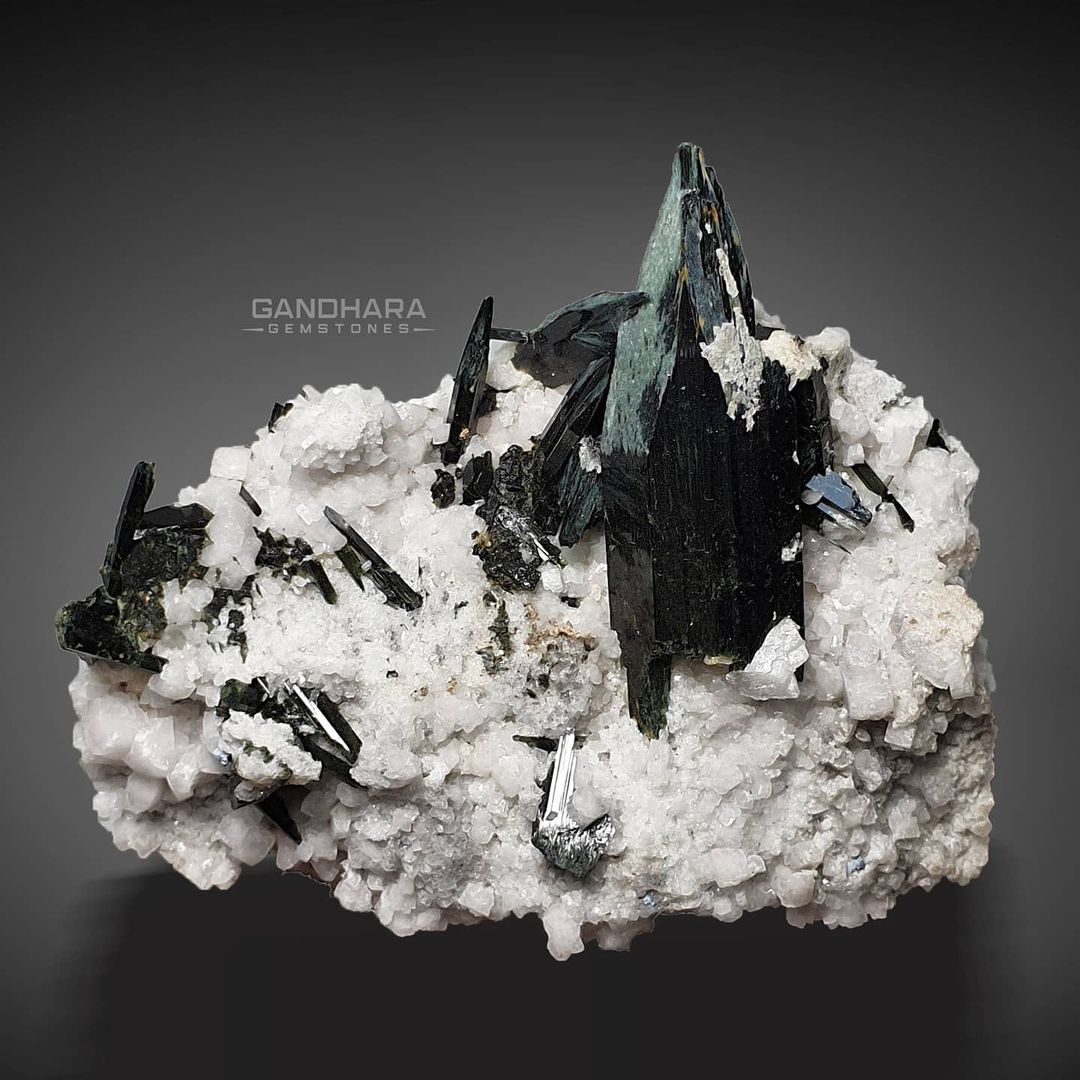
High-quality Rare Aegirine-Augite Crystal Aggregate on Albite matrix from Pakistan - Gray
Presenting this rare black beauty mineral specie of Aegirine-Augite crystal aggregate on detail Albite matrix. The crystals are nicely inter grown probably twinned somehow forming this artistic and adorable specimen. Featuring a nice tabular crystal aggregate with fine and sharp edges plus magnificent metallic...- $120.00
- $120.00
- Unit price
- per
-
Gray
-
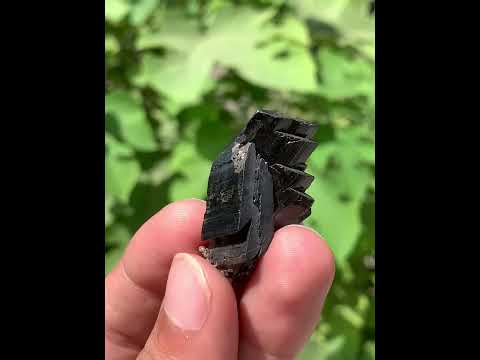
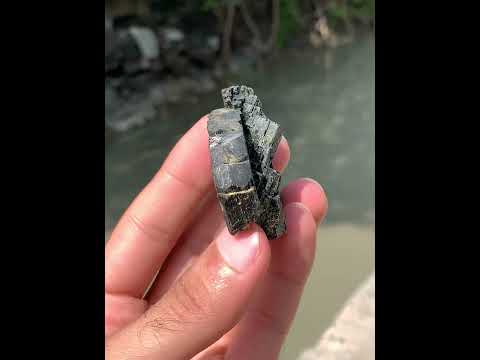
Interesting Crystallography for Rare Aegirine-Augite from Skardu, Pakistan - Gray
This is an incredible example for the rare Aegirine-Augite crystal aggregate with interesting crystallography all around. It's well crystalized all around with 360-degree view all around. It has compact crystal quality with greenish color and good quality luster. It has perfect self standing display...- $120.00
- $120.00
- Unit price
- per
-
Gray
Free Shipping on order over $80
100% Authentic & Certified
Save Big in 2026
Aegirine Minerals
Aegirine minerals are best selected by examining natural crystal form, dark green to greenish-black color, surface luster, termination quality, matrix associations, dimensions and visible preservation rather than by choosing the longest or darkest crystal automatically. Aegirine is a sodium iron silicate with the formula NaFe³⁺Si₂O₆ and belongs to the clinopyroxene subgroup of the pyroxene mineral group. Natural crystals commonly appear dark green, greenish black or nearly black, with some specimens showing reddish-brown tones or transmitting greener color through thinner edges.
Sidebar


Collectors often value aegirine for its elongated monoclinic prisms and sharply pointed terminations, which can create dramatic specimens even when the color is extremely dark. A relatively small crystal with clean faces and an intact spear-like tip can have stronger display character than a larger example whose main termination is broken. Within the wider range of mineral specimens and crystals, aegirine stands apart through the combination of dark coloration, slender prismatic growth and distinctive pyroxene crystal form.
Aegirine Crystal Form: Why Slender Prisms and Sharp Terminations Matter
Aegirine crystallizes in the monoclinic system and commonly develops prismatic to acicular crystals whose elongated form can become one of the most important quality features for collectors. Some specimens show individual upright crystals, while others contain clusters of crossing or radiating prisms attached to matrix.
Termination quality deserves particular attention because the pointed ends of long crystals create much of the mineral's visual identity. An intact termination can make a relatively modest specimen look exceptionally complete, while a broken tip may change the entire silhouette of an otherwise attractive crystal.
Natural contacts should still be distinguished from later damage. A crystal that developed against another mineral may show incomplete faces or irregular sections that formed geologically, whereas a fresh break typically interrupts an established edge or point. Examining the specimen from more than one direction helps determine how much of the original morphology remains.
Aegirine Color: Dark Green, Greenish Black and Reddish-Brown Variations
Aegirine is commonly associated with very dark green to greenish-black coloration, and substantial crystals can appear nearly black under ordinary reflected light. Thin edges or strongly transmitted light may reveal greener color that is not immediately apparent through thicker portions of the crystal.
Some material can show reddish-brown or brown components as well, demonstrating why color should not be reduced to one rigid description. Surface luster also changes the impression because well-preserved vitreous faces can reflect enough light to reveal crystal geometry even where the body color is extremely dark.
The darkest specimen is therefore not automatically the strongest choice. A slightly lighter crystal with better form, sharper termination and stronger natural luster can be more compelling than a black-looking piece whose surfaces are heavily damaged or difficult to read.
Aegirine Luster and Natural Crystal Faces: What to Examine Under Directional Light
Aegirine typically has vitreous luster, and intact faces can produce clear reflections under directional lighting. These reflections are particularly important in dark specimens because they outline crystal edges and make the elongated monoclinic form easier to appreciate.
Natural striations and growth textures can occur along crystal faces and should not automatically be classified as scratches. Growth-related features tend to follow the structure of the crystal, while random abrasion or recent mechanical damage often interrupts that natural pattern.
Collectors should therefore examine the focal faces carefully, especially on long crystals where a visually prominent surface can dominate the entire specimen. A crystal does not need mirror-smooth perfection, but preservation of natural luster helps the underlying geometry remain clear.
Aegirine Matrix Specimens: How Associated Minerals Add Geological Context
Aegirine commonly occurs in alkaline igneous environments and can appear with feldspars, nepheline and other minerals characteristic of such rocks and pegmatitic systems. Matrix specimens can preserve these natural associations and create strong visual contrast when dark aegirine crystals emerge from pale host material.
A balanced matrix piece usually allows the aegirine to remain visually dominant without removing the geological context. Several smaller crystals arranged naturally on a host can create more interest than one isolated crystal when the composition shows clear relationships and multiple intact terminations.
Structural stability remains essential. Long projecting aegirine crystals can be vulnerable where they attach to matrix, and a fragile host may introduce additional weakness. The complete specimen should therefore be supported from its strongest base rather than handled by its most attractive exposed crystal.
Aegirine Hardness and Cleavage: Why Long Crystals Still Require Care
Aegirine has Mohs hardness around 6, providing moderate resistance to scratching but leaving it softer than quartz, beryl, topaz and corundum. As a pyroxene, it also possesses cleavage, meaning a long crystal can break along structural planes when subjected to impact or unfavorable pressure.
This is particularly important because aegirine's elongated habit can create leverage. Gripping a projecting crystal near the tip can place substantial force on its base, especially where the crystal is attached to matrix through a relatively narrow contact.
Storage should prevent crystals from knocking against one another or against harder specimens. The practical guidance under gemstone care is useful for minimizing unnecessary abrasion, although natural matrix specimens should always be handled according to the most fragile part of the complete association.
Aegirine and the Pyroxene Group: What Its Mineral Classification Means
Aegirine belongs to the pyroxene group and specifically to the clinopyroxene subgroup, sharing a structural framework with several other important rock-forming minerals. Its chemistry is distinguished by sodium and ferric iron, which contribute to the mineral's identity and dark coloration.
This classification helps explain why aegirine should not be identified solely from a long black crystal shape. Other dark prismatic minerals can resemble it superficially, and even other pyroxenes can overlap in some external characteristics.
For serious mineral identification, chemistry, crystal structure and optical properties provide stronger evidence than appearance alone. Collectors can appreciate a specimen visually while still preserving the distinction between a likely visual identification and analytically confirmed mineral species.
Aegirine vs Aegirine-Augite: Why Intermediate Compositions Can Complicate Labels
Aegirine forms compositional relationships with other clinopyroxenes, and the name aegirine-augite has historically been used for intermediate sodium-calcium iron-magnesium pyroxenes. This means not every dark green pyroxene crystal in an alkaline rock can be assigned to pure aegirine merely from its external appearance.
Species naming depends on composition, making analytical information especially useful for systematic collectors who care about exact pyroxene classification. Historical labels may also use terms according to conventions that differ from current mineral nomenclature.
A visually strong specimen can still be enjoyed without overclaiming chemical precision. The responsible approach is to use the identification supported by the available evidence and preserve original labels or analytical information when they accompany the piece.
Aegirine Mineral Identification: Why Black Color Alone Is Not Enough
Aegirine's dark green to nearly black color can cause it to resemble several other elongated minerals, particularly when the crystal is thick enough to transmit little light. Tourmaline, amphiboles and other dark silicates can sometimes appear superficially similar in photographs.
Crystal habit, cleavage, hardness, luster and geological association provide more useful evidence when combined, but visual inspection alone may still be insufficient for difficult specimens. Buyers should therefore avoid assuming that any black prismatic crystal is aegirine.
Gandhara Gems' authenticity guarantee provides relevant purchasing context where mineral identity matters. Advanced collectors may also value locality information or analytical confirmation when building precise pyroxene collections.
Aegirine Dimensions and Display: Long Crystals Need More Than a Weight Figure
Aegirine's elongated crystal habit makes length, width and height more useful for display planning than total weight alone. A slender crystal can create impressive visual height while weighing relatively little, whereas a compact matrix specimen may be considerably heavier without appearing larger from the front.
Actual dimensions also help buyers understand scale in macro photography. A sharply terminated aegirine only a few centimeters long can appear monumental in a close-up image, so measurements should always be reviewed before deciding whether a specimen suits the intended cabinet or shelf.
Long crystals may also require extra clearance from neighboring specimens because the termination can project beyond the main matrix. A stable position that prevents the crystal from being touched or knocked is more important than maximizing the number of specimens placed within one display space.
Aegirine Locality and Provenance: Preserve Geological Context Rather Than Guessing Origin
Aegirine occurs in alkaline igneous rocks and related geological settings in several regions around the world. Certain localities are known for particularly attractive crystals, but dark green color or sharp prismatic form alone cannot establish geographic source.
Reliable provenance can significantly improve the scientific usefulness of a mineral specimen because it connects the crystal to a documented geological occurrence. Collectors who organize specimens by locality, rock type or mineral association should preserve original labels and any supporting information.
Where provenance is unavailable, the specimen can still be appreciated for its morphology, luster and condition without attaching an unsupported famous locality. Accurate uncertainty is more useful than a specific origin claim based only on visual resemblance.
Buying Aegirine Minerals Online: Examine Terminations, Faces and Matrix Stability
A useful online comparison begins with the completeness of the focal crystal, particularly its main termination, then moves through luster, color, matrix relationship and physical dimensions. Several viewing angles are important because a long dark crystal can hide chips or fractures on surfaces that are not visible from the strongest frontal photograph.
Matrix specimens should be checked for secure attachment and a stable resting position. A beautiful projecting crystal becomes difficult to preserve if the host is fractured or the specimen must rest directly on a delicate termination.
Gandhara Gems' shipping information provides the relevant delivery framework for projecting mineral specimens, while the return policy explains the applicable conditions for evaluating dimensions, condition and display character once the specimen arrives.
Aegirine Mineral FAQs
What makes a good aegirine mineral specimen?
A strong aegirine specimen usually combines recognizable elongated monoclinic crystal form with an intact termination, good natural luster and enough preservation for the crystal geometry to remain easy to read. A large black crystal can certainly be impressive, but size becomes less meaningful when the focal point is broken or the surfaces are heavily damaged. Matrix association and locality can add further interest when they are well documented and do not obscure the main crystals.
Is aegirine always black?
No. Aegirine commonly appears dark green, greenish black or nearly black, while reddish-brown tones can also occur. Thick crystals may look completely black in ordinary reflected light even when thin edges reveal a distinctly green color under stronger illumination. The apparent darkness therefore depends on crystal thickness and lighting as well as composition.
How hard is aegirine?
Aegirine has Mohs hardness around 6, giving it moderate resistance to scratching but leaving it softer than quartz and many common gem minerals. Its cleavage and often elongated crystal form mean that impact can still cause breakage even when exposed surfaces look robust. Careful cabinet display and handling from a secure base are therefore more appropriate than frequent casual handling.
Is aegirine a type of pyroxene?
Yes. Aegirine is a sodium iron member of the clinopyroxene subgroup within the larger pyroxene mineral group. Its chemical formula is NaFe³⁺Si₂O₆, and its mineral classification separates it from visually similar dark tourmalines or amphiboles. Exact classification of intermediate pyroxenes can require chemical information rather than simple visual observation.
Can aegirine be confused with black tourmaline?
Yes. Both can form elongated dark crystals, so a photograph of a thick nearly black specimen may create superficial similarity. Their crystal systems, chemistry, cleavage and other physical properties differ, however, and crystal habit can provide useful clues when the natural faces are well developed. Reliable identification should rely on more than body color alone.
Why are intact aegirine terminations important to collectors?
The sharp spear-like termination is often one of the most visually distinctive parts of an aegirine crystal, so preserving it helps the specimen communicate its natural growth clearly. A broken tip changes the silhouette substantially, particularly on a long slender crystal where the termination draws the eye. This is why a smaller complete specimen can sometimes offer more collector appeal than a larger crystal with significant end damage.
Choose Aegirine Minerals by Prismatic Form, Termination and Preservation
Compare the current Aegirine Minerals by elongated crystal development, dark green to greenish-black color, vitreous luster, termination quality, matrix association, actual dimensions and structural condition. Give particular attention to the focal crystal tips and attachment points because those features contribute heavily to both the beauty and fragility of the specimen. Choose the individual aegirine whose natural geometry, preservation and display proportions best suit your mineral collection rather than relying on darkness or total size alone.

Recently Viewed Products
Example product title
- $19.99
- $19.99
- Unit price
- / per
Example product title
- $19.99
- $19.99
- Unit price
- / per
Example product title
- $19.99
- $19.99
- Unit price
- / per
Example product title
- $19.99
- $19.99
- Unit price
- / per
Example product title
- $19.99
- $19.99
- Unit price
- / per
Example product title
- $19.99
- $19.99
- Unit price
- / per
Example product title
- $19.99
- $19.99
- Unit price
- / per
Example product title
- $19.99
- $19.99
- Unit price
- / per
Example product title
- $19.99
- $19.99
- Unit price
- / per
Example product title
- $19.99
- $19.99
- Unit price
- / per
- Choosing a selection results in a full page refresh.


