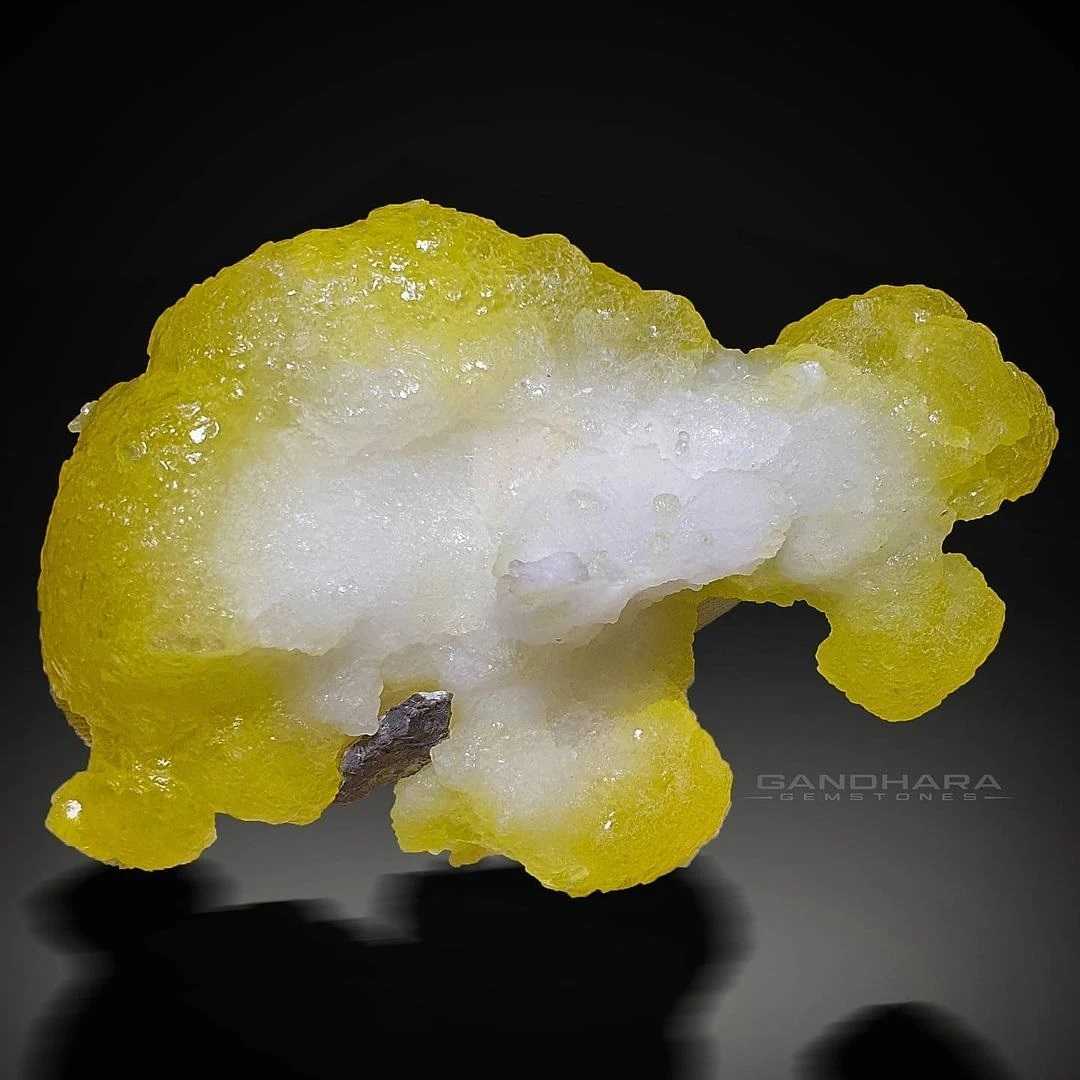
Brucite Minerals

Brucite minerals are best selected by comparing natural color, crystal development, surface luster, cleavage, matrix relationship, physical dimensions and overall preservation rather than choosing solely by the brightest yellow color or greatest specimen weight. Brucite is magnesium hydroxide, Mg(OH)₂, and natural specimens can occur in white, greenish, grayish, bluish, honey-yellow, brownish and other tones. Yellow brucite has become especially recognizable among collectors because well-presented pieces can combine unusually vivid color with delicate crystalline growth, creating specimens that look dramatically different from many darker metallic or earthy minerals.

Buy Brucite Minerals Online at Best Price

The attraction of yellow brucite is not simply its color. Individual pieces may show crystalline plates, aggregated growth, translucent edges, pearly cleavage surfaces and contrasting matrix that together determine whether a specimen has strong display character. Because brucite is very soft compared with quartz, beryl or corundum and has perfect cleavage, preservation becomes particularly important. A visually impressive specimen with intact delicate growth can be more desirable to a collector than a much larger example whose surfaces have been crushed, abraded or broken through handling.

Within the wider selection of mineral specimens and crystals, brucite deserves to be approached as a delicate collector mineral rather than as a gemstone expected to tolerate ordinary jewelry wear. Its relatively low hardness, cleavage and soft surfaces create a buying standard centered on natural structure, color and condition.

Yellow Brucite Color: How Lemon, Honey and Greenish Tones Affect Appearance

Color is usually the first feature that attracts attention to yellow brucite, but the strongest specimen is not necessarily the one with the most saturated photograph. Natural brucite can show pale yellow, lemon-yellow, honey-yellow and yellow-green appearances, while some pieces contain noticeably lighter or cream-colored areas. Crystal thickness, transparency, surface texture and lighting can all change how intense that yellow looks from one angle to another.

Translucent edges may appear brighter than thicker sections, while overlapping crystals can deepen the apparent color where several layers sit behind one another. Pearly or vitreous surfaces can also reflect strong highlights that make a specimen look lighter or more brilliant in photography. Buyers should therefore judge the complete specimen rather than trying to identify one ideal shade from a close-up image.

A slightly softer yellow specimen with strong crystal development and intact surfaces can be more rewarding than an intensely colored piece that has suffered substantial damage. Collecting quality comes from the interaction between color, form and preservation, not from saturation alone.

Brucite Crystal Habit and Cleavage: Why Natural Structure Needs Close Inspection

Brucite crystallizes in the trigonal system and can develop platy, tabular or foliated forms as well as aggregates in which individual crystals are difficult to separate visually. Its perfect basal cleavage allows the mineral to separate readily along particular planes, contributing to the layered or plate-like appearance seen in some specimens.

That cleavage is part of brucite's mineralogical character, but it also makes specimen handling more demanding. A cleavage surface can be naturally lustrous and attractive, yet the same structural weakness means pressure applied in the wrong direction can separate or damage delicate growth. Buyers examining photographs should therefore pay attention to whether plate-like structures remain intact and whether the specimen has crushed edges, missing sections or unstable areas.

Natural irregularity should not automatically be mistaken for damage. Brucite may grow in complex aggregates rather than as isolated textbook crystals, and uneven surfaces can be genuine growth features. Recent breakage is more concerning when it interrupts an otherwise continuous structure or leaves fresh, visibly damaged areas around the specimen's focal region.

Brucite Luster: Pearly, Vitreous and Waxy Surfaces in Natural Specimens

Brucite can display vitreous, waxy or pearly luster depending on crystal orientation, surface character and cleavage. This variation gives individual specimens a surprisingly diverse appearance even when their color is similar. A pearly cleavage surface can create a soft reflective sheen, while more vitreous crystalline areas may produce sharper highlights under directional lighting.

Collectors should distinguish natural luster from artificial-looking photographic brightness. Strong studio lighting can emphasize reflective planes, but the underlying surface should still show realistic texture rather than appearing uniformly glossy. A specimen with several intact orientations may shift from soft pearl-like reflection to brighter highlights as it is rotated, which can make brucite especially interesting in a display cabinet.

Surface preservation matters because scratches and abrasion are more noticeable on a mineral this soft. Brucite has Mohs hardness of only about 2.5 to 3, meaning even relatively ordinary contact can mark exposed areas. A specimen whose important surfaces retain their natural luster therefore deserves closer attention than one whose primary faces have been extensively rubbed or damaged.

Brucite Matrix Specimens: When Host Rock Strengthens the Geological Story

Brucite may occur attached to or intergrown with matrix, and the surrounding host can add useful geological context while creating visual contrast with the yellow mineral. A pale or darker matrix can frame delicate yellow growth effectively, while natural cavities and associated minerals may help show how the brucite developed rather than presenting it as an isolated decorative object.

The amount of matrix matters less than how well the composition works. A large host rock with a small patch of damaged brucite may provide limited display impact, whereas a compact piece with well-positioned yellow crystals can make a much stronger specimen. The relationship between mineral and matrix should feel coherent, with the brucite visible enough to remain the focal point.

Structural stability is especially important because the brucite may be softer and more delicate than the host. In other cases, the matrix itself may be fractured or crumbly, making the entire specimen vulnerable regardless of the condition of the brucite. Buyers should look for a piece that can be supported safely without placing pressure on delicate crystal growth.

Brucite Hardness and Perfect Cleavage: Why Care Matters More Than With Quartz

Brucite's Mohs hardness of approximately 2.5 to 3 places it well below quartz, topaz, beryl and many other minerals commonly encountered in gemstone collections. A harder mineral stored directly against brucite can scratch it, while careless handling can mark surfaces that appear visually strong. This softness is one of the most important practical differences between brucite and minerals that tolerate routine handling more easily.

Perfect cleavage adds another layer of sensitivity because a specimen can separate along its structural planes if subjected to pressure or impact. A thick aggregate may look robust but still contain zones that can separate or peel. Thin projecting crystals and plate-like structures deserve particularly conservative handling.

Brucite should therefore be stored separately from harder specimens and lifted from its strongest structural base rather than by delicate crystal areas. The practical principles under gemstone care become especially important with a soft mineral where avoiding scratches, pressure and unnecessary cleaning can preserve natural surfaces for far longer.

Brucite Transparency and Internal Character: Why Clearer Is Not Always Better

Brucite can range from transparent to translucent, but transparency should not be treated as a universal measure of specimen quality. Some yellow specimens show luminous translucent edges that enhance their color, while others gain their appeal primarily from dense crystalline growth and pearly surfaces rather than internal clarity.

A collector should therefore ask whether transparency contributes positively to the overall structure. Thin plates that transmit light can create visual depth, while a more opaque aggregate may display stronger surface architecture. Neither appearance is inherently superior if the natural growth and preservation are strong.

Internal fractures and cleavage-related separations should be considered separately from normal translucency. A fine internal boundary may simply reflect the way the mineral grew, while a major open separate can make the specimen unstable. The practical distinction lies in whether the feature adds natural character or creates a meaningful risk of future breakage.

Brucite Mineral Identification: Why Yellow Color Alone Is Not Enough

Bright yellow color can make brucite memorable, but color alone does not establish mineral identity. Several minerals can occur in yellow or yellow-green tones, and photographs cannot always reveal the hardness, cleavage, chemistry or optical properties needed for confident identification.

Brucite's magnesium hydroxide composition, low hardness, perfect cleavage and characteristic luster provide a more meaningful identification framework than color alone. For a collector building a systematic mineral collection, reliable labeling and preservation of any supplied locality information are therefore important parts of ownership.

Gandhara Gems' authenticity guarantee provides useful purchasing context when mineral identity matters to the decision. Significant specimens intended for scientific or highly specialized collecting may justify additional mineralogical verification, but ordinary buyers should still avoid assuming that any vivid yellow crystalline specimen must be brucite simply because the visual appearance is similar.

Brucite Dimensions and Display Size: Why Weight Can Be Misleading

Physical dimensions usually provide a better understanding of a brucite specimen than weight alone because the mineral can occur in irregular aggregates with varying amounts of matrix. A broad but lightweight crystalline cluster can occupy more display space than a denser compact piece, while a substantial host rock can add considerable weight without increasing the amount of visible yellow brucite.

Length, width and height should therefore be considered together when planning a display. Thin projecting structures may require extra clearance even when the main body of the specimen is compact, and an irregular base may benefit from a support that prevents tipping or pressure on delicate crystals.

Close-up photography can also make a small specimen appear much larger than it is, particularly when the individual crystals are finely developed. Reviewing actual measurements before purchase helps buyers understand whether the piece suits a thumbnail collection, cabinet display or larger mineral arrangement.

Buying Brucite Minerals Online: Prioritize Preservation Over Maximum Size

A careful online comparison begins with color and overall form, but condition should quickly become one of the main deciding factors because brucite is soft and cleavage-sensitive. Buyers should examine the specimen for crushed edges, rubbed surfaces, detached-looking areas and thin structures that may require especially cautious handling. Multiple photographs are valuable because one dramatic frontal image may not reveal instability on the back or underside.

Matrix specimens should be assessed for how securely the yellow brucite is attached, while isolated or largely crystalline pieces deserve close inspection around cleavage boundaries. A specimen with slightly less dramatic color but substantially stronger preservation may provide greater long-term satisfaction than a larger piece that is already structurally compromised.

Shipping conditions matter with such a delicate mineral. Gandhara Gems' shipping information provides the practical framework for delivery, while the return policy is relevant when a buyer needs to evaluate condition, scale and overall appearance after seeing the specimen in person.

Brucite Mineral FAQs

What makes a good yellow brucite mineral specimen?

A strong yellow brucite specimen combines attractive natural color with well-preserved crystalline growth, useful surface luster and enough structural integrity for safe display. Bright lemon-yellow color can certainly add visual impact, but a slightly softer hue with intact plate-like growth and undamaged pearly surfaces may be a better collector piece than a more saturated specimen that has been crushed or heavily abraded. Matrix, actual dimensions and the stability of delicate crystal areas should therefore be considered together rather than treating color as the only quality factor.

Why is brucite considered a delicate mineral?

Brucite has Mohs hardness of only about 2.5 to 3 and perfect basal cleavage, so it can scratch and separate more easily than harder minerals such as quartz or beryl. Thin plates, exposed edges and crystalline aggregates may be particularly vulnerable when subjected to pressure or impact. Proper storage, minimal handling and separation from harder specimens are therefore important parts of keeping natural brucite surfaces intact.

Is every yellow brucite specimen naturally bright lemon yellow?

No. Brucite occurs in several colors, and yellow specimens can range from pale cream or honey tones to stronger lemon-yellow or yellow-green appearances. Thickness, crystal overlap, luster and lighting can all alter perceived saturation, so two specimens of similar composition may look noticeably different in photographs. Buyers should evaluate the actual piece rather than assuming that one narrowly defined shade represents all natural yellow brucite.

Can brucite be used as an everyday jewelry gemstone?

Brucite's low hardness and perfect cleavage make it far better suited to protected mineral collecting than to ordinary everyday jewelry. A polished or faceted brucite might be interesting as a collector curiosity, but routine ring or bracelet wear would expose the stone to scratching and impact risks that its physical properties do not handle well. Natural crystal specimens are generally most successful when preserved and displayed rather than subjected to the mechanical demands of frequent jewelry wear.

Should I clean a brucite specimen with a brush or ultrasonic cleaner?

Aggressive cleaning is generally inappropriate for a soft, cleavage-sensitive mineral such as brucite, particularly when a specimen contains delicate plates or fragile matrix. Mechanical scrubbing can scratch exposed surfaces, while vibration or pressure can damage structurally weak areas. Gentle dust removal and minimal intervention are safer starting points, with the exact method determined by the complete composition and condition of the individual specimen.

Is a heavier brucite specimen automatically more collectible?

Weight does not establish collector quality because a significant part of a specimen's mass may come from matrix, and heavier brucite can still have weak crystal form or extensive damage. Dimensions, color, preserved growth, surface luster and structural condition provide a much more useful basis for comparison. A smaller, well-preserved yellow cluster can easily make a stronger display specimen than a heavier piece whose additional mass contributes little visual or mineralogical interest.

Choose Brucite Minerals by Color, Crystal Preservation and Display Stability

Compare the current Brucite Minerals by yellow hue, crystalline growth, pearly or vitreous luster, cleavage condition, matrix relationship, dimensions and overall preservation. Give particular attention to soft exposed surfaces and delicate plate-like structures, since a visually dramatic specimen will only remain satisfying if it can be handled and displayed safely. Rather than choosing automatically by the brightest color or greatest weight, select the brucite whose natural growth, condition and physical scale best fit the mineral collection and display space you are building.

Gemstone expert consultations available

Welcome to my shop! Contact Us

Recently Viewed Products
