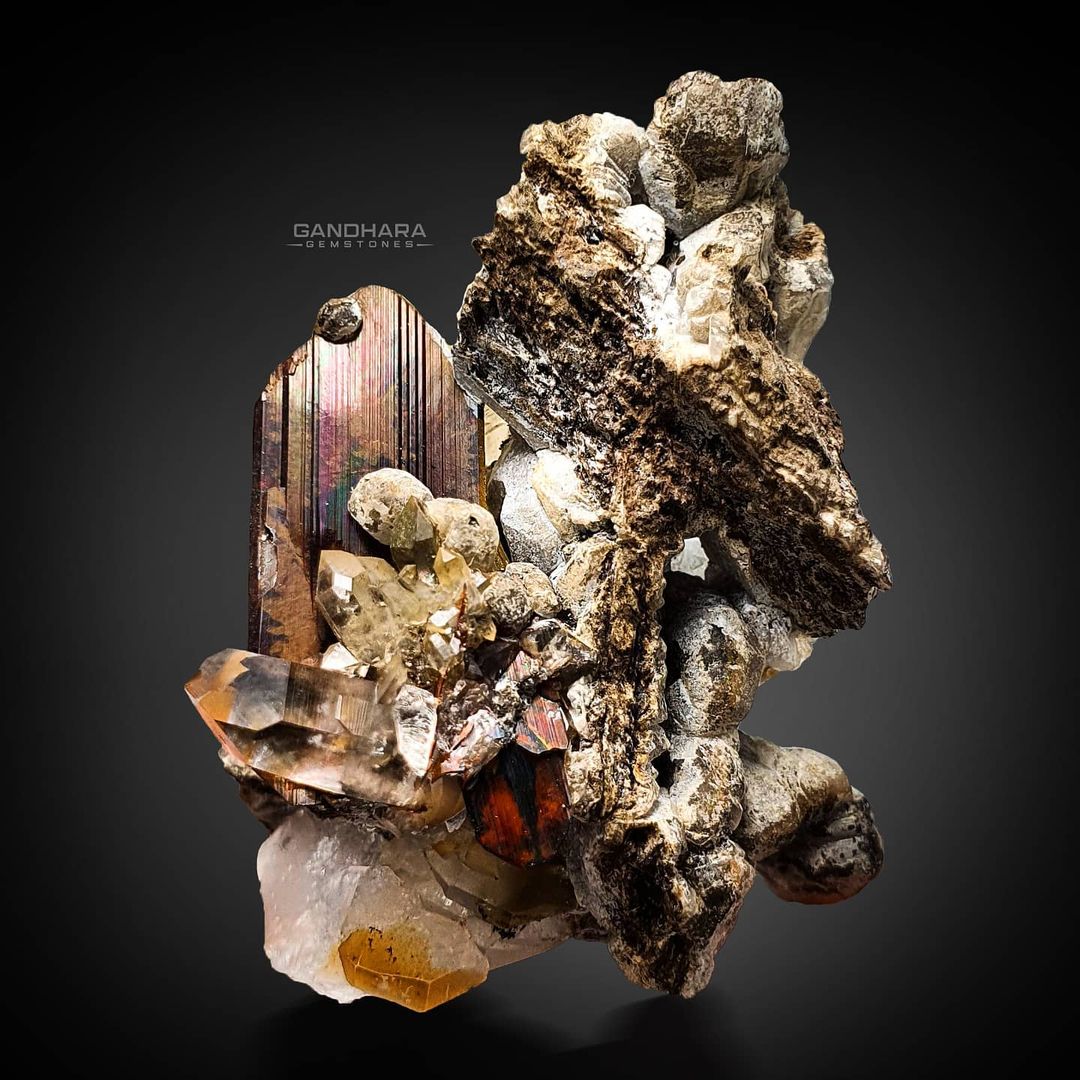
Brookite Minerals

Brookite minerals are best chosen by examining the natural crystal form, luster, color, matrix association, physical dimensions and condition of each specimen rather than simply selecting the largest or darkest piece. Brookite is one of the naturally occurring mineral forms of titanium dioxide, and collector specimens can show distinctive brown, reddish-brown to very dark crystals with reflective natural faces. Its appeal is often architectural rather than gemstone-like: well-developed crystals, sharp outlines, interesting growth and an attractive relationship with the host matrix can matter more than transparency or weight.

Brookite Mineral For Sale, Price, Meaning,

Unlike a faceted gemstone, a brookite mineral specimen is valuable to a collector largely because it preserves characteristics created during natural crystal growth. A modest-sized crystal with crisp form and undamaged faces may therefore make a stronger specimen than a much larger piece whose primary crystals are broken or visually lost within heavy matrix. Buyers should evaluate each piece as a complete mineral composition, paying attention to how the brookite sits, whether important faces or terminations remain intact and how the specimen looks from its strongest display direction.

Brookite Crystal Form: How Tabular Growth and Sharp Natural Faces Affect Appeal

Brookite crystallizes in the orthorhombic system and can form thin tabular, bladed or more complex crystal shapes. This natural geometry is one of the principal reasons collectors seek brookite specimens. Individual crystals may appear delicate and sharply defined, while clusters can create layered or intersecting compositions that reveal how multiple crystals developed together.

Crystal definition is often more informative than overall specimen size. A small brookite with crisp edges, identifiable faces and strong surface luster can show the mineral's character clearly, whereas a large specimen may be visually less satisfying if its crystals are incomplete or heavily damaged. Natural growth markings and contact areas should also be distinguished from recent chips. A contact surface formed where another mineral touched the crystal during growth is part of the specimen's geological history and does not carry the same meaning as fresh mechanical damage.

Buyers comparing brookite with the wider selection of mineral specimens and crystals should therefore focus on preserved morphology rather than expecting the same quality criteria used for cut gemstones.

Brookite Color and Luster: Why Brown-to-Black Crystals Can Look Very Different in Light

Brookite commonly appears brown, yellowish brown, reddish brown, dark brown or nearly black, yet these descriptions do not fully explain how a specimen will look under real lighting. Thin crystals or crystal edges may reveal warmer brown or reddish tones that are difficult to see through thicker portions, while highly reflective faces can make a dark specimen appear surprisingly lively.

Luster is especially important because brookite can show strong reflections across its natural surfaces. Directional light may reveal individual faces, growth patterns and subtle variations in surface texture that disappear under flat lighting. This does not mean the most reflective specimen is automatically superior, but clear, intact faces often make the mineral's natural structure easier to appreciate.

Color should therefore be considered with thickness, surface condition and matrix contrast. A near-black brookite on a contrasting pale matrix can create a very different visual effect from a reddish-brown free-standing crystal, even when both are equally representative examples of the species.

Brookite Matrix Specimens: How Host Rock Changes the Visual Composition

Many brookite specimens are collected attached to matrix, and the host rock can be an important part of the piece rather than unwanted excess. Matrix provides physical context for the crystals and can create contrast that helps dark brookite stand out visually.

A strong matrix specimen usually has a clear focal point. The main crystals should be positioned so that their natural form can be seen without excessive obstruction, while the host rock should support rather than visually overwhelm them. Multiple smaller crystals can also produce an attractive composition when they are distributed coherently across the surface.

Matrix stability deserves equal attention. A crystal attached through a narrow contact point may be visually impressive but more vulnerable during transport and handling. Fragile associated minerals can further reduce the practical durability of the complete specimen even when the brookite crystals themselves are relatively robust.

For online buying, examine how securely the crystals appear integrated with the host and whether the displayed orientation provides a stable base or may require a specimen stand.

Brookite Size vs Specimen Quality: Why Bigger Is Not Automatically Better

Physical size can make a brookite specimen more imposing, but dimensions do not replace crystal quality. A large piece can contain substantial matrix and only a few incomplete crystals, while a smaller specimen may display a highly defined crystal with excellent luster and balanced proportions.

Length, width and height are usually more useful than weight when estimating how a mineral will look in a display case. Those measurements show the actual space the specimen occupies and help collectors judge whether it will work as a thumbnail-sized piece, cabinet specimen or larger display example.

Weight can become particularly misleading with matrix because much of the mass may come from the host rock rather than brookite. Two pieces with similar weights can consequently contain dramatically different crystal presentations.

Buyers should therefore compare dimensions, crystal size and overall composition together instead of treating gross weight as a direct measure of collector quality.

Brookite Surface Condition: Distinguishing Natural Growth Features From Damage

Natural mineral specimens rarely resemble manufactured objects, and variation in surface texture should be expected. Growth lines, etched areas, mineral contacts and minor irregularities can all form naturally. These features may increase scientific or aesthetic interest rather than diminish it.

Fresh chips and broken crystal edges are different because they remove part of the original form. Damage near the focal crystal is generally more consequential than a small break on the back of matrix that does not affect presentation. Location matters as much as severity.

Photographs should therefore be examined for edge continuity and the condition of prominent faces rather than merely for overall darkness or shine. When a specimen has several crystals, the main display crystal deserves the closest scrutiny because a break there can alter the visual balance of the whole piece.

A collector who values pristine morphology may prioritize condition strongly, while another may accept minor damage when the specimen shows an unusual crystal habit or especially attractive matrix relationship.

Brookite Hardness and Handling: Protecting Crystal Edges and Matrix

Brookite is moderately hard rather than exceptionally hard, and crystal edges or thin tabular growths can still be damaged through impact. Mineral specimens should therefore be handled according to their most fragile feature rather than by relying on a hardness number alone.

A matrix specimen may have additional vulnerabilities because the host rock or associated minerals can be softer, crumbly or connected through narrow points. Holding a specimen by a projecting brookite crystal is especially risky because leverage can damage either the crystal or its attachment.

Stable storage reduces those risks. Individual specimens should not be allowed to knock against neighboring minerals in drawers or cases, and tall pieces may benefit from a secure support. General gemstone care principles are useful for handling, although complex mineral specimens should always be cleaned according to every mineral present on the piece.

Brookite Identification: Why Color Alone Is Not Enough

Dark brown or black coloration is not sufficient to identify brookite because many mineral species can share similar visual appearances. Crystal form, luster, hardness and other physical properties provide more useful evidence when considered together.

For collectors, reliable labeling is particularly important because mineral specimens are often purchased not only for appearance but also for species representation. Provenance and original identification records should therefore be preserved when supplied.

Gandhara Gems' authenticity guarantee provides relevant purchasing context for buyers concerned with mineral identity. A collector building a scientifically organized collection may also keep locality information, dimensions and any accompanying specimen data together with the piece so that those details remain associated over time.

Brookite Locality and Provenance: Why Documented Origin Matters More Than Guesswork

Mineral locality can add significant collecting interest when it is reliably documented, but the origin of a brookite should not be guessed from crystal color or shape alone. Similar-looking crystals can occur in different geological settings, and specimens from one locality can show substantial variation.

When reliable locality information accompanies a specimen, it can provide geological context and help collectors organize material by region or occurrence. When no such information is available, the mineral should be evaluated according to its observable characteristics without attaching an unsupported origin.

This distinction protects both scientific value and buying decisions. A strong brookite specimen does not require an exotic locality claim to be visually interesting, while documented provenance should be treated as factual information rather than inferred marketing language.

Buying Brookite Minerals Online: What to Compare Before Ordering

Compare the available brookite specimens by crystal definition, surface luster, color, matrix relationship, dimensions and visible condition. Look closely at the main crystal edges and faces, distinguishing natural growth surfaces from mechanical breakage. For matrix pieces, consider whether the crystals appear securely attached and whether the specimen has a practical display orientation.

Photography can emphasize reflections on dark crystals, so compare multiple views when available rather than judging the specimen from one dramatic angle. Actual dimensions provide a better sense of scale than weight alone, especially when substantial matrix is present.

Practical purchase conditions also matter with delicate mineral specimens. Gandhara Gems' shipping information explains applicable delivery considerations, while the return policy provides relevant terms if a specimen needs to be returned.

Brookite Mineral FAQs

What is brookite?

Brookite is a naturally occurring titanium dioxide mineral. It crystallizes in the orthorhombic system and is primarily collected for its distinctive natural crystal forms and reflective surfaces.

What color is natural brookite?

Brookite can appear yellowish brown, reddish brown, dark brown or nearly black. Thin portions may transmit warmer brown tones that are not obvious through thicker crystals.

Is brookite a gemstone or a mineral specimen?

Brookite is a mineral. Transparent material can be of gemological interest, but most buyers encounter it as a natural mineral specimen valued for crystal form, luster and matrix association.

What makes a brookite specimen attractive?

Sharp crystal form, intact faces, strong natural luster, appealing matrix contrast, good condition and balanced composition can all contribute to specimen appeal.

Is a large brookite automatically better?

No. A smaller specimen with sharply developed crystals and minimal damage may be more visually compelling than a larger matrix piece with poorly preserved crystals.

Should brookite specimens be cleaned aggressively?

No. Conservative handling is preferable, especially when thin crystals or fragile matrix are present. The safest cleaning approach depends on the complete mineral composition of the specimen.

Does locality matter when buying brookite?

Documented locality can add geological and collecting context. Origin should not be inferred from appearance alone when reliable provenance is unavailable.

Choose Brookite Minerals by Crystal Form, Luster and Preservation

Compare the current brookite specimens by the definition of their natural crystals, brown-to-black color, reflective surfaces, matrix composition, dimensions and visible condition. Give greater weight to an intact focal crystal and balanced specimen composition than to gross size alone. The strongest choice is the brookite whose natural morphology, luster and state of preservation best match the mineral collection or display you are building.

Gemstone expert consultations available

Welcome to my shop! Contact Us

Recently Viewed Products
