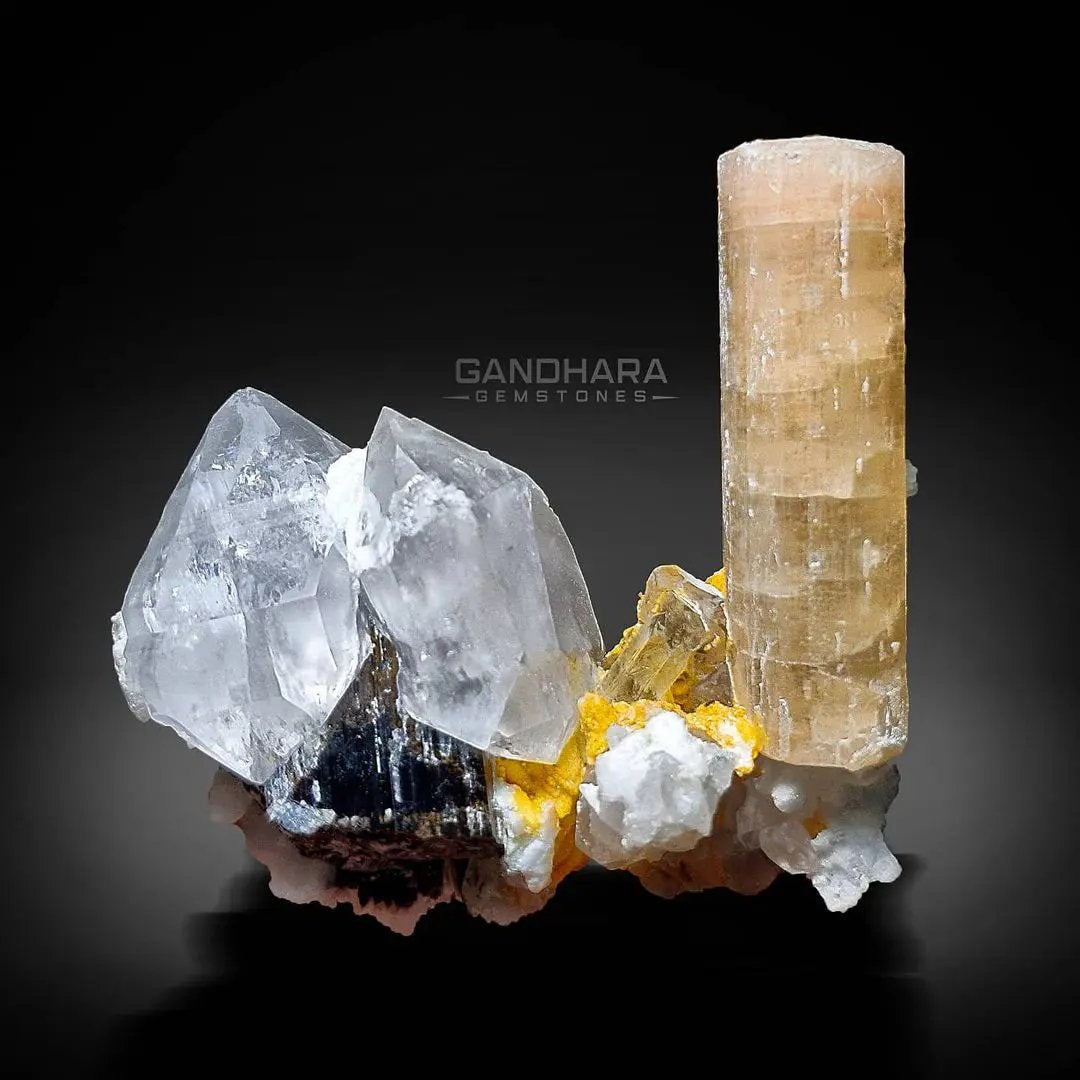
Apatite Minerals

Apatite mineral specimens are best chosen by comparing natural crystal form, color, transparency, inclusions, matrix association, physical dimensions and visible preservation rather than simply selecting the brightest blue or largest crystal. Apatite belongs to a mineral group whose members can form attractive hexagonal crystals in blue, green, yellow, violet, colorless and other tones, with individual specimens ranging from highly transparent crystals to included, translucent or matrix-bound examples. For a collector, a well-developed crystal with intact natural surfaces can be more interesting than a cleaner piece whose original form has been substantially broken.

Apatite Crystal

This collection is intended for buyers who value apatite as a natural mineral occurrence rather than solely as raw cutting stock or a polished gemstone. Buyers planning lapidary work can compare rough apatite, where usable transparent volume and cutting potential become more important, while faceted apatite gemstones are more appropriate when finished color, brilliance, cut and face-up dimensions are the primary buying factors. A natural specimen should instead be evaluated for the crystal architecture, surface character and geological relationships that would disappear once the stone is sawn or faceted.

Apatite Crystal Form: How Hexagonal Growth Shapes Collector Quality

Apatite commonly crystallizes in the hexagonal system and can form prismatic, columnar or thicker tabular crystals whose natural geometry is particularly appealing when the major faces remain clearly defined. An isolated crystal may make that structure easy to study, while a matrix specimen can preserve several apatite crystals in the positions where they naturally formed. Neither arrangement is automatically superior because the better choice depends on whether the collector values a single readable crystal or a more complex geological composition.

Termination quality can contribute strongly to appearance, but natural contacts should not be confused with damage. A crystal that grew against feldspar, quartz or another neighboring mineral may never have developed a complete free face in that area, and such contact surfaces belong to the specimen's growth history. A recent chip is different because it interrupts an established edge or exposes a fresh fracture surface after formation. When comparing apatite mineral specimens online, the most useful question is whether the focal crystal still displays enough of its natural geometry for its form to be understood clearly.

Blue, Green and Yellow Apatite Color: Why Saturation Should Not Be Judged Alone

Apatite occurs in a striking range of colors, and blue to blue-green crystals often attract immediate attention because their appearance can be unusually vivid. Green, yellow, violet and less saturated examples can be equally interesting mineral specimens when their natural crystal form and transparency are well preserved. Color should therefore be considered with structure rather than treated as a simple ranking in which the brightest or darkest crystal automatically wins.

Crystal thickness can alter the way color appears. A substantial blue-green crystal may look highly saturated through its center but significantly lighter around thin edges, while a pale yellow crystal can become more intense where several crystal sections overlap. Lighting and background also influence perceived saturation, particularly in transparent material, so photographs should be interpreted together with actual dimensions and several viewing angles whenever possible.

For a mineral specimen, attractive color is most effective when it complements the crystal's natural architecture. A slightly lighter specimen with sharp faces, intact termination and strong transparency may provide more collector interest than a highly saturated example whose important crystal surfaces are heavily damaged.

Apatite Transparency and Inclusions: When Internal Features Add Geological Character

Apatite can range from transparent to translucent, and clear crystals can reveal an interesting range of internal characteristics through their natural surfaces. Mineral inclusions, fine fractures, growth zones and other features may be visible without polishing, creating depth that would be absent in a uniformly featureless crystal. In a collector specimen, those inclusions should not automatically be treated as flaws because they can record part of the environment in which the apatite formed.

Structural fractures deserve a different evaluation. A fine internal inclusion that has little influence on stability is not the same as a surface-reaching break that crosses the main crystal or weakens its attachment to matrix. Apatite's modest hardness means a damaged crystal can require more cautious handling than a superficially similar quartz specimen, making the location and extent of fractures more important than simply counting visible inclusions.

Collectors should therefore avoid applying an eye-clean jewelry standard to apatite mineral specimens. A transparent crystal with distinctive internal features can be particularly compelling when those characteristics remain stable and the natural external form is well preserved.

Apatite Matrix Specimens: How Host Rock and Associated Minerals Affect Display

Matrix can add substantial interest to an apatite specimen because it preserves part of the geological setting in which the crystals developed. A blue or green apatite crystal emerging from contrasting feldspar, quartz or another pale host mineral may stand out more dramatically than an isolated crystal, while several smaller crystals arranged naturally across a matrix can create a composition that would be impossible to reproduce artificially.

The quality of a matrix specimen depends on how effectively the host supports the focal crystals rather than on the amount of rock present. A large piece of matrix with only a small portion of apatite visible may have less display impact than a compact specimen where several crystals are well exposed. At the same time, matrix can provide valuable context that an isolated crystal cannot, especially when associated minerals are recognizable and naturally positioned.

Collectors comparing apatite with other mineral specimens and crystals should also examine structural stability. The apatite itself may be reasonably intact while the matrix is fractured, crumbly or connected through a narrow point, so the safest way to handle and display the specimen is determined by the weakest part of the complete piece.

Apatite Hardness and Durability: Why Beautiful Crystals Require Care

Apatite defines hardness 5 on the Mohs scale, making it noticeably softer than quartz, beryl, topaz and corundum. This relatively modest hardness means natural crystal surfaces can scratch more easily when they contact harder minerals, while exposed edges and terminations can also chip if a specimen is dropped or stored loosely with other stones.

The difference matters because a crystal can look substantial without being suited to rough handling. A broad prismatic apatite may appear robust, yet a sharp termination or projecting matrix crystal can still be vulnerable to impact. Storing specimens so they cannot slide against harder minerals helps preserve natural faces, and handling by a secure matrix or stable base is preferable to lifting a piece by an exposed crystal.

Care also depends on internal condition. Existing fractures and included zones may make an individual specimen less tolerant of sudden temperature changes or physical stress. The practical principles in Gandhara Gems' gemstone care information are especially relevant when a specimen combines apatite with more than one mineral species and therefore requires attention to the complete composition rather than to apatite alone.

Apatite Mineral Identity: Why Color Alone Cannot Confirm What a Crystal Is

Apatite's name has a history connected with mistaken identity because crystals can resemble several other minerals in color or habit. Blue-green apatite can superficially resemble other transparent gemstones, while yellow, violet or colorless material may overlap visually with still more species. Color alone is therefore not enough to establish mineral identity, especially when the crystal is broken, heavily included or lacking a recognizable natural form.

Crystal system, hardness, optical properties and chemical composition provide stronger evidence when accurate identification matters. Within the apatite group, compositional differences can also occur, meaning the commercial word “apatite” does not always communicate every mineralogical detail about a specimen. For ordinary collecting, a reliable identification from a trusted seller may be sufficient, while scientifically significant pieces can justify more specialized analysis.

When a buyer's decision depends on confidence in the mineral being offered, Gandhara Gems' authenticity guarantee provides relevant purchase context without requiring color or photographs alone to carry the entire identification burden.

Apatite Crystal Size and Dimensions: Why Weight Can Mislead Specimen Buyers

Physical dimensions usually tell a collector more about an apatite specimen than gross weight. A long prismatic crystal can have strong visual presence while remaining relatively light, whereas a compact matrix piece may weigh substantially more without presenting a larger or better apatite crystal. Length, width and height therefore give a clearer picture of the space the specimen will occupy and how large the focal crystal actually appears.

This distinction becomes particularly important for matrix specimens because host rock may contribute a large percentage of total weight. Comparing two specimens by grams or carats can create the false impression that the heavier example contains more apatite or better-developed crystals when much of the difference is simply matrix.

Collectors should also consider how dimensions affect practical display. Tall or narrow crystals may require a secure stand or protected cabinet position, while broad matrix pieces need sufficient shelf depth. The best specimen is not necessarily the largest one, but the piece whose crystal quality, dimensions and stability work together for the intended collection.

Apatite Mineral Specimens vs Rough Apatite for Cutting

A natural crystal can sometimes attract both collectors and lapidaries, but those buyers evaluate different characteristics. Cutting rough is selected primarily for usable transparent volume, color, fracture distribution and dimensions that can support a finished gemstone. A mineral specimen is selected for natural prism development, termination, surface textures, inclusions and matrix relationships.

A complete transparent apatite crystal may theoretically contain attractive faceting material, yet cutting it would permanently remove natural features that cannot be recreated. When the crystal's morphology is unusually attractive, preserving it as a specimen can make more sense than calculating the maximum polished yield. Conversely, an irregular broken section with little remaining crystal form may be better suited to cutting if its interior is clean enough and its dimensions support a useful design.

Keeping these purposes separate allows buyers to judge apatite honestly. The question is not simply whether a crystal could be cut, but whether transforming it would improve its usefulness for the person who owns it.

Buying Apatite Mineral Specimens Online: Compare the Complete Natural Piece

A useful online comparison should begin with the focal crystal's natural form and continue through color, transparency, inclusions, matrix relationship, actual dimensions and visible condition. Multiple photographs are especially important for transparent apatite because strong lighting can make color appear brighter while also concealing fractures or surface contacts that become more obvious from another direction. Buyers should pay particular attention to terminations and projecting edges because these areas can carry a disproportionate amount of visual importance.

The intended display should also influence the choice. A systematic collector may prefer one clearly formed isolated crystal, while someone building a visually dramatic cabinet may favor a matrix specimen containing several blue or green crystals arranged naturally. Neither approach requires the highest weight or strongest color if another specimen offers better preservation and more coherent composition.

Apatite's relative softness makes secure handling during delivery particularly relevant. Gandhara Gems' shipping information explains applicable order conditions, while the return policy provides the terms that matter when evaluating a unique mineral specimen after it arrives.

Apatite Mineral Specimen FAQs

What makes an apatite mineral specimen worth choosing?

A strong apatite specimen usually combines clearly recognizable crystal growth with attractive color, useful transparency, preserved terminations and an overall composition that suits the collector's purpose. A bright blue crystal may catch the eye first, but a slightly less saturated specimen with cleaner natural faces and stronger structure can provide greater long-term satisfaction. Matrix, inclusions and dimensions should therefore be assessed together rather than reducing quality to color or size alone.

What colors can natural apatite crystals show?

Natural apatite can occur in blue, blue-green, green, yellow, violet, pinkish and colorless appearances, with the exact visual result influenced by composition, crystal thickness and lighting. Blue and blue-green examples are especially familiar in the gem trade, but they represent only part of the mineral group's color range. A collector should judge the actual specimen rather than assuming that one commercially popular color is automatically more mineralogically interesting than another.

Is apatite too soft for a mineral collection?

Apatite is perfectly suitable for mineral collecting, but its Mohs hardness of 5 means it requires more careful storage than harder minerals such as quartz or corundum. Natural crystal faces can scratch if they rub against harder specimens, and projecting terminations can chip through impact. A stable display position, separate storage and handling from a secure base are generally more important than avoiding apatite altogether because of its hardness.

Are inclusions a problem in transparent apatite specimens?

Inclusions are not automatically a problem because they can reveal natural growth history and make a transparent specimen more distinctive. Mineral crystals, internal veils and growth structures may add visual depth without compromising the specimen, while major surface-reaching fractures deserve more attention because they can affect structural stability. The useful distinction is therefore between an inclusion that contributes natural character and a fracture that materially weakens the crystal.

Is rough apatite the same thing as an apatite mineral specimen?

The physical stone may sometimes overlap between those categories, but the buying objective is different. Rough apatite is usually judged for the amount of usable stone that can be cut, whereas a mineral specimen is valued for preserved natural form, surfaces, termination, matrix and geological character. A complete crystal may consequently be more desirable left intact, while a broken piece with strong transparent interior quality may make better lapidary rough.

Should I choose the heaviest apatite crystal available?

Weight alone rarely identifies the strongest mineral specimen because matrix and crystal geometry can change mass substantially without improving appearance. A smaller crystal with distinct hexagonal form, good preservation and attractive color can be much more compelling than a heavier piece dominated by host rock or damaged surfaces. Actual dimensions, focal crystal size and overall composition provide a better foundation for comparison.

Choose Apatite Minerals by Crystal Form, Color and Preservation

Compare the current Apatite Minerals by hexagonal crystal development, color, transparency, inclusions, termination quality, matrix relationship, actual dimensions and visible condition. Buyers who value classic mineral morphology may prefer a clearly formed individual crystal, while collectors interested in geological associations may find a balanced matrix specimen more rewarding. Rather than choosing automatically by the brightest blue color or greatest weight, select the apatite whose preserved natural structure, stability and visual character best fit your collection, display space and budget.

Gemstone expert consultations available

Welcome to my shop! Contact Us

Recently Viewed Products
