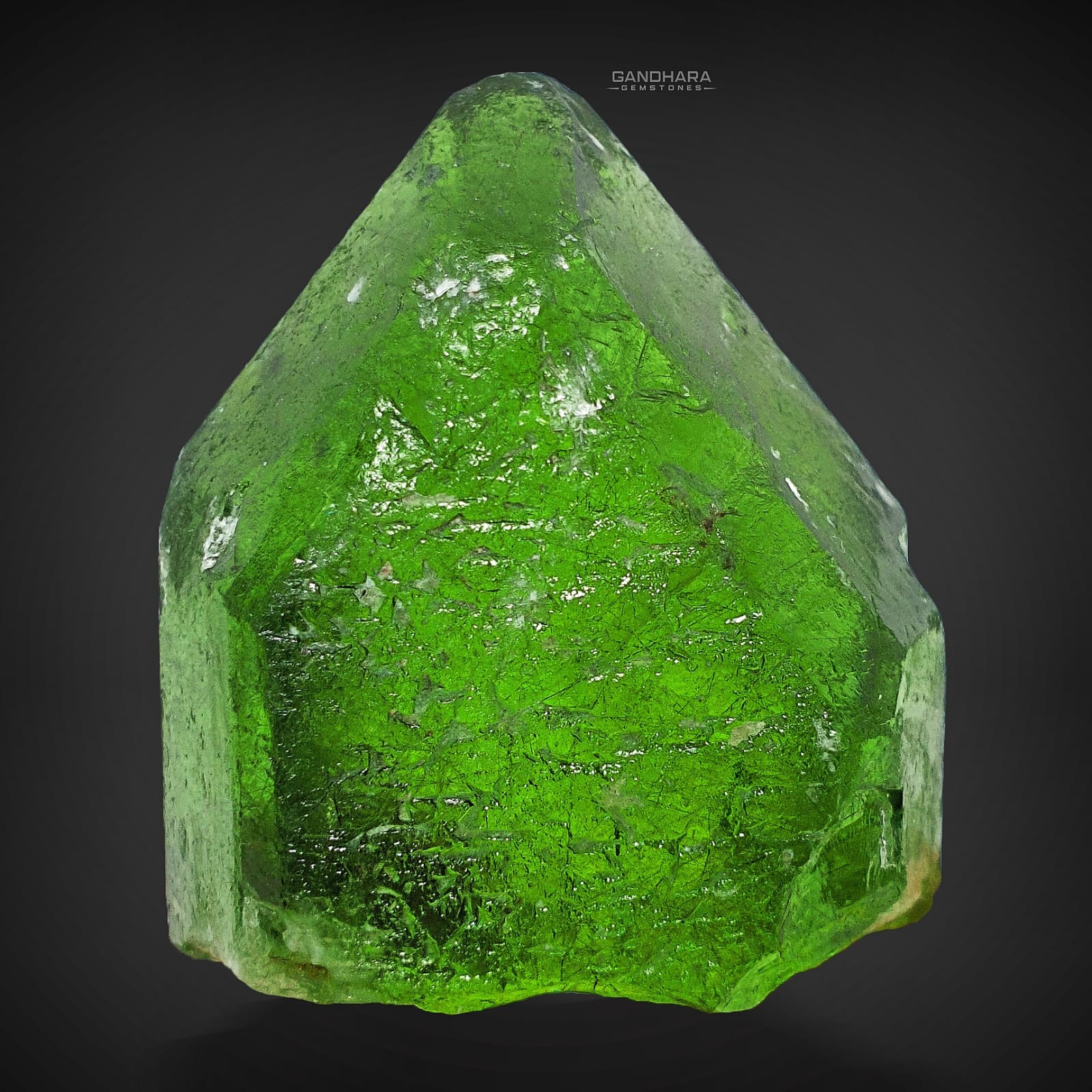
Peridot Minerals

Peridot mineral specimens are best selected by comparing natural crystal form, yellow-green to green color, transparency, inclusions, matrix relationships, physical dimensions and visible preservation rather than by choosing the brightest green or heaviest piece automatically. Peridot is the gem-quality variety of olivine, and natural crystals preserve features that disappear once the stone is cut, including original faces, growth surfaces, contact areas and relationships with surrounding host rock. A relatively modest crystal with recognizable morphology and intact surfaces can therefore be more satisfying to a mineral collector than a larger piece whose form has been substantially broken or altered.

Buy Peridot Stone Online at Best Price

The distinction between specimen, rough and finished gemstone is especially useful with peridot because the same mineral can appeal to several different buyers for completely different reasons. Collectors value natural crystal architecture and geological context, cutters working with rough peridot are more concerned with recoverable transparent volume and fracture distribution, while buyers choosing faceted peridot gemstones usually prioritize face-up color, cut, clarity and jewelry dimensions. This collection preserves peridot as a natural mineral occurrence rather than treating every green crystal as material that must eventually be polished.

Peridot Crystal Form: How Orthorhombic Olivine Growth Shapes Collector Appeal

Peridot belongs to the olivine group and crystallizes in the orthorhombic system. Well-developed crystals can show distinct faces and an angular natural geometry that differs considerably from the hexagonal prisms of beryl or quartz and the cubic forms of fluorite. Some specimens may present relatively complete crystals, while others show partial crystals embedded in matrix or naturally broken sections that still reveal useful growth features.

Crystal completeness matters because the preserved form allows the viewer to understand how the mineral developed. A sharply defined termination or sequence of natural faces can give a small specimen considerable collector presence, particularly when the green color remains visible through transparent or translucent portions. Natural contact surfaces should not automatically be interpreted as damage because a crystal that grew against another mineral may never have developed a free face in that area.

Fresh chips deserve a different evaluation when they interrupt an otherwise continuous edge or remove an important portion of the focal crystal. The most useful comparison is therefore not between “perfect” and “imperfect” specimens, but between pieces that preserve their natural structure effectively and those where later damage has significantly reduced the characteristics that make an olivine crystal interesting.

Peridot Color in Natural Crystals: From Pale Yellow-Green to Deeper Green

Peridot remains within the green family because iron is intrinsic to its composition, but natural crystals can vary substantially in hue and tone. Pale yellowish green, lively olive-green and richer green appearances can all occur, and thicker areas often look darker than thin crystal edges. A specimen that seems deep green when viewed against a dark background may appear considerably brighter when transmitted light reaches its thinner sections.

Color should therefore be judged together with crystal thickness, transparency and lighting. A small transparent crystal can show a fresh bright green even when a larger specimen appears darker because light must travel through more mineral. Matrix can also change visual perception, particularly when pale host rock creates strong contrast around the peridot.

Collectors do not need to apply the same color ranking used for faceted stones. A mineral specimen may be compelling because of its form or geological association even when its green is less saturated than the color preferred for polished jewelry. The existing discussion of peridot quality and natural characteristics is useful context, while specimen selection should remain focused on how color supports the natural crystal rather than how closely the material resembles an ideal faceted gem.

Peridot Transparency and Lily-Pad Inclusions: Why Internal Features Can Add Character

Peridot can be highly transparent, which allows natural inclusions to be observed through unpolished crystal surfaces. Small dark mineral crystals, fluid-related features and reflective disk-like inclusions often described as lily pads are among the characteristics associated with gem-quality olivine. In a faceted stone, a conspicuous inclusion may reduce transparency or brilliance, but a mineral specimen can be appreciated differently because inclusions may preserve information about formation and internal growth.

The important distinction is between a visually interesting inclusion and a structural weakness. A stable internal feature that does not reach the surface can add complexity without creating a practical handling problem, while a substantial surface-reaching fracture may divide the crystal or make an exposed termination vulnerable to breakage.

Collectors should consequently avoid applying an eye-clean standard automatically. A transparent peridot crystal with an interesting natural inclusion can be more distinctive than an internally featureless fragment whose external morphology is poorly preserved. The quality question is whether internal features support or disrupt the characteristics the buyer values in that particular specimen.

Peridot Matrix Specimens: How Host Rock Adds Geological Context

Peridot may occur in matrix, and a well-preserved host relationship can make a specimen more informative than an isolated crystal. Matrix provides context for how the olivine occurred naturally and can create useful visual contrast with green crystals, particularly where several crystals emerge from a lighter or darker host.

A balanced matrix specimen should still allow the peridot to remain visually important. A large piece of host rock containing one barely visible crystal may provide less collector appeal than a compact specimen where several green crystals are clearly exposed. Conversely, a single well-positioned crystal can create an excellent composition when the surrounding matrix frames it naturally and helps stabilize the specimen.

Structural condition is just as important as appearance because a hard-looking crystal may be attached to fractured or unstable host rock. The specimen should be handled according to its weakest component, not simply according to the nominal hardness of peridot. Buyers comparing different species across mineral specimens and crystals will often find that matrix stability is one of the most practical differences between attractive display pieces.

Peridot Hardness and Crystal Durability: Why Natural Specimens Still Need Care

Peridot has Mohs hardness approximately 6.5 to 7, providing reasonable resistance to everyday scratching while leaving it more vulnerable than beryl, topaz, sapphire or ruby. Natural crystal specimens can also contain fractures and narrow projections that make them mechanically more delicate than a hardness number alone suggests.

A transparent crystal with a sharp termination should be handled from a secure base rather than by the tip, particularly when internal fractures approach the surface. Matrix specimens can create additional leverage where a crystal projects outward from the host, and even a modest impact can damage a narrow attachment point.

Storage should prevent peridot from rubbing against harder minerals. The practical recommendations under gemstone care become particularly relevant when preserving natural surfaces because scratches that would be polished away during cutting remain permanently visible on an intact collector crystal.

Peridot Minerals vs Rough Peridot: Why Natural Crystal Form Changes the Buying Decision

The distinction between a mineral specimen and rough cutting material is based on purpose rather than simply whether the stone is polished. A complete crystal with recognizable faces, natural termination and an attractive matrix relationship has characteristics that will disappear permanently if the piece is sawn or faceted. For a collector, preserving those features can be more important than estimating potential polished yield.

Rough intended for cutting is judged differently. Transparency, fracture distribution, color consistency and usable dimensions determine whether a cutter can recover an attractive gemstone. A broken peridot section with little remaining natural morphology may therefore make excellent lapidary rough even though it offers limited value as a crystal specimen.

Understanding that distinction helps avoid treating every transparent peridot crystal as unfinished jewelry. A specimen can be complete in its natural state, while rough can be valuable precisely because its final purpose involves transformation.

Peridot Mineral Identification: Why Green Color Alone Is Not Enough

Peridot's yellow-green appearance is distinctive, but visual color alone is not sufficient for confident mineral identification. Other minerals and gemstones can overlap in green tones, particularly when crystals are broken, heavily included or lacking recognizable natural faces.

Olivine's optical properties, hardness, specific gravity and crystal structure provide more useful identification evidence than color alone. In a carefully organized collection, any reliable locality or identification information supplied with the specimen should remain attached to its records rather than being separated after purchase.

Gandhara Gems' authenticity guarantee provides relevant purchasing context where mineral identity matters. Particularly significant specimens intended for scientific study can justify additional testing, while ordinary collectors can still benefit from avoiding unsupported assumptions based on green color or matrix appearance alone.

Peridot Origin and Provenance: Why Locality Should Be Documented Rather Than Guessed

Peridot occurs in several geological environments and important localities around the world, including deposits associated with mantle-derived rocks. Some peridot is also known from meteorites, demonstrating that olivine can form beyond ordinary terrestrial gemstone deposits, although extraterrestrial origin should never be assumed without specific supporting evidence.

Geographic locality can add collecting interest because crystals from different occurrences may differ in color, habit, inclusions or matrix. Those variations can be useful for a systematic collection, but appearance alone rarely provides enough evidence to assign a precise source confidently.

Reliable provenance should therefore be preserved whenever it accompanies a specimen. When locality is not documented, it is better to describe the visible crystal accurately than to attach a famous mining region simply because the stone resembles material associated with that source.

Peridot Crystal Dimensions: Why Weight Is Less Useful Than Physical Scale

The weight of a mineral specimen does not reveal how large its focal crystal will appear in a display. Matrix can account for much of the mass, while a slender transparent crystal can provide excellent visual presence despite relatively low weight. Length, width and height therefore offer a clearer understanding of the specimen's actual physical scale.

Close-up photography can make a small crystal appear dramatically larger than it is, especially when transparent edges, inclusions and individual faces are photographed with macro equipment. Checking dimensions prevents disappointment and helps buyers plan whether the specimen belongs in a thumbnail collection, cabinet display or larger mineral arrangement.

Dimensions also influence stability. A tall narrow crystal can require more protected placement than a compact piece, particularly when its natural base is uneven. Choosing the correct specimen therefore involves considering how it will actually occupy space rather than treating grams or carats as the main measure of display importance.

Buying Peridot Mineral Specimens Online: Evaluate the Complete Natural Crystal

A useful online comparison begins with whether the specimen preserves recognizable crystal structure, then considers green color, transparency, inclusions, matrix, dimensions and visible damage. Several viewing angles are especially useful because fractures or contact areas may be hidden behind a dominant crystal face, while transmitted lighting can reveal color that appears much darker from the front.

The intended collecting goal should guide the choice. Someone building a systematic mineral collection may value a clearly formed isolated crystal, while another buyer may prefer a matrix specimen that preserves more of the geological setting. Neither approach requires choosing the brightest green or largest available piece if another specimen offers stronger preservation and more coherent natural composition.

Delivery conditions also matter when individual crystals project from matrix. Gandhara Gems' shipping information provides the relevant practical framework, while the return policy allows the buyer to understand the applicable terms before evaluating scale, condition and appearance in person.

Peridot Mineral Specimen FAQs

What makes a strong peridot mineral specimen?

A strong peridot mineral specimen combines recognizable natural olivine crystal form with appealing green color, suitable transparency, preserved surfaces and an overall composition that remains structurally stable. A smaller crystal with intact faces and an informative matrix relationship can be more collectible than a larger piece that has suffered extensive breakage, because the specimen's value as a natural crystal comes from features that cutting or damage would permanently remove.

Are lily-pad inclusions desirable in a natural peridot crystal?

Lily-pad inclusions are characteristic internal features that can occur in peridot and may add gemological interest to a transparent specimen. Their presence is not automatically positive or negative because the important questions are how visible they are, whether they contribute interesting internal character and whether associated fractures threaten the stability of the crystal. A fine internal feature can make a specimen distinctive, whereas a major surface-reaching fracture deserves more caution.

Is peridot a separate mineral from olivine?

Peridot is the gem-quality green variety associated with the olivine mineral group rather than a completely unrelated mineral species. Gem peridot is typically magnesium-rich olivine, and its yellow-green coloration is linked to iron within the structure. For collectors, understanding this relationship helps place a peridot crystal within mineralogy while preserving the familiar gemstone name used for attractive transparent green material.

Is a darker green peridot mineral specimen always better?

No. Strong green color can certainly make a crystal visually attractive, but mineral specimens should also be judged by morphology, transparency, inclusions, matrix and preservation. A lighter yellow-green crystal with sharp natural faces may provide considerably more collector interest than a darker piece whose termination is broken or whose crystal form is difficult to recognize. Color should support the specimen rather than replace every other buying criterion.

Can natural peridot crystals be used for faceting?

Some transparent crystals can contain areas suitable for cutting, but a complete well-formed crystal may have collector value precisely because its natural morphology remains intact. Faceting permanently removes natural surfaces and terminations, so the decision depends on whether preserved geology or a polished gemstone is the owner's priority. Broken material with good interior transparency can make more logical cutting rough when little significant crystal form remains.

How durable are peridot mineral specimens?

Peridot's Mohs hardness of approximately 6.5 to 7 gives it moderate scratch resistance, but natural specimens can contain fractures, exposed terminations and delicate matrix attachments that require careful handling. Hardness alone cannot predict whether a particular crystal will survive impact. Stable cabinet display, separation from harder minerals and handling from the strongest structural area provide better protection over time.

Choose Peridot Minerals by Natural Form, Green Color and Preservation

Compare the current Peridot Minerals by orthorhombic crystal development, yellow-green to green color, transparency, natural inclusions, matrix relationship, dimensions and visible condition. Give greater weight to intact natural morphology and stable presentation than to maximum weight or color saturation alone, because those preserved geological features are what distinguish a collector specimen from ordinary cutting rough. Choose the individual peridot crystal whose natural structure and display character best fit the mineral collection you are building.

Gemstone expert consultations available

Welcome to my shop! Contact Us

Recently Viewed Products
