


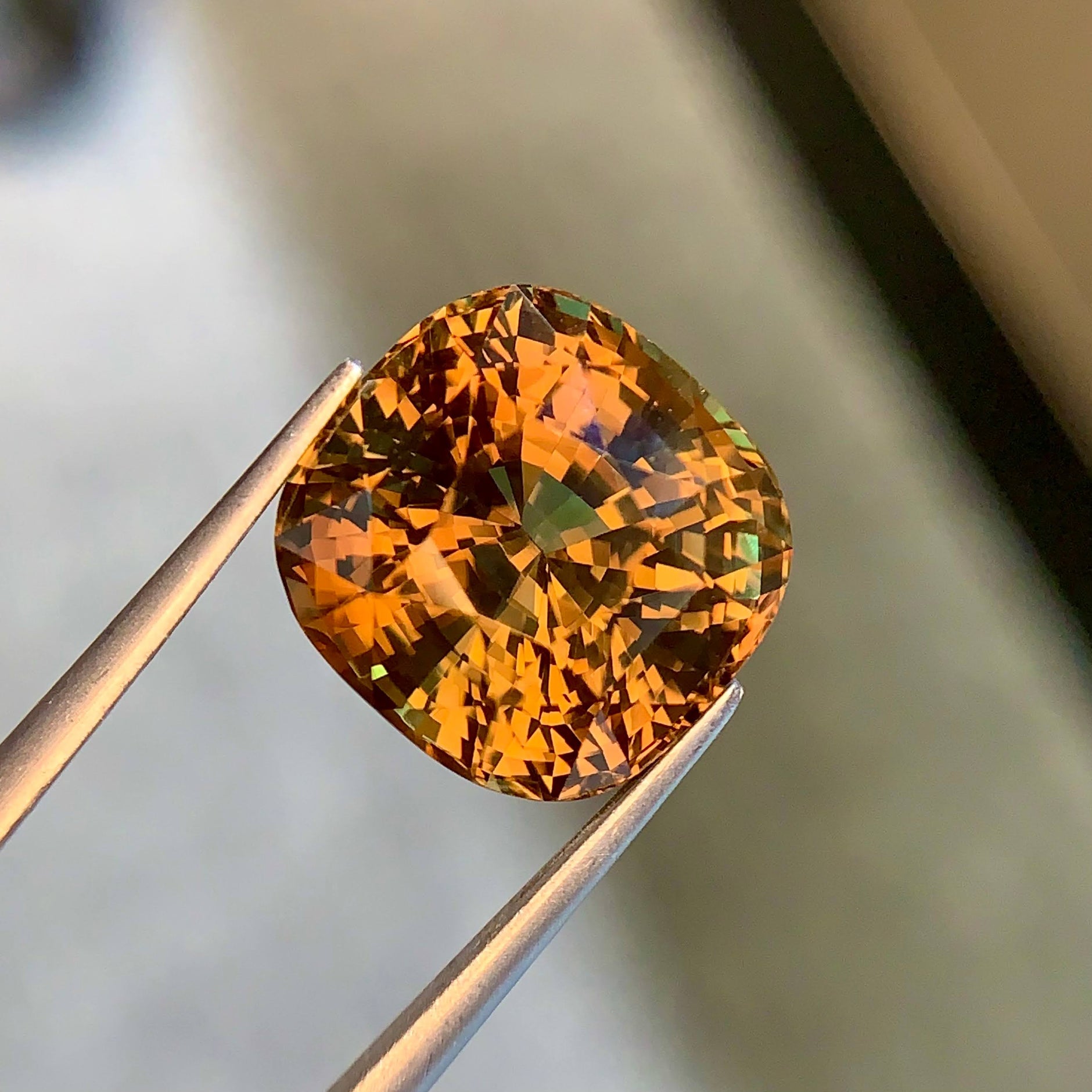


Oval Gemstones for Engagement Rings
Oval gemstones for engagement rings combine the elegance of an elongated silhouette with the color and individuality of natural gemstones. Their curved outlines work beautifully in simple solitaires, vintage-inspired designs, and contemporary rings with east-west settings. Sapphire and spinel are particularly attractive for engagement jewelry worn frequently, while ruby offers rich red color and other gemstone varieties provide alternatives for buyers whose wearing habits allow for more delicate materials.
The appeal of an oval gemstone is not simply that it can appear longer than a round stone of similar weight. Its proportions, color distribution, brilliance, and setting can change how the entire ring looks on the hand. A well-cut blue sapphire may create a refined centerpiece in yellow gold, while a bright pink spinel can look delicate or dramatic depending on its dimensions and surrounding metal. The same two-carat weight can produce noticeably different ring designs when one oval is broad and another is long and narrow.
An engagement ring also needs to be comfortable and secure. The center stone should suit the wearer's activities, the mounting should accommodate its actual depth, and the design should work alongside a wedding band if the rings will be worn together. A beautiful gemstone becomes a more satisfying purchase when these practical details are resolved before the jewelry is manufactured.

The shape changes how the whole ring looks
Oval gemstones have smooth, continuous outlines without the sharp points found in pear, marquise, and heart shapes. That makes them visually versatile, but individual ovals can still have remarkably different proportions.
A broad oval has a rounded, substantial appearance that can suit a simple solitaire or an ornate halo. A narrower oval appears more elongated and may create a different impression when positioned vertically on the finger. Neither shape is inherently more desirable; the right choice depends on the gemstone's actual beauty and the intended ring design.
The curvature of the shoulders matters as much as the length-to-width ratio. A stone with attractive proportions should taper smoothly around both ends rather than becoming noticeably flattened, pinched, or uneven on one side.
The setting can emphasize or soften these characteristics. A narrow band beneath a vertically mounted oval makes the center stone particularly prominent, while a wider band can create a more architectural appearance. A halo follows the oval's perimeter and adds visual presence, although it may conceal part of the center stone's outline.
These design possibilities explain why the gemstone should be examined on its own and then considered in relation to the ring, rather than selected solely from a photograph of finished jewelry.
Sapphire offers an excellent foundation for everyday wear
Natural sapphire is one of the strongest candidates for an oval engagement ring because corundum has a Mohs hardness of 9 and generally good toughness. A sound sapphire can withstand ordinary jewelry wear relatively well, although its condition, treatments, and mounting still matter.
Blue sapphire remains a classic choice, but oval cutting also suits teal, pink, yellow, green, purple, and parti-colored material. Each produces a different effect depending on the cut and metal.
A vivid teal sapphire can create attractive contrast with yellow gold, particularly when its greenish-blue color remains visible under indoor lighting. Pink sapphire can produce a softer appearance, while a rich blue stone may look especially elegant with a restrained platinum or white-gold setting.
Sapphire cutting requires attention to natural color zoning. Some rough crystals contain bands or concentrated regions of color, and the cutter must choose an orientation that produces an appealing face-up appearance. An oval that looks attractive at one angle may show a lighter center or a darker band when moved.
Treatment disclosure is equally important. A naturally formed sapphire may have undergone heating, and the absence of treatment should not be assumed from its color or price.
For frequent wear, the combination of favorable durability, attractive color, and a balanced oval outline often makes sapphire a practical choice. The individual stone's appearance remains important, since a poorly cut sapphire can still look dull or excessively dark.
Spinel provides a different kind of colored brilliance
Natural spinel has become an appealing choice for buyers who want an engagement gemstone in pink, red, lavender, violet, gray, or blue. It has a Mohs hardness of approximately 8 and generally good toughness, making sound specimens suitable for many regularly worn rings.
The visual character of spinel can be particularly attractive in ovals. A carefully proportioned stone may display bright flashes across its length, while a deeply saturated example can create a richer, more restrained appearance.
One useful comparison is the 2.05-carat purplish-pink oval spinel from Myanmar. Its published dimensions of 9.3 × 7.2 × 4.2 mm produce a moderately elongated outline, while the VS clarity description and untreated status provide further context for evaluating the individual stone.
Those proportions make the gemstone suitable for considering several different ring designs. A slim solitaire could emphasize the long axis, while a bezel might create a smoother perimeter for someone who prefers a less exposed center. A more decorative ring could pair the spinel with small side stones without overwhelming its color.
Fine-color spinel should not automatically be regarded as a budget substitute for sapphire or ruby. Particularly desirable natural colors and larger clean stones can command substantial prices.
A buyer should evaluate spinel for its own beauty and physical properties rather than choosing it merely because it is less familiar than conventional engagement-ring gemstones.
Ruby, aquamarine, and the choice to wear a more delicate stone
Ruby shares sapphire's corundum composition and Mohs hardness of 9, making sound examples practical for many engagement rings. Oval cuts can display its red color beautifully, although natural inclusions, treatments, and cutting proportions affect appearance and value.
Aquamarine offers a completely different aesthetic. Its transparent blue to greenish-blue color can create an airy, understated center stone. However, with a Mohs hardness of approximately 7.5–8, it requires greater attention to scratching and impacts than sapphire.
A buyer choosing aquamarine may prefer its gentle color enough to accept more careful wearing habits. The gemstone's transparency makes cutting quality particularly important, since a shallow oval can develop a pale central window that weakens the blue appearance.
Garnet and tourmaline provide further possibilities, including reddish-pink, orange, green, and bicolor stones. Their suitability depends on the specific mineral species, physical condition, and intended setting.
For an engagement ring, the most important distinction is not simply between precious and less expensive gemstones. It is whether the selected mineral can tolerate the wearer's routine and whether its color and cutting produce the desired appearance.
A stone chosen for occasional wear can be evaluated differently from one expected to remain on the hand throughout work, travel, household activities, and daily movement.
A colorless oval sapphire offers another approach to tradition
Not every engagement ring needs a strongly colored center stone.
A colorless natural sapphire can create a restrained appearance while retaining the durability associated with corundum. Its optical properties differ from diamond, so the reflections and dispersion should be appreciated on their own terms rather than expected to look identical.
The 1.37-carat natural colorless oval sapphire from Sri Lanka measures 7.3 × 5.7 × 4.3 mm, with VVS clarity and no treatment listed. Its physical dimensions illustrate the importance of judging how the gemstone actually looks on the hand rather than assuming the carat weight establishes a particular visual size.
A colorless sapphire may be particularly attractive in a minimalist ring, where the stone's oval outline and the craftsmanship of the mounting become the dominant design elements.
Metal choice can create different impressions. Platinum or white gold produces a cool appearance, while yellow gold introduces warmth and contrast.
The essential comparison is between the actual colorless gemstone's brightness, cutting, and dimensions and the design the buyer wants. A more expensive or heavier stone will not automatically create a more elegant ring.
The bow tie should be judged on the hand, not in one photograph
Oval gemstones often display an area of darker reflections across their centers, commonly described as a bow-tie effect.
The appearance varies with cutting proportions, pavilion facets, the mineral's optical properties, and lighting conditions. Some contrast is necessary for attractive scintillation, so the presence of a small dark region does not automatically indicate poor cutting.
A bow tie becomes distracting when a large, dark band dominates the center and prevents the gemstone's color from showing clearly.
This matters particularly for engagement rings because the center stone is viewed from changing angles throughout the day. A gemstone that appears bright in one studio photograph may look much darker when worn under ordinary indoor lighting.
The most useful evaluation involves examining the actual loose gem in motion. The bright and dark facets should change as it tilts, producing an attractive pattern rather than leaving the center persistently lifeless.
The buyer should also consider whether the bow tie is visually balanced. An uneven dark area can make an otherwise symmetrical oval appear less refined.
A well-selected engagement stone does not need to eliminate every trace of central contrast. It should display a satisfying relationship between color and brilliance in the conditions in which it will actually be worn.

Vertical or east-west: Two very different engagement rings
A conventional oval engagement ring places the gemstone's longer dimension along the finger. This arrangement emphasizes the elongated shape and works naturally with solitaire, halo, and three-stone designs.
An east-west setting turns the oval sideways, placing its longer dimension across the finger. The result can feel more modern and unconventional, particularly when the mounting is kept simple.
An east-west design may require additional thought about how the ring sits beside neighboring fingers and how the setting relates to the band. A broad oval placed horizontally can become visually substantial, even when its carat weight is moderate.
The center stone's actual length and width should therefore be considered with the wearer's finger size and preferred band thickness.
An east-west bezel can create a smooth, architectural appearance, while a vertical four-prong solitaire may expose more of the gemstone's outline.
Neither orientation guarantees greater durability. The more important considerations are the construction of the setting, protection of the girdle, how far the gemstone projects above the finger, and whether the finished ring remains comfortable.
The wedding band needs to be part of the design decision
A beautiful engagement ring can become less convenient if it does not sit well beside the wedding band the wearer intends to use.
A low-set oval may prevent a straight wedding band from sitting flush against the engagement ring. Depending on the mounting, a curved or contoured band may provide a better fit.
A raised setting can sometimes allow a straight band to sit closer, but it may increase the height of the center stone and expose it to more accidental contact.
The jeweler should therefore establish whether the intended wedding band will be straight, curved, fitted, or worn separately.
The choice also affects the visual balance of the finished set. A delicate center stone may be overwhelmed by a very wide band, while a large oval can require a slightly more substantial engagement-ring shank for appropriate support.
The details of custom jewelry made around individual gemstones become particularly important when two rings need to fit together. The actual pavilion depth, gemstone width, and gallery construction determine what is practical.
This planning is easier before the engagement ring is manufactured than after the setting has been completed.
Prongs, bezels, and the security of the oval
Oval gemstones lack sharp points, but their rounded ends and girdles still require secure support.
A four-prong setting is a popular choice because it leaves much of the center stone visible. The prongs should be positioned to hold the stone securely without creating uneven pressure or obscuring an important portion of the outline.
Six-prong settings may also be suitable, depending on the gemstone's dimensions and design. Additional prongs do not automatically guarantee better protection if they are poorly positioned or manufactured.
A bezel surrounds the perimeter with a fitted rim of metal. It can provide edge protection and suit a ring with a smoother profile, although it covers some of the gemstone's face-up boundary.
An oval halo creates greater visual presence through smaller surrounding stones. However, the security of every accent stone becomes part of the ring's ongoing maintenance.
For someone who wears jewelry during frequent physical activity, a protective mounting may be more important than maximizing the amount of exposed gemstone.
The ideal choice is a setting designed for the actual oval, not merely a commercial size label such as 9 × 7 mm.
Why the center stone's depth affects daily comfort
A stone's visible length and width do not reveal how much material lies beneath the girdle.
A relatively deep oval may require a taller mounting, even when its face-up size looks modest. This can affect how often the ring catches on clothing or comes into contact with surrounding objects.
A shallower stone may permit a lower setting, but excessive shallowness can produce windowing and weak light return.
The jeweler needs to balance pavilion clearance with practical wearing height. A center stone should not be forced into an unsuitable low mounting simply to achieve a fashionable profile.
The band's strength and proportions also matter. A very thin shank may look attractive in photographs but should be evaluated for its ability to support the complete ring design over time.
A lower-profile bezel, properly proportioned solitaire, or carefully designed cathedral setting may suit different wearers and gemstones.
Comfort should be judged according to the finished piece, not just the size of the center stone.
Planning the total engagement-ring budget
The price of an oval engagement ring depends on the natural gemstone and the work required to turn it into a secure, attractive piece of jewelry.
Sapphire, spinel, ruby, aquamarine, garnet, and tourmaline occupy different commercial markets, and their prices vary considerably according to color, rarity, clarity, treatments, weight, and cutting quality.
The mounting adds the cost of precious metal, skilled setting, finishing, and any side stones. Custom construction may be required when the gemstone has unusual dimensions, a deep pavilion, or a specific desired orientation.
The buyer should therefore obtain a preliminary setting estimate before committing the entire budget to the loose gemstone.
A smaller sapphire with excellent color and balanced brilliance can make a more satisfying finished ring than a heavier stone whose cutting is poor or whose setting must be compromised.
The decision should prioritize the complete piece, including comfort and security, rather than treating the center stone's carat weight as the primary measure of success.
The final inspection before the stone is mounted
An oval gemstone should be examined while loose, before its pavilion and girdle become partly concealed by the setting.
The jeweler should confirm the exact measurements, outline, physical condition, and any fractures near the girdle. The buyer should also verify the gemstone's natural identity and disclosed treatments, particularly when these claims influence the price.
If an independent laboratory report accompanies the stone, its identifying details should match the gemstone being purchased.
A rotating view is useful for checking the bow tie, color distribution, and brightness. A gemstone that looks attractive in a single photograph may display a noticeably different character when moved.
The final ring design should account for the actual stone's depth and mounting requirements, as well as the intended wedding band and daily wearing habits.
Once these details are resolved, the result can be a ring that is both personally distinctive and practical to enjoy for many years.

Conclusion
Oval gemstones for engagement rings offer considerable design freedom, from traditional blue sapphires and vivid spinels to understated colorless stones and unusual natural colors. The best result is not determined by shape or carat weight alone. Color, light return, durability, setting security, and comfort all influence how successfully the center stone becomes part of the finished ring.
A well-proportioned oval should retain its beauty as the hand moves, while its mounting should suit the wearer's activities and personal style. Natural loose gemstones for custom engagement rings can be compared by color, cut, clarity, dimensions, weight, and price before the final setting is commissioned.
Frequently Asked Questions
Are oval gemstones suitable for engagement rings worn every day?
Yes, particularly when the mineral species and mounting are appropriate for frequent wear. Natural sapphire and spinel are strong candidates because of their favorable hardness and toughness. Ruby is another durable option, while aquamarine, garnet, and tourmaline may require greater care depending on their physical condition. The setting should secure the girdle, and the ring should be removed during activities involving substantial impacts or abrasion. The individual gemstone's condition matters just as much as the oval outline.
Does an oval gemstone make the finger look longer?
A vertically mounted oval can create the visual impression of length because its long axis runs along the finger. However, the effect depends on the gemstone's actual proportions, the width of the band, and the overall ring design. A broad oval may create a more substantial appearance, while a narrower stone emphasizes elongation. An east-west setting produces a different visual effect by placing the longer dimension across the finger. Neither orientation is universally preferable; comfort and personal style should guide the choice.
Is an oval sapphire better than an oval spinel for an engagement ring?
Sapphire has greater scratch resistance, with a Mohs hardness of 9 compared with spinel's approximately 8. Both can provide good durability when the individual stone is sound and the mounting is secure. Spinel offers beautiful pink, red, lavender, violet, blue, and other colors, while sapphire provides its own extensive range. The better choice depends on the preferred color, cutting quality, physical condition, treatment information, and price. A beautifully cut spinel may be more appealing than a sapphire with excessive darkness or weak proportions.
Is a bow tie in an oval engagement gemstone a defect?
Not necessarily. Some darker contrast is normal and helps create an attractive pattern of reflections. A bow tie becomes undesirable when it forms a broad, persistent dark band across the center that obscures the gemstone's color and brilliance. The effect depends on cutting proportions and viewing conditions. A moving video is more informative than a single photograph because it shows whether the reflections change as the stone tilts. Buyers should judge the visual effect rather than reject every oval with visible contrast.
Should an oval engagement ring have four or six prongs?
Either arrangement can be appropriate when designed for the actual gemstone. Four prongs create an open appearance and are common in oval solitaires. Six prongs can provide another secure configuration, but additional prongs do not automatically mean the setting is safer. Prong placement, metal strength, girdle condition, and skilled workmanship are more important than the number alone. A bezel is also worth considering when greater perimeter protection or a smoother profile is preferred.
Can an oval engagement ring sit flush with a straight wedding band?
It depends on the engagement ring's gallery, center-stone depth, prong arrangement, and setting height. Some designs allow a straight wedding band to sit closely against the engagement ring, while lower-profile mountings may require a curved or contoured band. The jeweler should consider the intended wedding band before manufacturing the engagement ring. Raising the center merely to create a flush fit may introduce other comfort concerns, so the two-ring design should be balanced as a complete set.
Do oval gemstones look larger than round gemstones of equal weight?
Some ovals create an elongated visual impression and may have generous face-up dimensions, but there is no universal size advantage. Mineral density, cutting depth, and individual proportions influence how large a gemstone looks. Two sapphires of equal weight can have different visible dimensions if one carries more mass beneath the girdle. Buyers should compare actual length, width, and depth alongside brilliance rather than assuming that an oval will always look larger than a round gemstone of the same carat weight.


