

-
Gorgeous Natural Green Agate Gemstone - Green
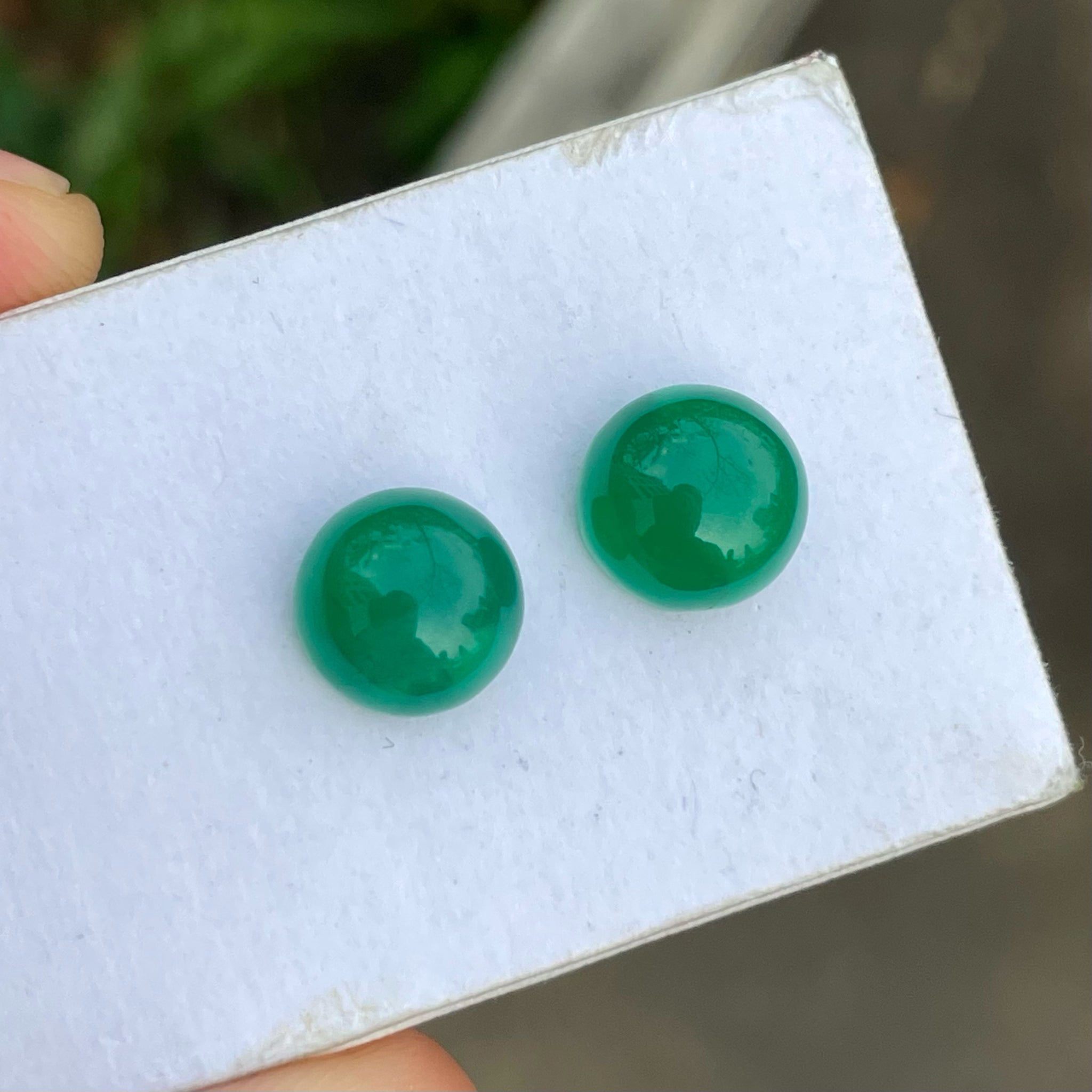
Gorgeous Natural Green Agate Gemstone, available for sale at wholesale price, natural high-quality 6.75 carats flawless Transparency Translucent clarity, certified Agate from India. Product Information: Gemstone Name Gorgeous Natural Green Agate Gemstone Weight 6.75 carats Dimensions 12.2 x 12.1 x 6.0 mm Clarity Transparency...- $130.00
- $130.00
- Unit price
- per
-
Green
-
4.54 carats Green Agate Stone Oval Cut Natural Indian Gemstone - Green
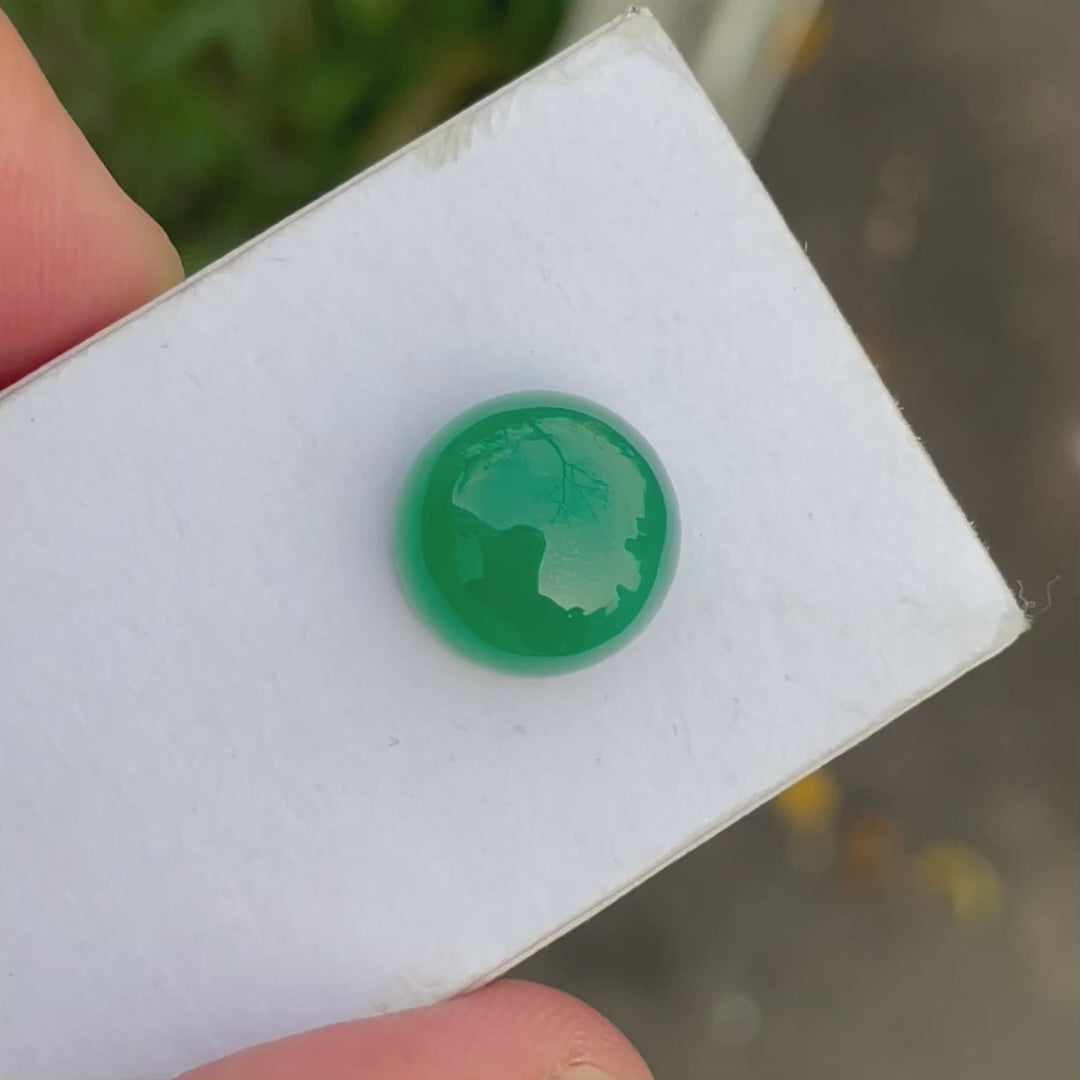
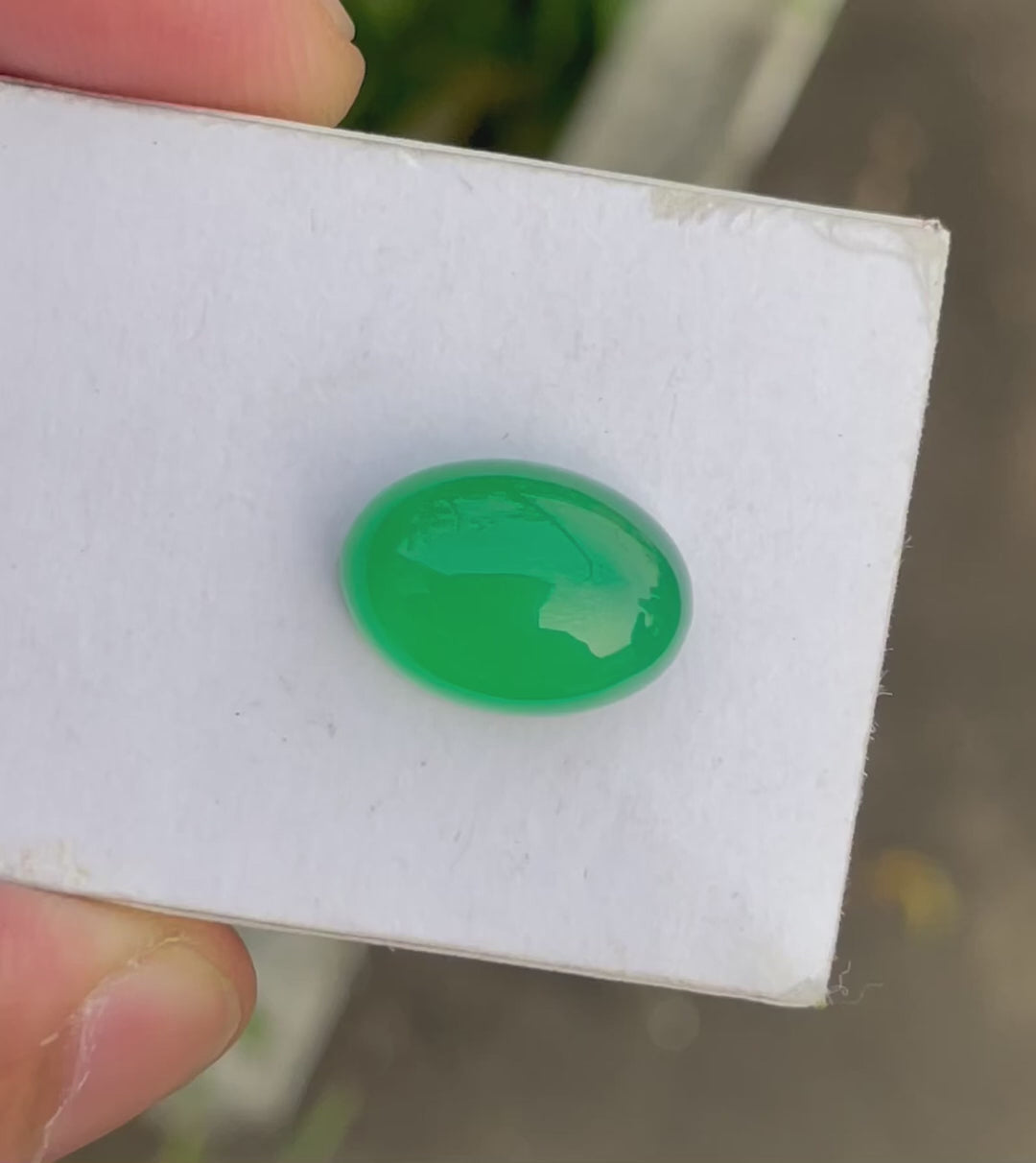
Buy 4.54 Carat Natural Green Agate Oval Cabochon Gemstone – Certified & Untreated Enhance your jewelry collection with this 4.54-carat natural Green Agate gemstone, expertly cut into a smooth oval cabochon. Mined from India’s mineral-rich regions, this untreated, certified green gemstone features a lustrous...- $65.00
- $65.00
- Unit price
- per
-
Green
-
4.62 carats Green Agate Stone Cabochon Cut Natural Indian Gemstone - Green
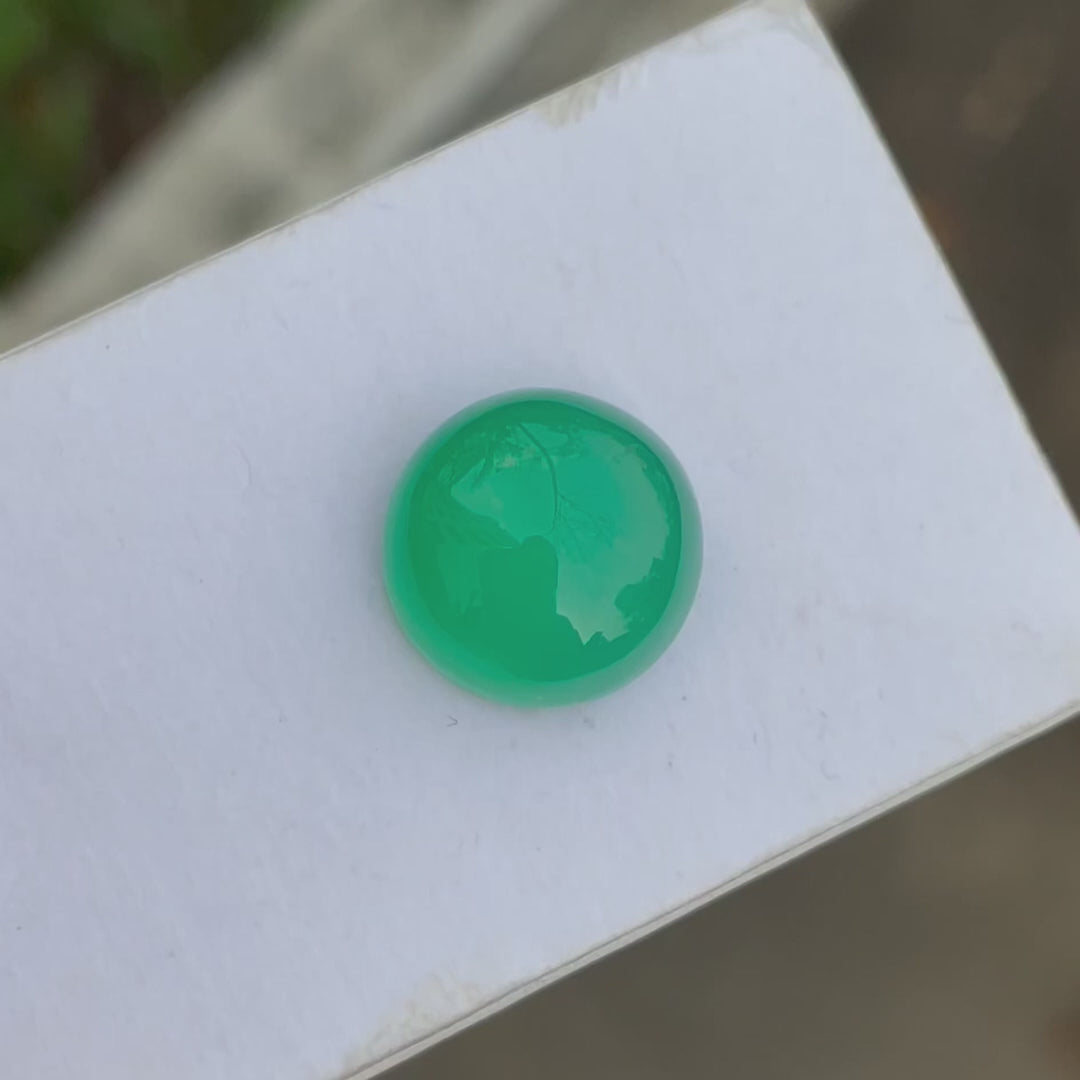
Enhance your jewelry collection with this stunning 4.62 carat natural Green Agate gemstone, expertly cut in a smooth round cabochon. Featuring a rich green hue with translucent clarity and natural internal patterns, this gemstone is ideal for rings, pendants, or custom jewelry designs. Sourced...- $65.00
- $65.00
- Unit price
- per
-
Green
-
12.78 carats Deep Green Natural Agate Pair Cabochon Cut from India - Green
This exquisite pair of deep green natural agate cabochons, weighing a combined total of 12.78 carats, is a stunning representation of the gemstone's elegance and natural beauty. Mined and crafted in India, these cabochons feature a smooth, domed surface and are expertly cut to...- $135.00
- $135.00
- Unit price
- per
-
Green
-
Natural Green Agate Cabochon Gemstone - Green
Natural Green Agate Cabochon Gemstone, available for sale at wholesale price, natural high-quality 6.65 carats flawless Diaphaneity Translucent, certified Agate from India. Product Information: Gemstone Name Natural Green Agate Cabochon Gemstone Weight 6.65 carats Dimensions 14.1 x 10.1 x 6.0 mm Clarity Diaphaneity Translucent...- $70.00
- $70.00
- Unit price
- per
-
Green
-
Marvelous Natural Green Agate Gemstone - Green
Marvelous Natural Green Agate Gemstone, available for sale at wholesale price, natural high-quality 7.15 carats flawless Transparency Translucent, certified Agate from India. Product Information: Gemstone Name Marvelous Natural Green Agate Gemstone Weight 7.15 carats Dimensions 12.6 x 12.6 x 6.0 mm Clarity Translucent Locality...- $155.00
- $155.00
- Unit price
- per
-
Green
-
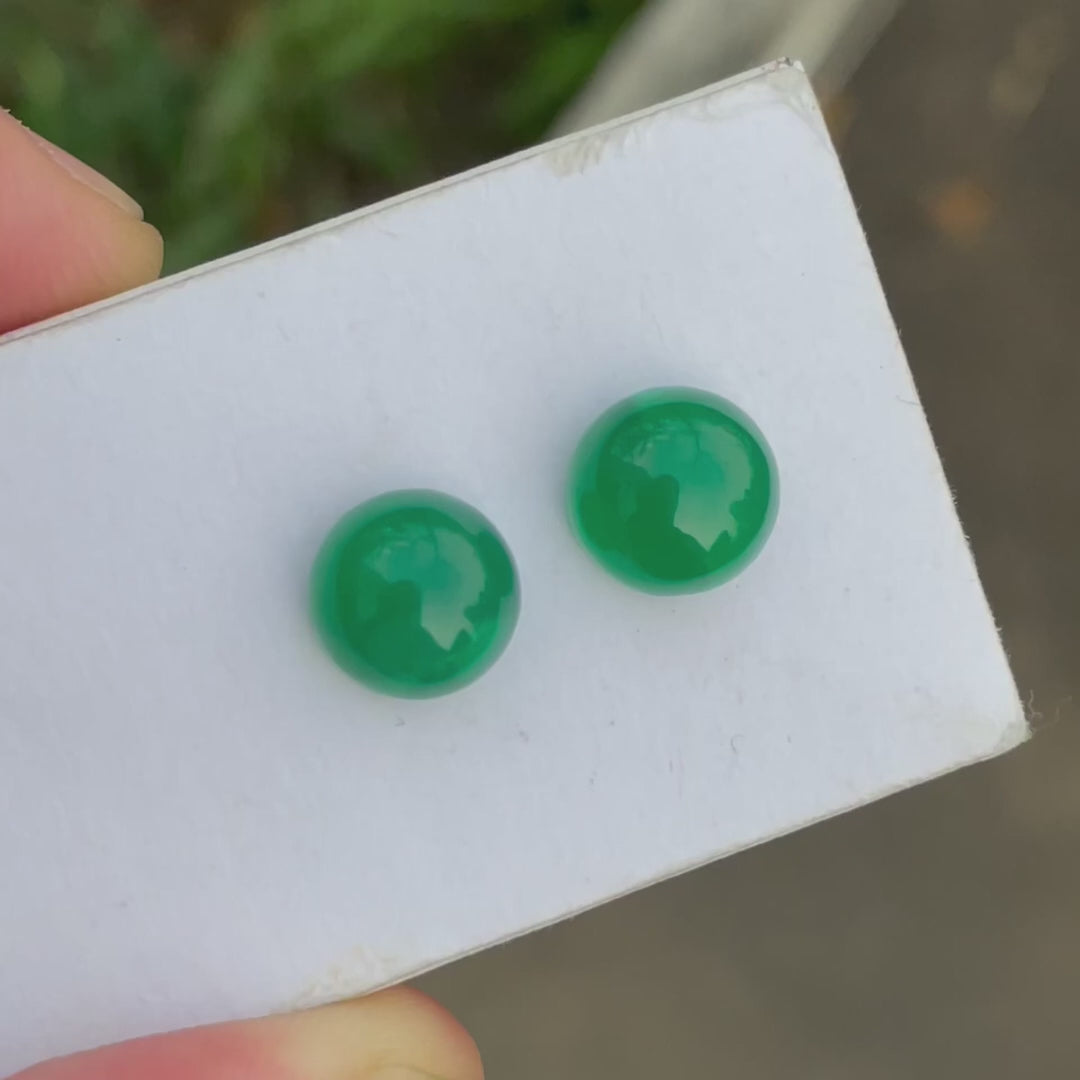
Beautiful Green Agate Pair Gemstone - Green
Beautiful Green Agate Pair Gemstone, available for sale at wholesale price, natural high-quality 7.25 carats flawless Transparency Translucent, certified Agate from India. Product Information: Gemstone Name Beautiful Green Agate Pair Gemstone Weight 7.25 carats Dimensions 9.1 x 9.1 x 5.7 mm Clarity Transparency Translucent...- $130.00
- $130.00
- Unit price
- per
-
Green
Free Shipping on order over $80
100% Authentic & Certified
Save Big in 2026
Natural Agate Gemstone
An agate gemstone is best selected by comparing natural banding, pattern definition, color distribution, translucency, polish, cut, dimensions, treatment disclosure and intended jewelry use rather than by choosing the brightest color or largest cabochon automatically. Agate is a variety of chalcedony within the quartz family and is composed principally of microcrystalline silica, SiO₂. Its most characteristic appearance comes from layered growth in which differently colored or translucent chalcedony zones create concentric, fortification-like or otherwise structured patterns.
Sidebar





No two agates need to look alike. One stone may show tight gray and white bands, another may combine red, orange and cream layers, while a third may contain a crystalline quartz center surrounded by chalcedony. That natural individuality is central to agate's appeal. Buyers browsing loose gemstones should therefore evaluate an agate gemstone as a patterned object whose visual composition matters as much as conventional clarity.
Agate Banding and Pattern Should Drive the Buying Decision
Banding is one of the defining visual features of agate, but the quality of a pattern depends on how well it works within the finished stone rather than simply on the number of visible lines. Fine parallel layers can produce a delicate appearance, while bold fortification bands create angular concentric patterns that follow former cavity walls. Some pieces contain eye-like structures, plume-like inclusions or crystalline centers that add complexity even when the classic bands are less dominant.
Cutting orientation strongly affects what the buyer sees. A slice taken across a nodule can reveal concentric zones that would be almost invisible if the same rough were cut in another direction. The lapidary therefore does more than polish the stone; the cut determines which part of the geological structure becomes the face-up design.
The best pattern is ultimately one that remains visually balanced within the chosen shape. An oval with strong bands running naturally through the center can be more satisfying than a larger cabochon where the most interesting section has been cut away or placed near an edge.
Agate Color Can Be Natural, Enhanced or Dyed
Natural agate occurs in a wide range of colors, including colorless, white, gray, brown, red, orange, yellow, pink and subdued blue or purple tones. Iron compounds can contribute red, orange and brown colors, while variations in porosity and mineral inclusions create additional visual differences between bands.
Agate's fine porous structure also makes it receptive to dyeing, and colored agate has a long history in decorative stone work. Strong green, electric blue, hot pink and other unusually uniform saturated colors may therefore reflect treatment rather than natural coloration. This does not automatically make the gemstone unsuitable, but treatment should be represented accurately so the buyer knows what creates the present appearance.
Bleaching, staining or other color modifications can also be used in some chalcedony products. Natural origin and natural color are separate questions, so a gemstone can be genuine agate while still having received a color treatment.
Agate Is Chalcedony, but Not Every Chalcedony Is Agate
Chalcedony is a microcrystalline form of silica that includes many named varieties. Agate belongs within this family and is particularly associated with structured, layered growth, but chalcedony can also occur as relatively uniform masses without classic agate banding.
This distinction matters because market names are sometimes applied loosely. Onyx, carnelian, jasper, chrysoprase and other chalcedony-related names describe different color, opacity or structural traditions, and some commercial labels overlap more than mineralogical terminology would suggest.
Collectors interested in the crystalline end of the same silica family can compare quartz mineral specimens. Quartz and agate share SiO₂ chemistry, but agate's fibrous microcrystalline structure creates a completely different appearance from visible macrocrystalline quartz crystals.
Agate Cut, Polish and Shape Should Preserve the Natural Pattern
Agate is commonly cut into cabochons, polished slices, freeform shapes, beads and carvings because these styles allow the internal pattern to remain visible across a relatively broad face. Flat-backed cabochons are practical for jewelry, while domed surfaces can emphasize translucency and help color bands flow smoothly through the design.
Polish quality deserves careful attention because agate can take an excellent glossy finish. A strong polish should reveal the internal pattern clearly without leaving obvious scratches, flat spots or poorly finished edges. The outline should also work with the natural banding rather than cutting abruptly across the most attractive section.
Faceting is possible in transparent chalcedony, but it is not usually the defining approach for patterned agate. In most cases, broad polished surfaces communicate the geological structure more effectively than numerous small facets.
Agate Hardness and Durability Make It Practical for Jewelry
Agate generally falls around Mohs 6.5 to 7, giving it good resistance to ordinary scratching and making it more durable than many softer ornamental stones. It has no significant cleavage and typically breaks with a conchoidal fracture, which gives it useful toughness for cabochons, beads and carved jewelry.
That durability does not make agate indestructible. Thin slices can break if dropped on a hard surface, pointed freeform sections can chip, and highly polished faces may scratch if stored directly against corundum or diamond.
For rings, pendants, bracelets and earrings, agate is generally practical when the setting protects exposed edges appropriately. Routine care is straightforward, though treated or dyed stones deserve additional caution around strong chemicals and solvents that might affect color.
The guidance under gemstone care provides a useful foundation for keeping polished agate surfaces clean and separating them from harder stones during storage.
Agate Translucency, Quartz Centers and Natural Inclusions
Agate ranges from nearly transparent in thin bands to strongly translucent or locally opaque, and this variation often contributes directly to the pattern. Light passing through alternating layers can reveal bands that look much less obvious under reflected light, making backlit photographs useful when evaluating a stone.
Some agate nodules contain central cavities lined with quartz crystals. These crystalline interiors can create attractive combinations of smooth chalcedony banding and sparkling macrocrystalline quartz. Other pieces may contain mineral inclusions, dendritic features or iron-rich areas that produce unusual patterns.
These features should not automatically be judged as flaws. Agate is appreciated partly because its internal structures record changing stages of silica deposition, and a distinctive inclusion or cavity can become the focal point of the gemstone rather than something that needs to be removed.
Agate Treatments, Authenticity and Accurate Photography
Because agate can be dyed readily, treatment disclosure deserves more attention than it might with stones where enhancement is uncommon. Very saturated colors should be viewed with realistic expectations, especially when every band appears equally intense or the hue is uncommon in natural agate.
Photography can also exaggerate color through saturation and contrast adjustments. A useful product image should preserve the real relationship between pale and dark bands rather than turning a muted natural stone into an artificially vivid graphic pattern.
Species identity remains a separate question. Glass, resin and reconstructed products can imitate patterned stone, while other chalcedony varieties can be marketed under agate-related names. Gandhara Gems' authenticity guarantee provides relevant purchasing context when natural gemstone identity matters.
Buying an Agate Gemstone Online
A careful online comparison should begin with the face-up pattern, then consider color, translucency, polish, shape, thickness and actual millimeter dimensions. Several photographs are useful because transmitted light can reveal structures that ordinary front lighting hides, while side views show cabochon height and edge finishing.
Treatment disclosure should be considered alongside aesthetics rather than after the purchase. A dyed gemstone can still be attractive when represented accurately, while buyers seeking natural color should prioritize stones whose appearance and disclosure support that preference.
Choose the current Agate Gemstone whose banding, pattern, color and proportions work naturally for the jewelry, carving or collection you have in mind instead of selecting solely by maximum saturation or size.
Agate Gemstone FAQs
What is an agate gemstone made of?
Agate is composed primarily of silica, SiO₂, and belongs to the chalcedony family within quartz. Its distinctive appearance comes from microscopic fibrous silica deposited in layers, often creating concentric or fortification-style bands.
Is every banded chalcedony considered agate?
Not necessarily. Agate is strongly associated with characteristic layered growth and wall-lining banding, but several other chalcedony forms can also show stripes or patterns. Commercial terminology is sometimes used more loosely than strict mineralogical descriptions.
How hard is agate?
Agate generally has Mohs hardness around 6.5 to 7 and has no important cleavage. This makes it reasonably durable for rings, pendants, earrings, bracelets and other jewelry, although thin slices and sharp edges can still chip or break from impact.
Is brightly colored agate always natural?
No. Agate is porous enough to accept dyes, and vividly colored commercial stones may be treated to create blue, green, pink, purple or other strong colors. Dyed agate is still genuine agate when accurately represented, but natural color and treated color should not be confused.
Why are agate patterns different in every stone?
Agate forms through repeated deposition of silica inside cavities and fractures, with changing conditions producing layers of different translucency, impurities and color. Cutting direction then reveals different cross-sections of that structure, which is why even pieces from the same nodule can look different.
What should I prioritize when choosing an agate gemstone?
Prioritize an attractive natural pattern, balanced color distribution, clean polish, useful dimensions, good edge condition and clear treatment disclosure. The strongest stone is the one whose banding and cut work together visually rather than simply the one with the brightest color.
Choose Agate Gemstone by Pattern, Color and Polished Finish
Compare the current Agate Gemstone selection by natural banding, pattern balance, body color, translucency, polished surface, shape, millimeter dimensions and treatment disclosure. Give the internal design more importance than maximum saturation because agate's strongest appeal comes from the geological pattern revealed by the cut. Choose the individual stone whose color and structure best fit your jewelry or collection.

Recently Viewed Products
Example product title
- $19.99
- $19.99
- Unit price
- / per
Example product title
- $19.99
- $19.99
- Unit price
- / per
Example product title
- $19.99
- $19.99
- Unit price
- / per
Example product title
- $19.99
- $19.99
- Unit price
- / per
Example product title
- $19.99
- $19.99
- Unit price
- / per
Example product title
- $19.99
- $19.99
- Unit price
- / per
Example product title
- $19.99
- $19.99
- Unit price
- / per
Example product title
- $19.99
- $19.99
- Unit price
- / per
Example product title
- $19.99
- $19.99
- Unit price
- / per
Example product title
- $19.99
- $19.99
- Unit price
- / per
- Choosing a selection results in a full page refresh.


