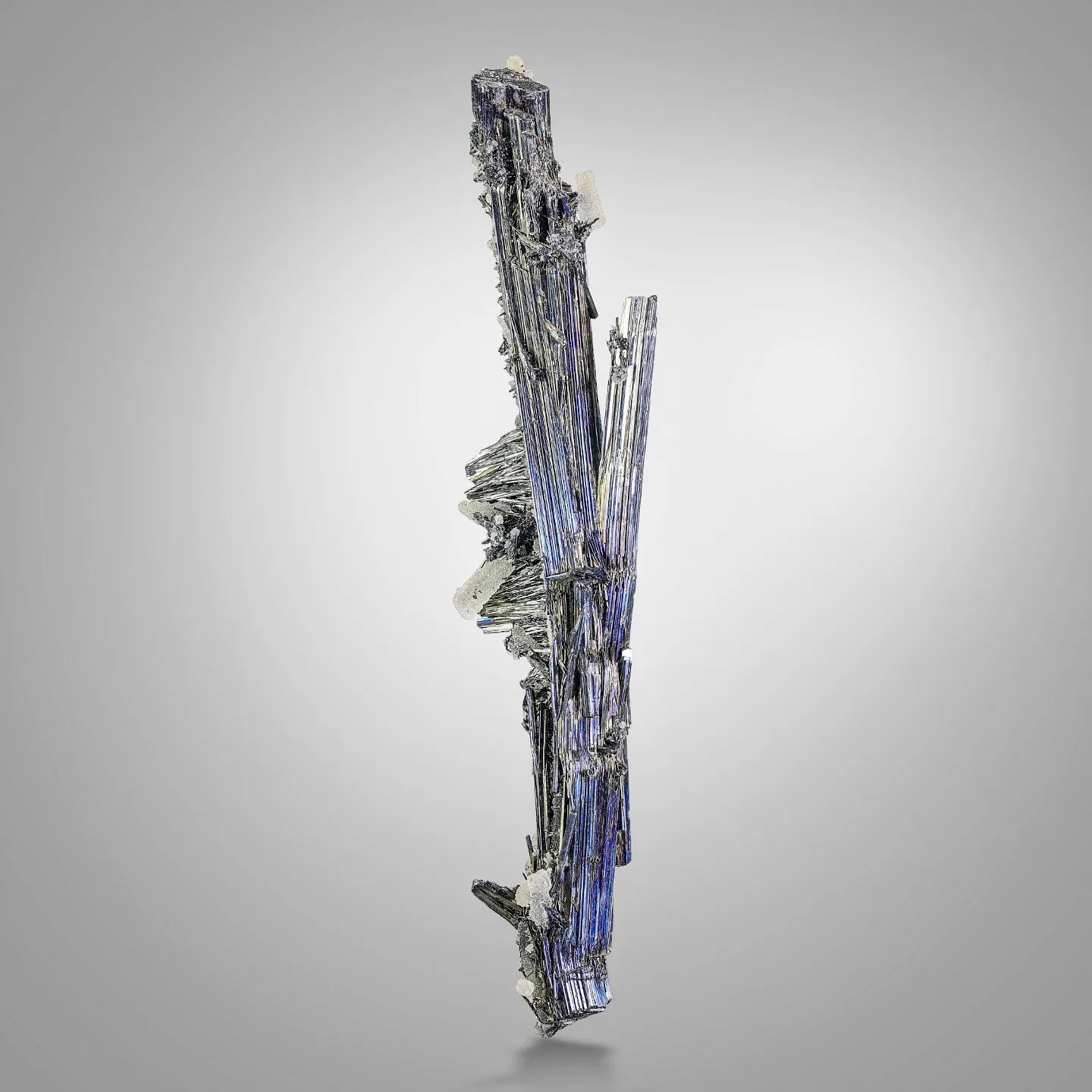
Natural Antimony Mineral

An Antimony Mineral specimen is best selected by comparing native antimony crystal form, tin-white metallic color, surface luster, cleavage, matrix association, dimensions, condition and provenance rather than by assuming that every antimony-bearing specimen is native elemental antimony. Native antimony is the mineral species Sb, crystallizes in the trigonal system, has metallic luster and typically falls around Mohs 3 to 3.5. It is dense, opaque and notably brittle, with easy cleavage that can produce flaky or layered-looking broken surfaces.

Natural Antimony Mineral

This distinction matters because antimony occurs in many different minerals, while native antimony represents the element itself in mineral form. Stibnite, for example, is antimony sulfide rather than elemental antimony, even though it is one of the most important and familiar antimony-bearing species. Buyers comparing native antimony with other mineral specimens and crystals should therefore verify the actual mineral identity instead of relying on the presence of antimony in the chemistry.

Native Antimony Crystal Form and Metallic Surface Character

Native antimony can occur as granular, massive or compact crystalline aggregates as well as better-developed crystals. Well-formed examples may show trigonal symmetry, but many collector specimens are valued for their bright metallic surface, layered cleavage texture and dense crystalline appearance rather than for large isolated crystals.

Fresh surfaces are typically tin-white to silvery with strong metallic luster. Tarnish can slightly dull or darken the surface over time, especially where the specimen has been exposed to environmental conditions or repeated handling. A completely mirror-bright appearance is therefore not required for authenticity, and polishing an original specimen can remove natural texture that is useful to collectors.

The strongest piece depends on collecting intent. A systematic collector may favor a compact specimen with reliable identification and locality, while an aesthetic buyer may prefer a brighter metallic face or clearer crystal development. Maximum shine should not override provenance and natural form.

Native Antimony Is Different From Stibnite and Other Antimony Minerals

Native antimony consists essentially of elemental Sb, while many more common antimony minerals contain sulfur, oxygen, lead, copper, silver or other elements. Stibnite is Sb₂S₃ and forms elongated orthorhombic metallic crystals, while native antimony is structurally and chemically different despite sharing the same essential element.

This is particularly important because commercial descriptions sometimes use “antimony mineral” broadly to refer to any antimony-bearing specimen. For scientific collecting, that wording is too general. A specimen should be identified as native antimony only when the mineral species itself is Sb.

Collectors comparing these forms should keep species names precise. Native antimony belongs with the native-element minerals, whereas stibnite belongs among sulfides. Their crystal structures, habits and physical behavior are not interchangeable.

Antimony Hardness, Cleavage and Brittleness Affect Preservation

Native antimony is relatively soft, with Mohs hardness around 3 to 3.5, and it is extremely brittle rather than malleable. This distinguishes it sharply from native copper, which can bend or deform. Antimony instead tends to break with a flaky or crystalline texture, and its perfect basal cleavage can create smooth reflective planes.

These properties make exposed edges vulnerable to damage. A dense metallic mass may look robust, yet a sharp blow can separate sections along cleavage or create fresh breaks that interrupt natural surfaces. Storage should therefore keep the specimen away from both harder minerals that could scratch it and unstable matrix that could place mechanical stress on the crystal.

Handling from the strongest base is preferable to gripping thin projecting sections. Repeated polishing or rubbing should also be avoided because soft metallic surfaces can mark more easily than their visual density suggests.

Native Antimony Geological Occurrence and Mineral Associations

Native antimony is much less common than many antimony-bearing sulfides and typically occurs in hydrothermal or ore-related environments. It can be associated with silver minerals, arsenic-group elements, sulfides and secondary antimony minerals depending on locality and deposit history.

Matrix can therefore add substantial collector value. A metallic native antimony aggregate preserved with contrasting gangue or another ore mineral can communicate geological context that a loose polished fragment cannot. Associations may also help document how antimony moved and concentrated during hydrothermal mineralization.

A good matrix specimen should still allow the native antimony to remain visible and clearly distinguishable. Too much host rock can obscure the focal mineral, while excessive trimming can remove valuable evidence about how the specimen occurred naturally.

Antimony Provenance and Identification Matter More Than Metallic Color Alone

Several minerals can appear silver-white or metallic, making appearance alone unreliable for exact identification. Arsenic, bismuth, antimony-rich intermetallic minerals and metallic sulfides can overlap visually, especially when the specimen lacks clear crystal morphology.

Native antimony is unusually dense, brittle and soft, but reliable species identification may still require chemical or analytical evidence. Historic locality labels can also strengthen confidence because some mining districts are well documented for native antimony occurrences.

Gandhara Gems' authenticity guarantee provides useful purchasing context where mineral identity matters. Original labels, analytical data and locality information should remain with important Antimony Mineral specimens rather than being separated after purchase.

Antimony Mineral Safety and Sensible Collector Handling

Antimony is an element that warrants sensible handling, particularly when the specimen is crumbly, powdered, cut or ground. An intact collector specimen does not require alarmist treatment, but creating dust is unnecessary and should be avoided. Fine particles provide a much less controlled exposure route than leaving the specimen intact in a display cabinet.

Collectors should wash their hands after substantial handling, keep specimens away from food-preparation areas and prevent children or pets from mouthing or repeatedly handling them. These practices are simple and also help preserve the metallic surface by reducing fingerprints and unnecessary contact.

Grinding, sanding, polishing or experimenting chemically with a collector specimen is not recommended. Preservation and minimal disturbance are better for both the mineral and the collection.

Buying an Antimony Mineral Online

A careful online comparison should begin with species identification and provenance, then consider metallic luster, crystal or aggregate form, cleavage, matrix, dimensions and condition. Several viewing angles help reveal whether bright surfaces are natural crystal or cleavage faces, fresh breaks or artificially polished areas.

Actual measurements are important because dense metallic specimens can look visually substantial without occupying much physical space. Weight can also feel unexpectedly high for the dimensions because native antimony has a specific gravity around 6.6 to 6.7.

Choose the current Antimony Mineral whose natural metallic form, preservation, documentation and geological context best fit your native-element, ore-mineral or systematic collection.

Antimony Mineral FAQs

What is native antimony?

Native antimony is the naturally occurring elemental mineral Sb. It belongs to the arsenic group of native elements and crystallizes in the trigonal system. Its tin-white metallic color, high density, brittleness and relatively low hardness are characteristic physical properties.

Is native antimony the same as stibnite?

No. Native antimony is elemental Sb, while stibnite is antimony sulfide with the formula Sb₂S₃. Stibnite commonly forms elongated metallic crystals, whereas native antimony is structurally and chemically different.

How hard is native antimony?

Native antimony has Mohs hardness around 3 to 3.5. It is also extremely brittle and has strong cleavage, so specimens can break even though they look dense and metallic. Careful handling is more important than the low hardness number alone suggests.

Why does native antimony look silvery?

Fresh native antimony has a tin-white to silvery metallic appearance because of the way its surface reflects visible light. Tarnish or oxidation can reduce that brightness over time, but mild natural dulling does not automatically mean the specimen is damaged or inauthentic.

Is native antimony safe to collect?

It can be kept safely as an intact collector specimen with sensible precautions. Avoid creating dust by grinding or sanding, wash hands after substantial handling and keep the specimen away from food, children and pets. Minimal handling also protects the soft metallic surface.

What should I prioritize when buying native antimony?

Prioritize reliable species identification, natural metallic texture, preserved crystal or cleavage surfaces, stable matrix and documented provenance. A smaller well-documented specimen can be more valuable to a systematic collection than a larger unlabeled metallic mass.

Choose Antimony Mineral Specimens by Identity, Luster and Provenance

Compare the current Antimony Mineral specimens by tin-white metallic color, trigonal or compact crystalline form, cleavage texture, luster, matrix, dimensions, condition and provenance. Give particular attention to reliable identification because many antimony-bearing minerals are not native antimony itself. Choose the individual specimen whose natural form and geological documentation best fit your collection.

Gemstone expert consultations available

Welcome to my shop! Contact Us

Recently Viewed Products
