

-
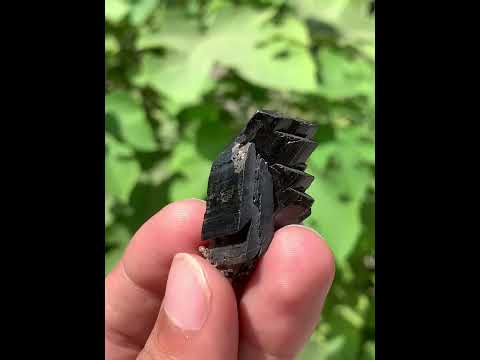
High-quality Rare Aegirine-Augite Crystal Aggregate on Albite matrix from Pakistan - Gray
Presenting this rare black beauty mineral specie of Aegirine-Augite crystal aggregate on detail Albite matrix. The crystals are nicely inter grown probably twinned somehow forming this artistic and adorable specimen. Featuring a nice tabular crystal aggregate with fine and sharp edges plus magnificent metallic...- $120.00
- $120.00
- Unit price
- per
-
Gray
-
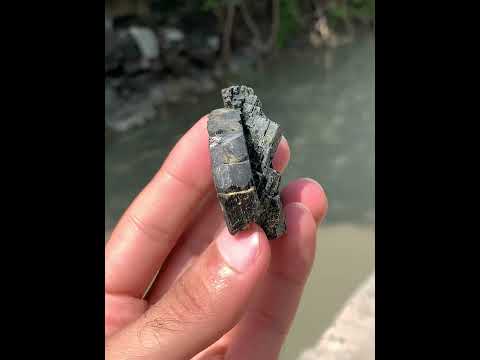
Interesting Crystallography for Rare Aegirine-Augite from Skardu, Pakistan - Gray
This is an incredible example for the rare Aegirine-Augite crystal aggregate with interesting crystallography all around. It's well crystalized all around with 360-degree view all around. It has compact crystal quality with greenish color and good quality luster. It has perfect self standing display...- $120.00
- $120.00
- Unit price
- per
-
Gray
Free Shipping on order over $80
100% Authentic & Certified
Save Big in 2026
Natural Augite Minerals
Augite minerals are best selected by comparing natural monoclinic crystal form, dark green to black or brown color, vitreous luster, cleavage, matrix association, physical dimensions, condition and provenance rather than by treating every dark pyroxene crystal as equivalent. Augite is a calcium-magnesium-iron clinopyroxene with variable composition, commonly represented within the Ca-Mg-Fe pyroxene system rather than by one perfectly fixed simple formula. It crystallizes in the monoclinic system, usually has Mohs hardness around 5.5 to 6 and commonly appears green-black, black, brown-green, brown or purplish brown.

Sidebar


Augite is an important rock-forming mineral in many igneous and metamorphic rocks, so its collector appeal often comes from crystallography and geological context rather than vivid color. A sharply developed dark crystal in contrasting matrix can be more instructive than a larger massive specimen where no natural faces remain visible. Buyers comparing augite with other mineral specimens and crystals should therefore examine form, cleavage and host rock as carefully as overall size.
Augite Crystal Form and Dark Green to Black Color
Augite commonly forms short, stout prismatic crystals, often with a nearly square or eight-sided cross-section depending on the combination of crystal faces present. Individual crystals may be embedded partly in matrix or occur as phenocrysts within volcanic and intrusive rocks, while some specimens preserve well-formed free faces suitable for display.
Color commonly ranges from brown-green through dark green, green-black and black to purplish brown. Thick crystals can appear almost completely black until strong light reveals a green or brown tint along thinner edges. Dark coloration should therefore not be interpreted automatically as opacity or poor quality.
Vitreous luster is most evident on fresh crystal faces and cleavage surfaces. Surface weathering can dull the appearance, particularly where iron-bearing components have altered, while fresh broken areas may look brighter than the original exterior. Collector quality depends on preserving natural surfaces rather than simply maximizing shine.
Augite Belongs to the Clinopyroxene Group
Augite is a member of the clinopyroxene subgroup within the pyroxene group. Its composition varies because calcium, magnesium, iron and smaller amounts of other elements can substitute within the crystal structure, which is why augite is better understood as a compositional mineral species than as one perfectly pure end-member formula.
This chemistry places augite within the same general pyroxene system as diopside and hedenbergite. The boundaries between these compositions are chemically defined rather than visually obvious, and natural crystals may contain zoning or substitutions that make appearance an unreliable guide to exact composition.
Collectors interested in pyroxene mineralogy should therefore give analytical identification appropriate weight. A dark green crystal may look “augite-like,” but exact naming should not be based on color alone when chemistry is uncertain.
Augite Cleavage, Hardness and Brittleness
Augite has Mohs hardness around 5.5 to 6 and good cleavage on two directions characteristic of pyroxenes. Those cleavage directions intersect at angles close to 90 degrees, which helps distinguish pyroxenes from amphiboles, whose cleavage angles are markedly different.
The mineral is brittle, so sharp edges and projecting portions can chip from impact. This is especially relevant when a well-formed crystal is only partly attached to matrix or when cleavage cracks extend through an otherwise attractive specimen.
Augite is hard enough to scratch calcite and several softer collector minerals but can itself be scratched by quartz. Separate storage protects both the augite and neighboring specimens, particularly when natural prism faces remain well preserved.
Augite in Basalt, Gabbro and Other Igneous Rocks
Augite is a common component of mafic and intermediate igneous rocks, including basalt, gabbro and related volcanic or intrusive rocks. It forms under conditions where calcium, magnesium and iron are available and commonly crystallizes alongside plagioclase feldspar, olivine, magnetite and other mafic minerals.
Matrix can therefore be exceptionally informative. A distinct augite crystal preserved within basalt or another igneous host shows the mineral as part of a natural rock-forming assemblage rather than as an isolated object. Large phenocrysts can also document the cooling history of magma when they grew before the surrounding finer-grained matrix crystallized.
This geological setting differentiates augite from many collector minerals formed primarily in cavities or hydrothermal veins. The host rock may look visually plain, yet it often carries essential information about how the crystal formed.
Augite vs Diopside, Hornblende and Other Dark Minerals
Dark green or black augite can resemble diopside, hornblende, aegirine and several other silicate minerals, particularly in hand specimens where crystal faces are incomplete. Crystal form and cleavage provide useful clues, but precise identification may require optical or chemical data.
Hornblende and other amphiboles are commonly distinguished from pyroxenes by cleavage angles. Augite's two good cleavage directions meet at approximately right angles, whereas amphibole cleavage produces angles closer to 56 and 124 degrees. This distinction is useful in rock identification but can be difficult to observe on small or weathered collector specimens.
Diopside belongs to the same clinopyroxene family and can overlap in green color and crystal habit. Exact boundaries depend on chemistry, so visual appearance alone should not be used to force a precise species assignment.
Augite Weathering, Inclusions and Matrix Condition
Augite can alter during weathering, especially in exposed volcanic rocks, and dark crystal surfaces may become duller or develop iron-rich alteration products. Partial alteration can reduce luster while still preserving the original crystal shape, providing evidence of the specimen's geological history.
Inclusions and intergrowths may also occur naturally. A crystal partly enclosing another mineral or showing compositional zoning can be scientifically interesting even if it does not meet a simple aesthetic standard of uniform color.
Matrix condition should be evaluated separately from crystal condition. A well-formed augite can remain intact while the surrounding volcanic rock becomes fractured or crumbly, creating a transport risk that is easy to miss in close-up photographs.
Augite Identification and Provenance
Because augite is widespread, locality information can add important context. A specimen from a documented volcanic field, intrusive complex or metamorphic occurrence can be connected to a specific geological setting, while an unlabeled dark crystal loses much of that interpretive value.
Identification may involve crystal morphology, cleavage, optical properties, density and chemical analysis. Augite typically has a specific gravity around 3.2 to 3.6, but that range overlaps with other dark silicates and should not be used by itself to determine species.
Gandhara Gems' authenticity guarantee provides useful purchasing context where mineral identity matters. Original labels and locality records should remain with important Augite Minerals because provenance cannot be reconstructed confidently from dark color and habit alone.
Buying Augite Minerals Online
A careful online comparison should begin with crystal form and condition, then consider color, luster, cleavage, matrix, dimensions and provenance. Several photographs from different directions are useful because dark minerals can hide surface detail under flat lighting, while angled illumination reveals prism faces and cleavage more clearly.
Buyers should also decide whether they want a free crystal, a matrix specimen or a representative rock-forming example. A highly aesthetic isolated crystal and an embedded augite phenocryst serve different collecting purposes and should not be evaluated by one identical standard.
Choose the current Augite Mineral whose monoclinic crystal form, surface preservation, host-rock context and documentation best fit your pyroxene, igneous-rock or systematic collection.
Augite Mineral FAQs
What is augite?
Augite is a calcium-magnesium-iron clinopyroxene mineral with variable composition. It crystallizes in the monoclinic system and is an important rock-forming mineral in many igneous and metamorphic rocks.
What color is natural augite?
Natural augite is commonly dark green, green-black, black, brown-green, brown or purplish brown. Thick crystals may appear nearly black until viewed through thinner edges or under stronger light.
How hard is augite?
Augite has Mohs hardness around 5.5 to 6. It is harder than calcite and fluorite but softer than quartz. The mineral is brittle and has good cleavage, so crystal edges can still chip from impact.
Is augite the same as diopside?
No. Both are clinopyroxenes and can overlap in appearance, but their chemical compositions differ. Exact identification is based on mineral chemistry rather than simply on green color or prismatic habit.
Where does augite form?
Augite commonly forms in mafic and intermediate igneous rocks such as basalt and gabbro and can also occur in metamorphic environments. Associated minerals often include feldspar, olivine, magnetite and other rock-forming silicates.
What should I prioritize when buying augite?
Prioritize recognizable monoclinic crystal form, preserved natural faces, vitreous luster, stable matrix and reliable locality information. A smaller documented crystal can be more useful than a larger dark specimen whose identity and geological origin are uncertain.
Choose Augite Minerals by Crystal Form, Matrix and Provenance
Compare the current Augite Minerals by dark green to black color, monoclinic prismatic form, vitreous luster, cleavage, host-rock association, dimensions, condition and provenance. Give particular attention to clear crystallography and documented geological context because augite is a common rock-forming mineral whose collector interest comes strongly from form and occurrence. Choose the individual specimen whose mineralogical character best fits your collection.

Recently Viewed Products
Example product title
- $19.99
- $19.99
- Unit price
- / per
Example product title
- $19.99
- $19.99
- Unit price
- / per
Example product title
- $19.99
- $19.99
- Unit price
- / per
Example product title
- $19.99
- $19.99
- Unit price
- / per
Example product title
- $19.99
- $19.99
- Unit price
- / per
Example product title
- $19.99
- $19.99
- Unit price
- / per
Example product title
- $19.99
- $19.99
- Unit price
- / per
Example product title
- $19.99
- $19.99
- Unit price
- / per
Example product title
- $19.99
- $19.99
- Unit price
- / per
Example product title
- $19.99
- $19.99
- Unit price
- / per
- Choosing a selection results in a full page refresh.


