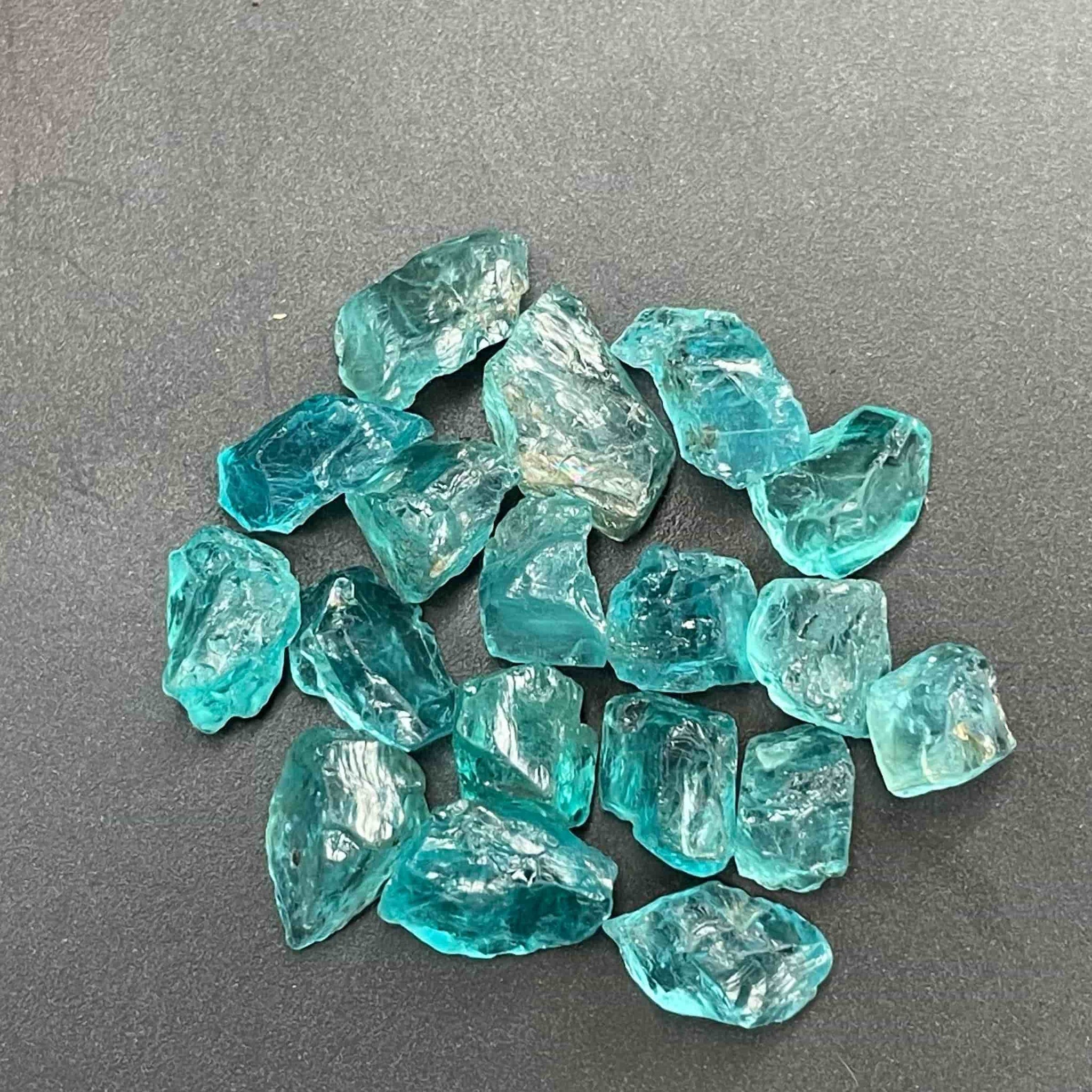
Apatite Rough

Apatite rough gemstones are best selected by examining the usable interior of each piece rather than choosing the largest stone by weight. Color intensity, transparency, visible fractures, inclusions, crystal shape and millimeter dimensions all influence whether an individual piece is suitable for faceting, cabochon cutting, carving, collecting or display. Apatite can produce striking blue and blue-green gemstones, but its relatively low hardness and brittle nature make careful rough selection especially important for buyers planning lapidary work.

Blue Apatite Stone For Sale

A rough piece with attractive color does not automatically guarantee a successful finished gemstone. Internal breaks may reduce cutting yield, a heavily included section may limit transparency, and unfavorable proportions can leave too little depth for the planned cut. Buyers who want predictable finished dimensions and brilliance rather than a lapidary project can compare already cut apatite gemstones. Rough apatite serves a different purpose by allowing the cutter to decide orientation, shape and how the stone's natural characteristics will be used.

Apatite Rough Color: Comparing Blue, Blue-Green and Teal Appearance

Color often drives the initial attraction to apatite. Blue, turquoise-like, blue-green and teal appearances can all occur, and even one piece of rough may look different as its thickness changes. A thin edge can transmit considerably more light than the center of a thick crystal, so the color seen through one part of the rough should not automatically be taken as the color a finished gemstone will display.

For faceting, the cutter needs to consider how much depth will remain after damaged or irregular areas are removed. A stone that looks moderately saturated in rough form may concentrate color when fashioned into a deeper gem, while another may become noticeably lighter after cutting. Excessive darkness is not automatically desirable because finished apatite still needs enough light return to remain lively.

Color consistency also matters. Some pieces may contain zoning or shifts between blue and green. These variations can either become attractive features or create uneven finished color depending on how the rough is oriented. The planned apatite gemstone buying guide addresses the characteristics of finished apatite, while rough buyers need to anticipate how those characteristics may emerge after cutting.

Apatite Rough Clarity: How Fractures and Inclusions Affect Usable Yield

Clarity assessment in rough apatite is fundamentally about determining which parts of the stone can realistically be used. Natural inclusions are not necessarily a reason to reject a piece, but fractures can be particularly important because apatite is more vulnerable to damage than harder jewelry gemstones.

A small inclusion contained within an otherwise transparent area may have little effect on a planned finished stone. A fracture running across the entire piece can be much more significant because it may dictate where the rough must be divided. Surface-reaching cracks also deserve careful attention before sawing or grinding, since mechanical pressure can extend an existing weakness.

Transparency can range from areas suitable for faceting to translucent sections better suited to cabochons or other lapidary uses. Buyers should therefore evaluate clarity according to the intended project rather than expecting every piece to meet one standard. The planned apatite gemstone properties article provides additional context on the gemological characteristics that affect how apatite performs as a finished stone.

Apatite Crystal Shape and Rough Geometry: Planning the Finished Stone Before Cutting

The external geometry of rough apatite can significantly influence cutting options. A compact piece may support a cushion, oval or similar shape, while a long narrow section might work more efficiently for an elongated design. Irregular rough may require substantial trimming before a symmetrical preform can be established.

This is why dimensions matter alongside weight. Two pieces with similar carat weight can provide very different cutting opportunities if one is broad and shallow while the other is narrow and deep. Buyers planning a specific finished gemstone should consider the dimensions of the cleanest internal zone rather than measuring only the maximum outside edges.

Natural surface shape may matter more for collectors than cutters. Interesting crystal faces, color patterns and untouched surfaces can make a rough piece visually appealing in its existing form even if it would produce a relatively modest faceted gemstone.

Rough Apatite Weight vs Finished Gemstone Yield

Rough carat weight is not a prediction of finished carat weight. The cutter must remove weathered surfaces, fractures, poorly colored zones and excess stone while establishing correct proportions. Apatite's brittleness can also make aggressive weight retention a poor strategy when the result would leave vulnerable areas in the finished gem.

A smaller piece with a clean central section may therefore offer better cutting potential than a larger piece divided by fractures. Millimeter dimensions can help the buyer estimate whether an intended oval, cushion, pear or another design can fit within the usable area, but even dimensions cannot guarantee final yield before the rough has been carefully examined and oriented.

Buyers who want to compare different uncut gem species for lapidary use can browse the wider rough gemstones selection, where differences in crystal structure, transparency and usable geometry become particularly apparent.

Apatite Hardness and Durability: Why Rough Requires Careful Handling

Apatite has a Mohs hardness of about 5, making it considerably softer than quartz, topaz, corundum and several other familiar jewelry gemstones. It can therefore acquire scratches more readily during handling, cutting and wear. Apatite is also brittle, so rough pieces should be protected from knocks and unnecessary pressure.

For a lapidary, these characteristics affect every stage of the project. Sawing, preforming and polishing require a controlled approach, particularly around existing fractures and thin sections. The objective is not simply to preserve maximum weight but to create a finished gem that remains structurally sound.

These durability characteristics also influence eventual jewelry use. A beautifully cut apatite may perform well in a pendant or earrings, where impact is limited, while a ring intended for frequent wear requires more caution and a protective setting. The individual gemstone's fracture pattern remains relevant even after cutting.

Natural Apatite, Identification and Treatment Disclosure

Natural apatite refers to geological origin, but visual appearance alone should not be used to make assumptions about every aspect of a stone's history. Color, transparency and crystal shape are valuable buying observations, yet definitive gem identification or treatment determination can require gemological testing.

Buyers should therefore separate what is directly visible from what requires verification. A photograph can show color and many surface characteristics, but it cannot establish every property of a gemstone. Gandhara Gems' authenticity guarantee provides relevant context for buyers considering gemstone identity when purchasing online.

Rough Apatite for Faceting, Cabochons and Natural Display

Transparent rough with an adequate clean area may be considered for faceting, especially when the color is attractive and fractures can be avoided. More translucent pieces may lend themselves to cabochons or other polished forms, while visually interesting crystals can simply be retained in their natural condition.

The intended project should be decided before buying whenever possible. Faceting places greater demands on transparency, orientation and usable depth. A cabochon can make use of different internal characteristics, while a collector may deliberately choose a specimen because of natural surfaces or inclusions that a cutter would otherwise remove.

There is therefore no single version of “best” apatite rough. The useful piece is the one whose structure, dimensions and visual characteristics match what the buyer intends to create.

Caring for Apatite Rough Before Cutting or Display

Apatite should be stored separately enough to prevent harder gemstones from rubbing against it. Its relatively low hardness makes scratching a practical concern, while sharp impacts can damage thin edges or extend fractures.

Cleaning should also remain conservative. Rough surfaces and crevices can trap debris, but unnecessary mechanical or abrasive cleaning can damage a softer crystal. Buyers can use Gandhara Gems' gemstone care information when deciding how to handle and maintain natural gemstones before or after cutting.

Buying Apatite Rough Online: What to Inspect Before Ordering

Start by identifying the planned use and then evaluate the rough accordingly. For faceting, look for a transparent usable zone with enough width and depth for the intended shape. Examine visible fractures from every available angle and compare the strongest-colored area with the actual dimensions of the piece. For cabochons or display, transparency may matter less than color, pattern and natural form.

Do not rely on gross weight as the main quality measure. A heavy stone can contain limited recoverable gem-quality volume, while a smaller but cleaner piece may be much more efficient for a cutting project. The relationship between usable volume and the price being asked is usually more informative than weight alone.

Online purchase conditions should also be reviewed before ordering. Gandhara Gems' shipping information explains relevant delivery considerations, while the return policy sets out the applicable conditions for returns.

Apatite Rough Gemstone FAQs

Is apatite rough suitable for beginners to facet?

It can be cut successfully, but apatite's hardness of about 5 and brittle nature demand more care than harder, more forgiving gemstones. Existing fractures should be studied carefully before work begins.

What color apatite rough is best?

There is no universal best color. Buyers may prefer blue, blue-green or teal appearance. Saturation, brightness, transparency and the way color is distributed through the usable portion are more meaningful than color name alone.

Are fractures common in natural apatite rough?

Natural rough can contain fractures and other inclusions. Their importance depends on position, extent and whether they divide the stone's usable area.

Can translucent apatite rough still be useful?

Yes. Rough that is unsuitable for transparent faceting may still work for cabochons, carving, collecting or natural display depending on its color and condition.

Why should I check millimeter dimensions as well as rough carat weight?

Dimensions reveal whether a clean section has the physical width, length and depth required for a planned design. Weight alone cannot show how that mass is distributed.

Is apatite suitable for everyday rings after cutting?

Apatite is relatively soft and brittle compared with many traditional ring gemstones. It is usually better suited to protected settings or jewelry exposed to less impact, depending on the individual stone.

Choose Apatite Rough by Usable Color, Structure and Dimensions

Compare the available apatite rough by blue or blue-green color, transparency, visible fractures, inclusions, crystal geometry and the dimensions of the portion you can realistically use. A lapidary buyer should prioritize sound cutting volume over gross weight, while a collector may give more importance to natural crystal character and color. Choose the individual piece whose structure and size match the faceted stone, cabochon, carving or natural specimen you actually intend to produce or keep.

Gemstone expert consultations available

Welcome to my shop! Contact Us

Recently Viewed Products
